Table of ContentsClick to view all sections
- Interview Checklist: Start with the interview invitation
- Research the role and organisation
- Prepare answers that sound like you
- Get documents and work samples ready
- Plan your outfit, route and timing
- On the day: a practical checklist
- Prepare questions for the interviewer
- After the interview
- Common interview mistakes to avoid
- Examples: adapt the checklist to your interview
- Conclusion
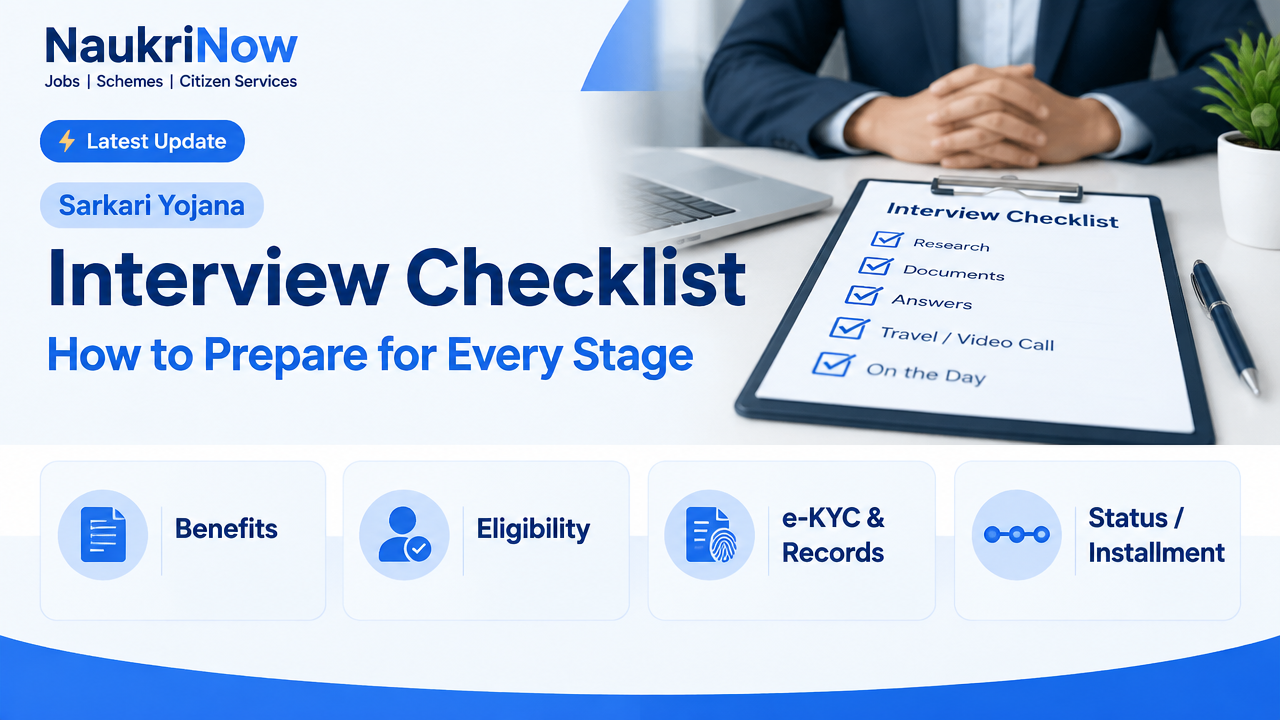
An interview is easier to manage when you know what to prepare and where to find reliable instructions. This interview checklist helps you organise your research, documents, answers and travel or video-call setup for company, campus and government recruitment interviews.
Use it as a flexible guide rather than a fixed set of rules. The invitation may specify a different format or documents, so read it carefully and follow the latest instructions from the employer or recruiting authority. If anything is unclear, confirm through a contact channel listed on its official website or in the original invitation.
Interview Checklist: Start with the interview invitation
Before preparing answers, make sure you understand the arrangements. Save the invitation and note the details in one place. Check:
- Date and time: Confirm the date, time and time zone, especially if you are joining an online interview from another location.
- Format: Identify whether it is in person, by video, by phone, a group discussion, a technical round, a presentation or more than one stage.
- Location or link: Record the full venue address, building or reporting-point instructions, or the meeting link and platform name.
- Contact details: Note whom to contact if you cannot find the venue, the link fails or you need an accessibility adjustment.
- Required items: Look for instructions about identification, certificates, a CV, a portfolio, a written test or other materials. Do not assume every interview requires the same documents.
- Duration and schedule: Check whether the invitation gives a likely duration or lists several rounds. Keep enough time free around the appointment.
If the invitation conflicts with information you find elsewhere, do not guess. Ask the recruiter, placement office or responsible authority to confirm. For government or public-sector recruitment, use the official recruitment notice and the relevant department or recruiting body’s website for current instructions. For campus interviews, check with your placement office as well as the employer’s communication.
Research the role and organisation
Good preparation is specific. Read the job description again and highlight the main responsibilities, required skills and experience. For each important requirement, think of one example that shows how you have used that skill. If you are a fresher, examples can come from a project, internship, course, volunteering, a part-time role or a responsibility outside work.
Learn the basics of the organisation from its official website and other credible, recent sources. Be ready to explain what interests you about the role and how your experience could contribute. You do not need to memorise the company website or make sweeping claims about its business. A clear, honest answer linked to the actual role is more useful than a rehearsed speech.
Make a short role brief for yourself:
- What are the three main things this role appears to involve?
- Which of your skills or experiences are most relevant?
- What would you like to understand better about the work or team?
Use the employer’s official careers page or the recruiting authority’s official portal to verify current role details, interview instructions and any changes. Search results, forwarded messages and social media posts can be outdated or inaccurate.
Prepare answers that sound like you
Practise speaking about your experience, but avoid memorising complete answers word for word. Rehearsed scripts can sound unnatural and become difficult to adapt when a question is phrased differently. Instead, prepare a few points for common questions and choose relevant examples.
For questions about a situation or challenge, organise your answer around four points: the situation, your responsibility, the action you took and the result or learning. Keep the context brief, make your own contribution clear and do not claim credit for work done by a team. If an outcome was not successful, explain what you learned and what you would do differently.
Practise concise answers to questions such as:
- Tell me about yourself.
- Why are you interested in this role?
- What skills or experience would help you do this work?
- Describe a problem you solved or a time you worked with others.
- What would you like to learn or improve?
- What are your expectations about the role and its working arrangements?
For “Tell me about yourself”, focus on a brief introduction, relevant experience or education, and why you are speaking with the organisation. You do not need to recite your entire personal history. For a strength, support your claim with an example. For an area to improve, choose something genuine and explain the steps you are taking to work on it.
Prepare for questions specific to your field. A software candidate might review a project and be ready to explain design choices; a sales candidate might practise describing how they understand a customer’s needs; a graduate might revise the concepts named in the job description. Do not try to predict every question. Aim to understand your own experience well enough to discuss it accurately.
Get documents and work samples ready
Follow the invitation’s document list rather than carrying every certificate you own. If documents are requested, organise them so they are easy to find. Depending on the instructions and role, useful items may include:
- A few clean copies of your current CV or résumé.
- The identification document specifically requested by the organiser.
- Copies of relevant education, training or work-experience records, if requested.
- A portfolio, project summary, writing sample or other work sample relevant to the role.
- A notebook and pen for notes, if appropriate.
Keep originals secure and take them only when the instructions ask for them. Do not send sensitive identity or financial information to an unverified person. If a request seems unusual, confirm it directly through the organisation’s official contact details before responding. Never share passwords, one-time passcodes or banking PINs as part of interview arrangements.
Check that the information on your CV is accurate and that you can explain dates, responsibilities, project contributions and any gaps honestly. If you find an error, prepare a brief, straightforward clarification rather than hoping it will go unnoticed. For a portfolio, confirm that links open, files are readable and confidential material is not included without permission.
Plan your outfit, route and timing
Choose neat, comfortable clothing that suits the role and setting. Unless the employer gives a dress instruction, aim for a professional appearance without buying something special just for the interview. Check your clothes the previous day for stains, loose buttons or anything that may distract you. Plan for weather and the journey, while keeping the outfit appropriate for the meeting.
For an in-person interview, check the route, likely travel time and the exact entrance or reception point. Build in a sensible buffer for traffic, public transport delays, security checks or finding the building. If you are travelling to another city, confirm the venue and accommodation arrangements independently and leave room for disruptions. Carry the organiser’s contact details in case you are delayed.
For an online interview, test your device, internet connection, camera, microphone and the meeting platform in advance. Charge your device and keep a charger nearby. Choose a quiet, well-lit place with a simple background. Put your camera at a comfortable height, silence notifications and close unrelated tabs. Keep the meeting link and a backup way to contact the recruiter accessible. If you have a connectivity problem, send a concise message using a verified contact channel rather than repeatedly joining without explanation.
On the day: a practical checklist
- Re-read the interview instructions and confirm the time, format and location or meeting link.
- Eat and drink as you normally would before an important appointment; avoid trying an unfamiliar routine.
- Carry only the documents and materials requested, plus anything practical for the journey.
- Arrive with enough time to settle in. For a video interview, join when the instructions say to; do not assume an early entry is possible.
- Greet everyone respectfully, including reception staff and other candidates. Listen carefully and let the interviewer finish the question.
- Pause briefly if you need to organise your thoughts. Ask for a question to be repeated or clarified when necessary.
- Give direct, honest answers. If you do not know something, say so and explain how you would approach finding the answer.
- Ask your prepared questions when invited, then thank the interviewer for their time.
Good communication does not mean having a perfect answer to everything. It means responding clearly, staying engaged and treating people respectfully. If you need a moment, a simple “Let me think about that for a moment” is better than rushing into an unclear answer.
Prepare questions for the interviewer
Thoughtful questions help you understand the work and show that you have considered the role. Pick two or three that are genuinely useful to you. Depending on what the invitation or earlier conversations have already covered, you could ask:
- What would the main priorities be for the person in this role?
- How is the team’s work usually organised?
- What skills or behaviours help someone succeed in this position?
- What are the next steps in the selection process?
Listen to the answers and avoid asking for information that was clearly explained earlier. If you need to discuss salary, location, shifts or joining arrangements, raise the point respectfully at an appropriate stage. Do not treat assumptions about these terms as confirmed; ask the employer to clarify them.
After the interview
Make a few private notes soon after the conversation: which questions came up, what you explained well and what you want to improve. If you promised to share a link or document, send it promptly through the channel the interviewer used, taking care not to include unrelated sensitive information.
A short thank-you message may be appropriate if you have a legitimate contact address and the organisation’s process allows it. Keep it professional: thank the interviewer, refer briefly to the conversation and restate your interest if that is genuine. Avoid sending repeated messages asking for an immediate decision. Use the timeline or contact method given in the interview instructions for any follow-up. If no timeline was provided, ask politely through the verified recruiter contact after a reasonable interval.
Hiring decisions and response times vary. Do not rely on unofficial posts or messages for a result. Check the employer’s official communication or, for a recruitment examination or public-sector process, the official portal or notice responsible for that process.
Common interview mistakes to avoid
- Preparing only generic answers: Connect your examples to the actual responsibilities in the job description.
- Exaggerating experience: Be precise about what you did, what the team did and what you are still learning.
- Ignoring the instructions: Recheck the invitation instead of assuming the venue, format or required documents.
- Arriving rushed or joining unprepared: Test the route or technology and allow time to handle ordinary disruptions.
- Speaking negatively about past colleagues or employers: Explain challenges neutrally and focus on what you learned or how you acted.
- Giving answers that are too long: Lead with the point, add a relevant example and stop when you have answered the question.
- Sharing confidential information: Discuss your skills without disclosing protected data from a current or previous organisation.
- Trusting unverified requests: Check unusual interview, document or payment requests through official channels before taking action.
Examples: adapt the checklist to your interview
Campus interview: A final-year student can review the role description, practise a brief introduction, revisit relevant coursework and prepare to explain one project in detail. They should confirm reporting instructions with the placement office and employer, and bring only the documents specified in the communication.
Experienced professional: A candidate changing roles can select two or three examples that show relevant results, leadership or problem-solving. They should be ready to explain their own contribution, reasons for considering a move and what they want from the next role without criticising their current employer.
Online technical interview: A candidate can test the platform, check screen-sharing permissions and keep any requested project files accessible. They should read the interview instructions to learn whether particular tools or materials are expected, rather than installing software from an unverified link.
Frequently Asked Questions
What should I bring to an interview?
Bring the items requested in the invitation. Depending on the role and format, this may include a CV, specified identification, relevant records or a portfolio. Check the instructions first; requirements differ between employers and recruitment processes.
How early should I arrive?
Plan to reach the venue with enough time to find the correct entrance and settle in, allowing for local travel conditions. Follow any reporting-time instruction in the invitation. For online interviews, follow the organiser’s directions about when to join.
What should I wear to an interview in India?
Choose clean, comfortable clothing that looks professional and suits the workplace and role. There is no single outfit for every industry or interview. Follow any dress guidance from the organiser and consider the weather and travel involved.
How should a fresher prepare for an interview?
Review the role requirements, practise a concise introduction and prepare examples from projects, internships, coursework, volunteering or other responsibilities. Be ready to explain what you contributed and what you learned, rather than presenting academic work as employment experience.
What if I do not know the answer to a question?
Stay calm and be honest. Ask for clarification if needed, explain what you do know and describe how you would approach the problem. Avoid guessing confidently or claiming expertise you do not have.
Should I follow up after an interview?
If appropriate, send one brief thank-you message using a verified contact channel. For updates, follow the timeline and process provided by the interviewer or recruiting authority. Avoid repeated messages or relying on unofficial claims about the outcome.
How can I verify interview instructions or a suspicious request?
Compare the message with the official careers page, recruitment portal or notice, and contact the organisation using details published there. For campus hiring, you can also check with the placement office. Do not share passwords, one-time passcodes or banking PINs.
Conclusion
A reliable interview checklist turns preparation into manageable steps: confirm the arrangements, understand the role, practise honest examples, organise requested materials and plan your journey or technology. On the day, listen carefully and communicate clearly; afterwards, follow the stated process. When details concern a specific employer or recruitment round, verify them through the responsible official source rather than assuming that general advice applies.
Comments