Table of ContentsClick to view all sections
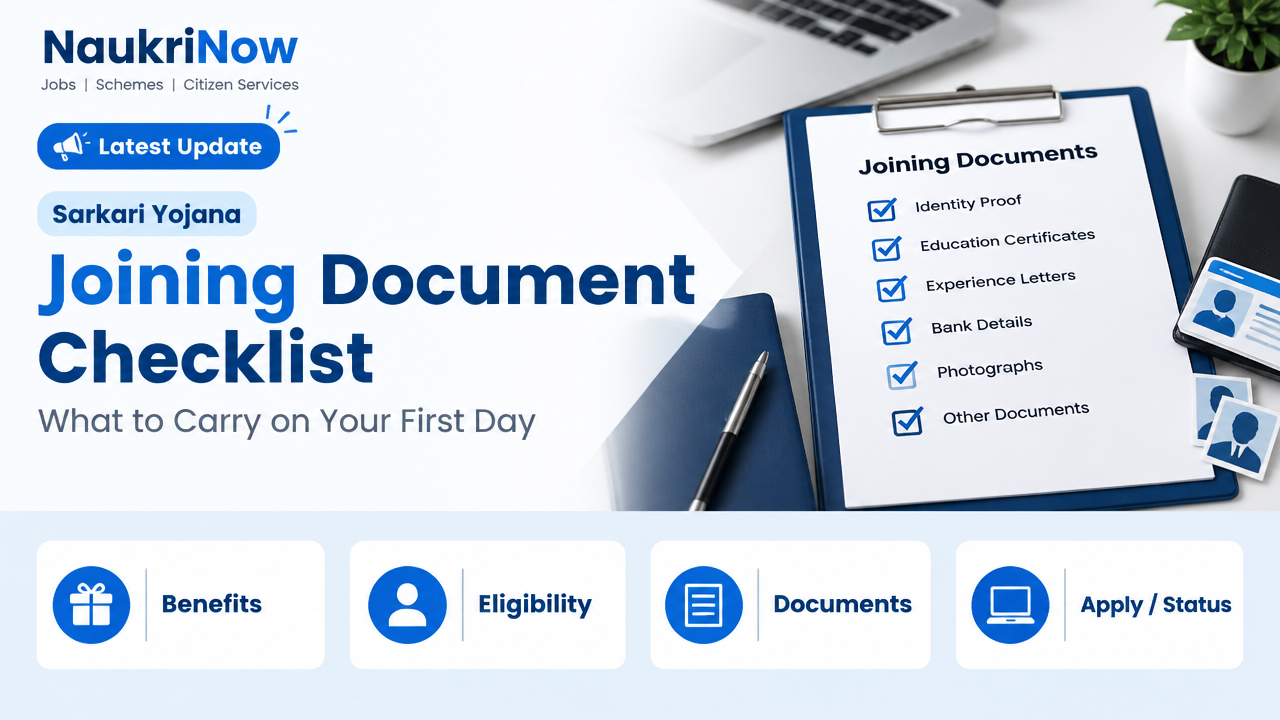
- Joining document checklist at a glance
- 1. Offer letter and employer forms
- 2. Identity and address proof
- 3. Education and professional qualifications
- 4. Previous employment and work history
- 5. Bank and payroll information
- 6. Personal details, photographs and declarations
- 7. Extra documents for particular situations
- How to organise your documents before joining
- Common mistakes to avoid
- Where to confirm current or employer-specific requirements
- Conclusion
Starting a new job often involves more paperwork than the offer letter suggests. Your employer may need to confirm your identity, verify your qualifications, set up payroll and complete background checks. The exact requirements vary by organisation, role and employment history, so there is no single checklist that fits every candidate.
Use this guide to prepare a reliable set of documents, identify what applies to your situation and avoid last-minute problems. Treat your offer letter and instructions from the employer’s official HR or recruitment contact as the final authority. If a requirement is unclear, ask for confirmation before sharing sensitive information or travelling with original documents.
Joining document checklist at a glance
Start with the categories below, then mark each item as required, if applicable or not requested. Do not assume that every employer needs every item.
- Offer and joining details: signed offer or appointment documents, joining instructions and any forms supplied by the employer.
- Identity and address: suitable identity proof, current address details and any supporting proof requested.
- Education and qualifications: certificates, mark sheets, transcripts and role-specific credentials.
- Previous employment: experience letters, relieving or separation documents, payslips and other records relevant to your work history.
- Payroll and tax setup: bank account details and tax or employment identifiers requested through the employer’s official process.
- Personal details and photographs: completed employee forms and photographs only in the format or number specified.
- Special circumstances: documents for a name change, employment gap, transfer, regulated role or other situation relevant to your application.
1. Offer letter and employer forms
Keep a copy of your offer letter and any later written updates about your role, reporting location or joining arrangements. Bring or submit signed copies only where requested. Read any joining forms carefully before completing them, especially sections about your address, emergency contact, work history and declarations.
Some employers send forms through a secure portal before your start date; others ask you to complete them during onboarding. Follow the instructions you receive rather than downloading forms from unofficial websites. If a form asks for information you do not understand, check with HR before signing. Keep a copy of documents you submit and note when and how you sent them.
2. Identity and address proof
Ask which identity documents the employer accepts. Depending on its process, it may ask to see a government-issued document such as a passport, driving licence, voter ID or Aadhaar. These are examples, not a claim that every employer requires all of them or that one particular document is always mandatory. Share only the documents requested for a clear onboarding purpose.
Your address on an identity document may differ from your current residence. If the employer asks for current address proof, find out what forms of proof it accepts and whether an explanation or supporting document is needed. Do not alter an official document to make details match. If your name or address has changed, tell HR and ask what evidence, if any, is appropriate.
Carry originals for in-person verification only if the employer asks you to bring them. Keep them in your possession after they have been checked. Provide copies through the employer’s approved channel, and ask whether copies should be signed or marked for a specific purpose. Avoid sending identity documents to personal email addresses or unknown messaging accounts.
3. Education and professional qualifications
Prepare the certificates and mark sheets relevant to the qualifications you listed in your application. Depending on your course and the employer’s verification process, this could include school records, college or university certificates, transcripts, provisional certificates or proof that a qualification is still in progress. You generally do not need to produce unrelated records unless asked.
For professional, technical or regulated roles, include relevant licences, registrations or training certificates if they were required for the position or mentioned in your application. Check that names, course titles and dates are legible. If a final certificate has not yet been issued, tell HR what document you currently have and ask whether it can be used for initial verification.
If a certificate is missing, damaged or unavailable, do not create a substitute or present an unofficial copy as an original. Explain the situation and ask the issuing institution or employer what acceptable evidence can be provided. Any requirements tied to a particular occupation should be confirmed with the organisation responsible for the role and, where applicable, the relevant official regulator.
4. Previous employment and work history
If you have worked before, review the employment dates and job titles in your application and check that your supporting records are consistent. An employer may ask for documents such as experience or service letters, a relieving or separation letter, recent payslips, an appointment letter or records relating to your last working day. Which items are needed depends on the employer’s verification process and your circumstances.
Some candidates may also be asked for tax documents, provident fund or UAN-related details, or proof of previous payroll. These requests are not identical across employers. Use the official HR instructions to establish what is relevant, and do not assume that a particular record is compulsory simply because another organisation requested it.
If you are waiting for a relieving letter, final payslip or another document from a former employer, tell your new employer early. Give a realistic update and ask whether another record can be used temporarily. Do not submit altered payslips, invented experience letters or misleading explanations about a gap in employment. A brief, accurate explanation is safer than trying to make your history appear perfect.
5. Bank and payroll information
Payroll setup may require your bank account details and supporting information, such as a cancelled cheque or an account document, depending on the employer’s process. Confirm the accepted evidence and the secure method for submitting it. Check the account holder’s name and account details carefully before sending them, as small errors can delay salary processing.
Only provide information needed for the stated payroll or employment purpose. Never disclose your banking password, ATM PIN, card security code or one-time password as part of routine joining formalities. If someone requests these credentials, stop and verify the request directly with HR using contact details you already know to be genuine.
6. Personal details, photographs and declarations
Employee forms may ask for contact details, an emergency contact, a photograph or declarations relevant to the role. Complete only the fields that apply to you, and check spellings, phone numbers and dates before submitting. Ask HR how to handle a field that does not apply rather than entering a guess or leaving it unclear when the form requires an answer.
Use photographs that meet the employer’s stated size, background or file requirements. Do not order prints or pay for a service unless the employer has clearly explained why it is needed. If a declaration asks you to confirm a fact, read it fully and answer truthfully. Raise any uncertainty before signing.
7. Extra documents for particular situations
Some candidates need a little more preparation. Use these examples to decide what to discuss with HR:
- Fresh graduate: If your final degree certificate is pending, ask whether your provisional certificate, final mark sheet or another record is acceptable for the initial process.
- First job: Previous-employment documents will not apply. Say so if a form asks for them, and do not leave a required field ambiguous.
- Name differs across records: Explain the difference before verification and ask what supporting evidence the employer accepts. Names can differ because of initials, spelling variations or a formal name change.
- Employment gap: Prepare a short, factual explanation if the employer asks. Provide supporting documents only when relevant and requested.
- Relocation or different work location: Confirm which address the employer needs for its records and which documents, if any, support it.
- Role with additional checks: Ask the employer or relevant official regulator about any role-specific licence, registration, medical check or background-verification requirement. Do not rely on informal claims about current rules.
How to organise your documents before joining
- Read the employer’s instructions first. Make a list of what is explicitly requested, what is optional and what is unclear. Check the offer letter, onboarding email or secure portal.
- Match records to your application. Compare your name, education, employment dates and job titles across documents. Contact HR promptly if you spot a genuine discrepancy.
- Prepare clear copies. Scan or photograph documents in good light, include all relevant pages and make sure text is readable. Do not crop out details the employer needs to verify.
- Use sensible file names. Names such as Education_Certificate or Experience_Letter_EmployerName make files easier to identify. Follow any naming convention or file format the employer specifies.
- Protect your information. Store digital copies in a secure location and share them only through a verified employer portal or approved channel. Avoid public computers and shared links that anyone can access.
- Pack for in-person verification. If asked, carry the relevant originals and one set of copies in a folder. Keep originals with you and ask before leaving any document behind.
- Keep a submission record. Save confirmation emails or portal acknowledgements and note any item you are still waiting to receive.
Common mistakes to avoid
- Taking every document you own without checking. A long pile of unrelated papers can make verification slower. Start with the employer’s list and add relevant supporting records.
- Assuming a document is mandatory everywhere. Employers use different processes. Confirm the requirement instead of relying on a friend’s or former colleague’s checklist.
- Sending sensitive files to an unverified contact. Verify unexpected requests through an official channel, especially if someone asks for identity or financial information urgently.
- Handing over originals without a clear reason. Originals may be needed for inspection, but ask how and when they will be returned if anyone proposes retaining them.
- Ignoring mismatched details. A small difference in a name, date or address can lead to follow-up questions. Raise it early and provide a truthful explanation.
- Editing or inventing evidence. Never change a certificate, payslip or employment record. If something is unavailable, explain that and ask what alternative evidence is acceptable.
- Waiting until the first morning to ask questions. Confirm missing or unclear requirements before your joining date so there is time to resolve them.
Where to confirm current or employer-specific requirements
Use your signed offer documents, official onboarding portal and verified HR or recruitment contact for the organisation’s current checklist. If you need clarification about a government-issued record, tax process, provident fund matter or regulated profession, check the responsible government department, official portal or regulator directly. Requirements and procedures can change; do not rely on an old checklist, social media post or forwarded message as the final source.
Frequently Asked Questions
1. What documents should I carry on my first day?
Carry the items named in your employer’s joining instructions. This may include identity proof, education records, previous-employment documents, payroll information and completed forms. Ask HR whether originals, copies or digital submissions are required.
2. Do I need to submit every original document?
Not unless the employer’s verified process specifically requires it. Originals may be requested for inspection, but ask how they will be handled and returned. Keep your original records secure and do not leave them behind without a clear explanation.
3. Is Aadhaar compulsory for joining every private job?
Do not assume that one identity document is required by every employer. Ask which documents are accepted for the particular onboarding purpose. For a current government or regulatory requirement, consult the responsible official source rather than relying on a general checklist.
4. What if my final degree certificate is not ready?
Tell HR before your joining date and explain which records you can provide now. Ask whether a provisional certificate, mark sheet or another document is acceptable for the employer’s process. The answer depends on the organisation and role.
5. What if my name is different on two documents?
Point out the difference early and ask HR which supporting evidence it accepts. Do not alter either document. If the difference reflects a formal name change, provide relevant evidence only through the employer’s approved process.
6. Can I send my documents over WhatsApp or personal email?
Use the secure portal or submission method specified by the employer. If instructions suggest a personal account or an unexpected messaging number, confirm the request with a known, verified HR contact before sharing sensitive records.
7. What should I do if a previous employer has not issued a required letter?
Inform your new employer as soon as possible, state which document is pending and ask whether alternative evidence can be used temporarily. Submit only genuine records, and provide an update when the pending document becomes available.
Conclusion
A good joining document checklist is organised around your employer’s actual instructions, not assumptions about what every company requires. Prepare clear copies, keep originals safe, check for mismatched details and handle identity and banking information carefully. When something is missing or unclear, contact the employer through a verified channel before your first day. For any changing government or role-specific requirement, confirm the latest information with the responsible official source.
Comments