Table of ContentsClick to view all sections
- Reporting Time Checklist: 1. Confirm exactly what the reporting time means
- 2. Build a realistic journey plan
- 3. Pack documents and permitted items the night before
- 4. Make a brief plan for the morning
- 5. What to do when you reach the venue
- 6. If you are delayed or cannot attend
- Useful examples: adapt the checklist to the occasion
- Mistakes to avoid
- Conclusion
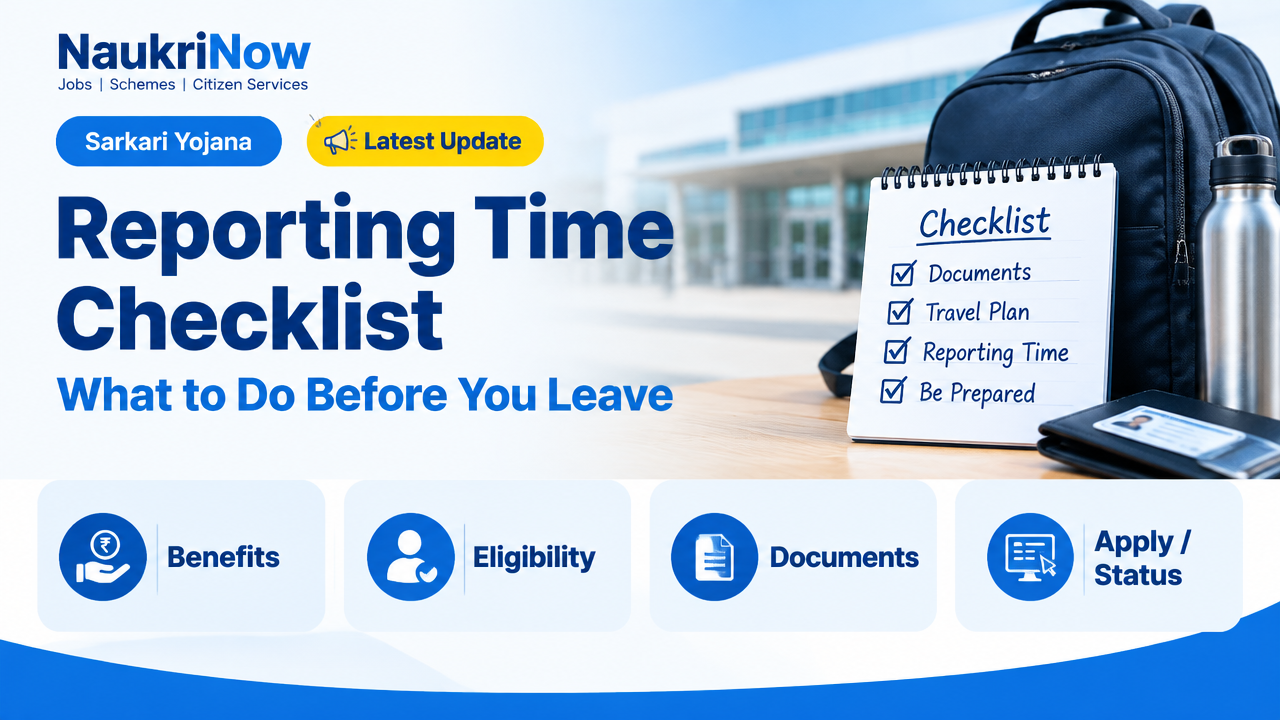
Reporting Time Checklist: What to Do Before You Leave
A reporting time is the time by which you are expected to reach a venue or check in—not necessarily the time an interview, exam or appointment begins. Arriving late can affect entry even if the main event has not started. The safest approach is to check the instructions carefully, plan for the journey and prepare everything you are allowed to bring.
Use this guide for interviews, recruitment tests, document verification, counselling, joining formalities and similar appointments. Requirements differ between organisers and venues, so this checklist is a planning aid, not a substitute for the latest official instructions. For event-specific details, rely on the responsible employer, institution, examination authority or appointment provider.
Reporting Time Checklist: 1. Confirm exactly what the reporting time means
Start with the original notice, email, admit card, appointment message or joining instructions. Look for the precise reporting time and distinguish it from the event start time, interview slot, gate-closing time or appointment time. These can be different. If the instructions give more than one time, do not assume that the later one is your arrival deadline.
- Check the date, day, time and venue, including the building, entrance, floor or reporting desk if stated.
- Confirm whether the time is for arrival, registration, document checking or the start of the activity.
- Look for an entry cut-off, gate-closing instruction, late-arrival policy or instructions about waiting outside.
- Check whether you need to complete an online step, print a document or confirm attendance before travelling.
- Read any updates or revised instructions from the organiser. Use its official website, portal or direct communication channel for current details.
If any instruction is unclear or contradictory, contact the responsible organisation through a contact method published in its official communication. Do not rely on an old message, an unofficial social media post or advice from someone who attended a different session.
2. Build a realistic journey plan
Plan to reach the venue before the required reporting time, leaving room for ordinary delays. There is no single buffer that works for every journey. Your travel time depends on distance, time of day, transport availability, weather, local traffic and how difficult the venue may be to find. Allow more time when you are travelling to an unfamiliar area or changing between modes of transport.
- Check the full address. Match the venue name and address against the official instructions. Similar institution or building names can lead to the wrong destination.
- Choose a primary route and a fallback. Check likely travel conditions and consider an alternative if your first option is disrupted. Keep enough phone battery to access maps or messages.
- Work backwards from the reporting time. Estimate travel, transfers, parking or drop-off, walking to the entrance and any expected security or registration queue. Add a reasonable contingency rather than planning to arrive at the last minute.
- Confirm the final approach. A large campus, office complex or examination centre may have a specific gate or building. Read any directions about entry and check the route before the day.
- Prepare for local conditions. Consider rain, heat, public transport frequency and whether you will need cash or a pre-booked ride. Keep essential travel details accessible offline where possible.
For example, if a notice asks you to report at 9:00 a.m., do not plan a journey that reaches the neighbourhood at 8:58. Allow time to find the entrance, complete check-in and respond to a minor delay. Your exact departure time should be based on your route and the organiser’s instructions, not a universal rule.
3. Pack documents and permitted items the night before
Use the instructions for your specific appointment to make a short packing list. Carrying more is not always safer: some venues restrict bags, electronic devices, stationery or other belongings. Bring what is requested and avoid assuming that an item will be accepted simply because it is commonly used elsewhere.
- Identity proof: Take the identification document specified by the organiser. Check whether an original is required and whether any alternate proof is accepted.
- Appointment or entry proof: Carry the required admit card, interview invitation, appointment confirmation or registration document in the format requested.
- Supporting papers: For an interview or verification, review the list carefully. This may include certificates, application details or copies, but the official instructions determine what is needed.
- Photographs or forms: Bring these only if requested, and check any stated format or quantity.
- Writing materials or devices: Take them only if permitted. Exam and secure-site rules may differ from ordinary office visits.
- Essentials: Carry a charged phone, any necessary medication and a small amount of money for travel. Check whether phones must be switched off or left outside.
Keep documents in a simple folder, ordered in the sequence you may need them. Protect originals from rain or damage, and store copies separately if the instructions call for them. Do not assume a digital version will replace a physical document, or that a printout will replace an original, unless the organiser explicitly says so.
For a document check, compare each item on your packing list with the official requirement. For an interview, keep your resume or portfolio ready only if requested or appropriate for the role. For an examination, follow the specified permitted-items list closely; a checklist from another exam may not apply.
4. Make a brief plan for the morning
A few simple preparations can reduce avoidable stress. The evening before, lay out suitable clothing, pack your folder and check the travel plan. Set an alarm with enough time to get ready without rushing. If you depend on someone for transport, confirm the arrangement rather than assuming it is understood.
Before leaving, run through this quick check:
- Do I have the correct date, venue and reporting time?
- Have I packed every document and item required by the latest instructions?
- Are my travel plan, route and backup option clear?
- Is my phone charged, and can I access the organiser’s message if needed?
- Have I checked for a venue update or disruption that could affect my journey?
- Am I carrying anything that the venue may prohibit?
Choose neat, comfortable clothing suited to the purpose and any stated dress requirements. If there is no dress instruction, use good judgement for the setting. Avoid last-minute choices that make it difficult to travel or comply with venue rules.
5. What to do when you reach the venue
Go to the entrance or reporting point named in the instructions. If you are unsure, ask venue staff or security for directions rather than entering restricted areas or following an unfamiliar group. Keep your documents accessible but secure, and follow the check-in process calmly.
- Show only the documents requested at that stage and keep track of originals after they are checked.
- Listen for instructions about queues, seating, device use, document handling and when you may leave.
- Tell the appropriate staff member promptly if your name, application detail or appointment information appears incorrect.
- If you are asked to wait, stay in the designated area and pay attention to announcements or messages.
For an interview, use waiting time to settle, review key points and keep your phone silent. For an exam or another controlled assessment, follow invigilator instructions even if a familiar practice from another venue differs. For document verification, be prepared to present papers in an orderly way and answer straightforward questions about your application.
6. If you are delayed or cannot attend
Unexpected problems can happen: a cancelled connection, traffic disruption, a vehicle issue or illness. If you realise you may be late, contact the organiser as soon as reasonably possible using the official contact details in your notice. Explain briefly, give your expected arrival time if you can estimate it, and ask what to do. Keep a record of the communication.
Do not assume that a late arrival will be accepted, that a different session is available or that an appointment can automatically be rescheduled. Only the responsible organisation can confirm its options and policy. If you cannot attend, follow the official procedure for reporting an absence or requesting a change. Avoid sharing sensitive identity or application information through an unverified contact.
Useful examples: adapt the checklist to the occasion
| Situation | What to confirm | What to prepare |
|---|---|---|
| Job interview | Interview slot, office address, reception or entry instructions and any requested preparation. | Invitation details, identification and any documents or work samples requested by the employer. |
| Examination or recruitment test | Reporting time, gate-closing instructions, venue and the current permitted-items rules. | Required entry documents and identity proof in the format specified by the examination authority. |
| Document verification | Reporting desk, appointment details and the exact list of originals, copies or forms. | Documents arranged for easy checking; do not substitute digital copies unless permitted. |
| Joining formalities | First-day time, reporting person or department, location and any pre-joining instructions. | Only the identity, employment or banking documents specifically requested through the employer’s official communication. |
These are planning examples, not fixed requirements. The responsible organisation’s latest instructions take precedence in every case.
Mistakes to avoid
- Confusing the start time with the reporting time. Check the exact wording and any separate entry deadline.
- Following an old or unofficial message. Verify changes through the organisation responsible for the event.
- Planning to arrive at the last minute. A small delay or difficulty finding the entrance can make you late.
- Assuming the same rules apply everywhere. Document, dress, device and entry requirements vary by organiser and venue.
- Carrying unnecessary restricted items. Check the current instructions instead of relying on habits from another appointment.
- Leaving document checks until the gate. Review your papers the previous day and keep them organised.
- Relying only on a phone. If printed material or an original document is required, a screenshot may not be enough.
- Waiting to report a delay. Contact the official organiser as soon as you know there is a problem, without assuming an exception will be granted.
Frequently Asked Questions
Is reporting time the same as the start time?
Not always. Reporting time usually indicates when you must reach or check in at the venue, while the activity may begin later. Read the notice for a separate start time, entry deadline or gate-closing instruction.
How early should I reach the venue?
Arrive before the stated reporting time with a buffer suited to your route, the venue and the expected check-in process. There is no single arrival margin that works for every location. Follow any timing instructions from the organiser.
What should I carry?
Carry the documents and items listed in the latest official instructions, such as specified identity proof or appointment confirmation. Check whether originals, copies or a particular format are required, and review any prohibited-items rules.
Can I show documents on my phone?
Only if the responsible organisation explicitly accepts digital documents for that purpose. Do not assume that a phone image or digital copy replaces a required original, printout or entry document.
What if my reporting time is not clear?
Check the original notice and any official updates. If the wording remains unclear, contact the employer, institution, examination authority or appointment provider using its published official communication channel.
What should I do if I am running late?
Contact the organiser as soon as possible through its official channel, explain the situation briefly and ask what to do. Late entry or rescheduling is not guaranteed; follow the instructions you receive.
Does this checklist apply to every exam or interview?
It covers general preparation, but individual rules differ. Always follow the current instructions for your specific exam, interview, verification or appointment, especially for entry times, documents and permitted items.
Conclusion
A reliable reporting-time plan starts with the latest official instructions. Confirm what the time refers to, map out a realistic journey, pack only the required and permitted items, and leave room for delays. On arrival, follow venue staff and organiser instructions. If a detail changes or a problem arises, contact the responsible organisation through an official channel rather than relying on assumptions. A little preparation can make the journey and check-in calmer, while keeping you ready for the appointment itself.

Comments