Table of ContentsClick to view all sections
- Application Status Guide: What an application status tells you
- Before you check: a quick checklist
- How to check an application status
- Common status messages and sensible responses
- If the status is blank, delayed or confusing
- How to follow up clearly
- Common mistakes to avoid
- Keeping your application organised
- Conclusion
Application Status Guide: How to Check and Follow Up
After submitting a job application, admission form or government scheme application, it is natural to want to know what happens next. An online status can help, but its meaning depends on the organisation and the process. A label such as “in progress” is not a promise of approval, while a quiet portal does not necessarily mean rejection.
This Application Status Guide explains how to find the right status page, interpret common messages and take sensible next steps. Since portals, timelines and procedures can change, use the official website or office responsible for your particular application to confirm current instructions. Do not rely on an unrelated website, social media post or message claiming to provide an update.
Application Status Guide: What an application status tells you
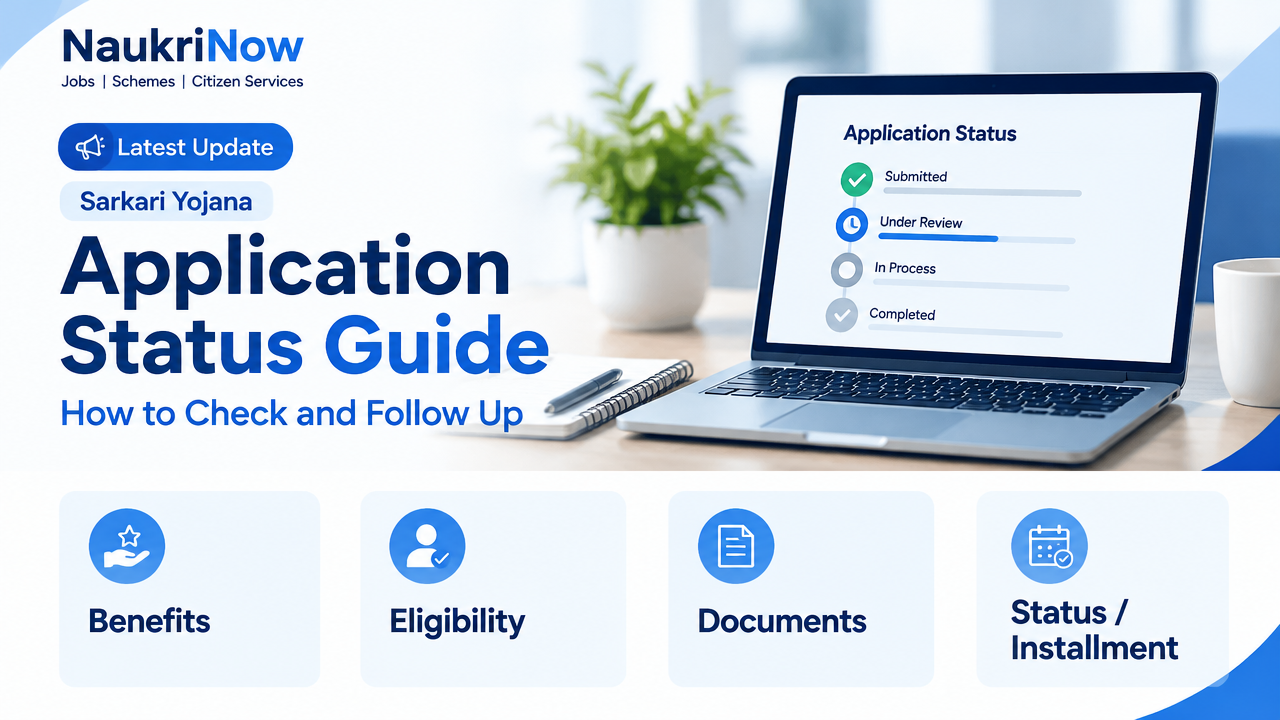
An application status is a recorded update about where a submitted request appears to be in a process. Depending on the organisation, it may confirm receipt, show that checks are under way, ask you to correct information, or communicate an outcome. Some portals display detailed stages; others show only a short label or the date of the latest update.
Status wording is not standard across India. “Under review” on one recruitment portal may not represent the same stage as “under process” on a college portal or a scheme website. Read the explanation, instructions and notices on the relevant official portal rather than assuming that a familiar phrase has a universal meaning.
A status is also not always the final decision. If an application is shortlisted, provisionally accepted or marked for verification, there may be another step before the process is complete. Look for a separate result notice, offer, approval order or formal communication where applicable.
Before you check: a quick checklist
- Identify the responsible organisation. Use the website or application channel through which you applied, or the official organisation named in the notification.
- Find your reference details. Check your acknowledgement, submitted form, email or SMS for an application number, registration ID or other requested identifier.
- Use the correct sign-in method. Some portals require an account; others ask for details from the acknowledgement. Follow the portal’s own instructions.
- Keep your contact details and records available. You may need access to the email address or mobile number used at submission. Keep a copy of the form and confirmation for reference.
- Check the full notice, not only the status box. Instructions may appear under messages, document requests, notices, inbox or application history.
- Protect private information. Enter identifiers only on the official portal. Do not share passwords, one-time passwords or full identity details with someone offering to “check” for you.
How to check an application status
- Return to the original official channel. Start with the organisation’s official website or the authorised portal mentioned in its notice. If you search online, verify that the page belongs to the responsible organisation before entering personal information. Avoid sponsored results or lookalike pages if you are unsure.
- Locate the status or applicant sign-in section. Labels vary. Look for wording such as “Application Status”, “Applicant Login”, “Track Application” or “My Applications”. The exact wording and available options depend on the portal.
- Sign in or enter the requested details carefully. Match the application number and other details to your acknowledgement. Watch for common typing errors, such as confusing the letter O with zero or entering an old registration number instead of the application number.
- Open the relevant application. If your account contains more than one form, check the correct post, course, location, scheme or submission date. Do not assume the newest entry is the one you mean.
- Read the status and any accompanying message. Note the update date, pending action and any stated deadline. A request to submit information needs a different response from a general progress update.
- Save a record of what you see. Keep the acknowledgement and relevant status message. If you contact the organisation, having the date and exact wording will make your query clearer. Store screenshots securely and avoid posting them publicly.
- Check again using the official process. If there is no update, follow any review frequency or contact instructions given by the organisation. Repeated refreshing or submitting a second application is rarely a substitute for checking the published guidance.
Common status messages and sensible responses
The explanations below are general possibilities, not official definitions. The organisation’s own portal or notice takes priority.
| Status wording | What it may indicate | What to do |
|---|---|---|
| Submitted or received | The portal has recorded a submission. This alone may not confirm that every field or attachment meets the requirements. | Save the acknowledgement and check whether the portal shows any separate validation or action required. |
| Pending or under review | The application may be waiting for an initial check, assessment or another process step. | Read the official instructions and allow the stated process to proceed. Do not infer selection or rejection from this label alone. |
| Documents required or action needed | The organisation may need a correction, clarification or additional item. | Open the message, confirm what is requested and how to respond, and follow the official instructions and any stated deadline. |
| Provisionally accepted or shortlisted | You may have passed one stage, subject to further checks or steps. | Read the notice carefully. Check what remains to be completed before treating the process as final. |
| Approved, selected or offered | A positive decision may have been recorded, but further acceptance, verification or joining steps may still apply. | Check for a formal letter or notice and follow its instructions. Confirm details on the official channel. |
| Rejected, not selected or unsuccessful | The application may not have progressed or may have received a negative decision. | Read the notice for any explanation or permitted next step. Do not pay anyone who promises to reverse a decision. |
| Closed, withdrawn or expired | The record may have been closed, cancelled or passed beyond a process stage. | Check the portal’s explanation and contact the responsible office through its published route if the status seems inconsistent with your records. |
If the status is blank, delayed or confusing
A portal may not update immediately after submission or after an organisation completes an internal step. There can also be technical interruptions, maintenance or delays in displaying information. A missing update is not proof that your application was lost, and it is not a reason to create another application without checking the rules.
First, confirm that you are signed into the right account and viewing the correct application. Check your acknowledgement, email and text messages, including filtered folders, for a confirmation or instruction. If the portal displays an error, try again later using the official site and a reliable connection. Avoid entering your details on a third-party tracking page.
If the issue remains, consult the official notice for the relevant process. It may explain how to report a technical problem or ask about an application. Use only contact details published by the responsible organisation. When you write, include the application reference and a short description of the issue, but do not send passwords, one-time passwords or unnecessary identity documents.
For example, if a candidate has an acknowledgement but the portal shows no later update, the practical first step is to verify the reference number and read the recruitment notice for the published process and enquiry route. It would be premature to assume either selection or rejection. Similarly, a student who sees “document required” should read the specific message and submit only what the official admission portal requests, by the stated method.
How to follow up clearly
Before contacting an office, make sure your question cannot be answered by the notice, status page or an existing message. A useful follow-up is brief and specific. State the type of application, reference number, submission date if relevant, the exact status message and the action you have already taken. Ask one clear question, such as whether any action is pending from you or where an identified technical issue should be reported.
Use the enquiry form, email address or other route officially published for that process. Keep a copy of your message and any acknowledgement. If you call an official office, note the date and any reference provided, but do not treat an informal conversation as a formal decision unless the organisation confirms it through its prescribed channel.
Here is a simple structure you can adapt:
Subject: Query about application status – [application reference]
Message: I submitted an application for [process or role] on [date, if known]. The portal currently displays “[exact wording]”. I have checked the instructions and would like to confirm whether any action is required from me. Please advise through the appropriate official process.
Replace the brackets with relevant details and remove anything not needed. Do not attach sensitive documents unless the official process specifically asks for them through a secure channel.
Common mistakes to avoid
- Assuming a status label is a final decision. Check whether another stage, verification or formal notice is required.
- Using unofficial links. A convincing page or message may imitate an organisation. Navigate from its known official website and verify the domain before signing in.
- Sharing OTPs or passwords. A person who asks for these to check or speed up an application should not be trusted. Use the portal yourself.
- Submitting duplicate forms without guidance. Duplicate applications may create confusion or be treated differently under a particular process. Ask the responsible organisation if you are unsure.
- Ignoring a specific request. Read messages and notices in full, including the response method and any deadline. Do not rely only on a summary label.
- Paying for a promised outcome. No outside agent can guarantee approval, selection or a faster decision. Verify any legitimate payment instruction directly in the official notice or portal.
- Posting screenshots publicly. Application pages can reveal phone numbers, email addresses, reference IDs or other private information. Redact details before sharing a technical issue with anyone outside the official channel.
- Trusting forwarded claims about timelines or rules. Processes differ and may change. Confirm current dates, requirements, fees and decisions with the responsible official source.
Keeping your application organised
A small record-keeping routine can prevent avoidable problems. Save the submitted form, acknowledgement, relevant notices and official correspondence in a secure folder. Use a clear file name that helps you identify the process without exposing private information. Keep a note of when you checked the portal and the exact status shown.
If several applications are active, track them separately. A simple personal record can include the organisation, process name, reference number, submission date, official portal and next action. Do not store passwords or OTPs in that record. Delete or securely dispose of documents when they are no longer needed, in line with your own privacy needs.
Frequently Asked Questions
Does “submitted” mean my application is complete?
Not necessarily. It generally indicates that a submission was recorded, but the portal or organisation may still need to validate details or check required documents. Look for a confirmation, completeness indicator or further instruction on the official portal.
How often should I check my application status?
Follow the frequency or timeline given in the official notice. If no checking schedule is provided, use reasonable intervals rather than refreshing continuously. Check promptly if you are expecting a message or have been told to take an action.
What should I do if I have lost my application number?
Look in your acknowledgement, saved form, email or messages from the official portal. If it is not there, use the portal’s account recovery or enquiry process, if provided. Contact the responsible organisation through its published route; do not share identity details with an unofficial recovery service.
Why does my application show different information on two pages?
One page may not have refreshed, or the pages may refer to different stages or applications. Sign in again through the official portal, confirm the reference number and check for a notice explaining the discrepancy. If it remains unclear, ask the responsible organisation and quote the exact wording from both pages.
Can I change details after submitting an application?
That depends on the process. Some organisations allow corrections only during a specified period or through a prescribed method; others may not permit changes. Check the current official instructions before editing, withdrawing or submitting another form.
Does “shortlisted” mean I have been selected?
Not always. It may describe progress to another stage, and further assessment, verification or acceptance may remain. Read the official notice to understand what the status means in that particular process and what you must do next.
Is it safe to pay someone to check or improve my status?
No intermediary can guarantee an outcome. Check status yourself through the official channel and pay a fee only if it is explicitly required by the responsible organisation through its official process. Never disclose your password or OTP.
Conclusion
Checking an application status is most useful when you treat it as an official update, not a prediction. Use the portal or office responsible for your application, confirm the reference details, read the full message and respond to any stated request through the prescribed route. Status labels and procedures differ across jobs, admissions and schemes, so verify current requirements and decisions with the relevant official source. Keep your records secure, follow up clearly and do not share credentials or pay anyone who promises a guaranteed result.

Comments