Table of ContentsClick to view all sections
A strong career is built on more than qualifications. Employers also look for people who can communicate clearly, use relevant tools, solve everyday problems and learn as work changes. Yet it is easy to spend time collecting certificates without knowing which abilities matter for the role you want.
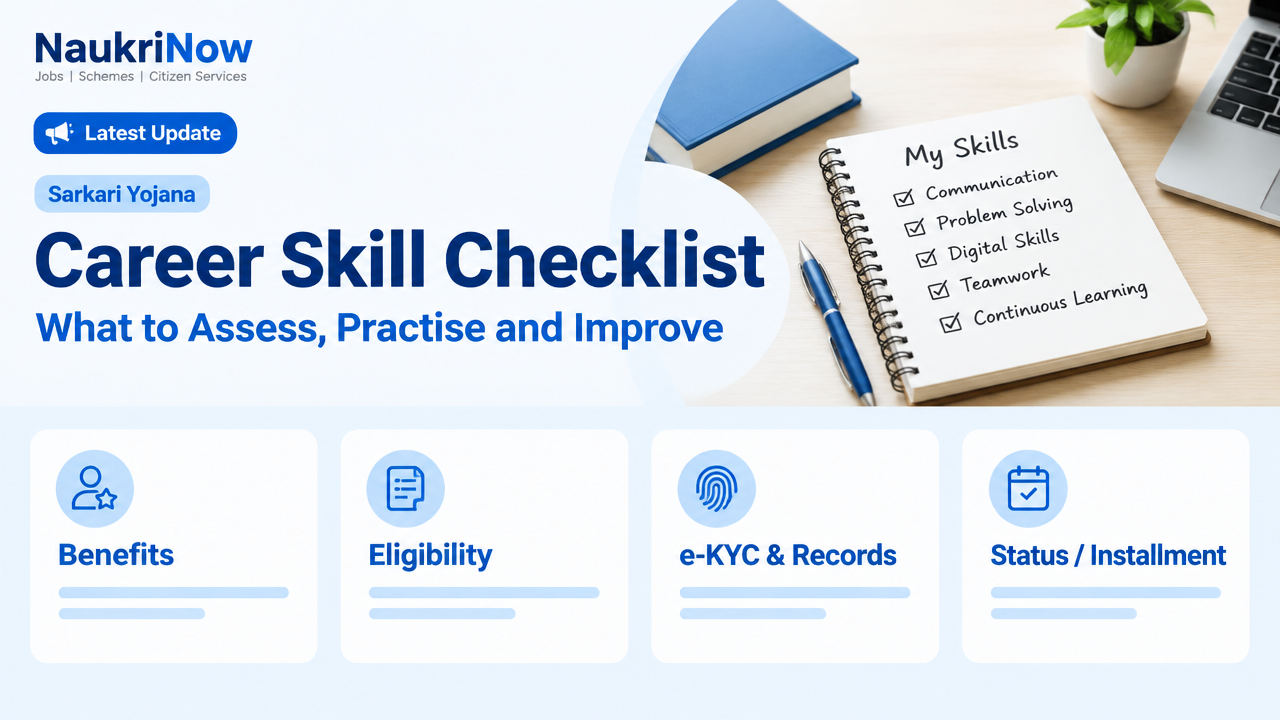
This Career Skill Checklist helps you take stock of your current skills, spot meaningful gaps and choose practical ways to improve. Use it when exploring a new career, preparing for interviews, returning to work or planning your next step. It is a starting point, not a universal list: the right priorities depend on the role, industry and employer.
What a career skill checklist should do
A useful checklist connects three things: the work you want to do, the skills that work requires and evidence that you can apply those skills. It should help you answer questions such as: Can I perform the task? Can I explain how I have done it? What would help me improve?
Skills are not the same as certificates. A course may introduce a concept, but practice helps you use it. For example, knowing what a spreadsheet is does not necessarily mean you can organise information, check formulas or explain what the numbers show. Treat training as one possible way to develop a skill, not as proof on its own.
The Career Skill Checklist
For each area below, consider what your target role actually involves. Mark a skill as ready if you can use it independently in a relevant situation; developing if you can do it with practice or guidance; or priority if it is important for your target role but you cannot yet demonstrate it. Add one example or piece of evidence beside every skill you mark ready.
1. Communication
- Speaking: Can you explain an idea, give a clear update and ask a useful question? Can you adjust your level of detail for a customer, colleague or manager?
- Writing: Can you write a clear email, message, note or short report with an appropriate tone and few avoidable errors?
- Listening: Can you follow instructions, confirm what you have understood and respond to feedback without jumping to conclusions?
- Language fit: Do you have the English, Hindi or regional-language ability the role calls for? Requirements vary by workplace and job; focus on the languages you will actually use.
2. Digital and information skills
- Can you use email, calendars, video meetings and shared documents appropriately?
- Can you create, format and check documents or presentations, and use spreadsheets for tasks such as organising information, basic calculations or sorting data, if relevant?
- Can you learn a new workplace system by following instructions and practising? Some roles may involve point-of-sale systems, customer databases, design software, coding tools or other specialised applications.
- Can you judge whether online information is credible, protect passwords and personal information, and recognise suspicious links or requests?
- Can you save, name and organise files so you and others can find the latest version?
Digital confidence does not mean knowing every application. Identify the tools named in reliable role descriptions and learn the functions you are likely to use. Do not claim proficiency in software you have only tried briefly.
3. Problem-solving and judgement
- Can you define a problem before proposing a solution?
- Can you separate facts from assumptions, check details and decide what information is still missing?
- Can you compare options, explain your reasoning and know when to ask for help?
- Can you learn from an error, correct it and take reasonable steps to prevent it happening again?
Problem-solving is often practical rather than dramatic. It might mean spotting a mismatch in a record, identifying why a process is delayed or knowing when an issue needs to be escalated.
4. Numeracy and working with information
- Can you read figures, percentages, dates and basic charts accurately?
- Can you check calculations that matter to your work instead of relying on a quick guess?
- Can you summarise information in a way that helps someone make a decision?
- Does your target role require more specialised analysis, accounting, measurement or data skills?
Not every job requires advanced mathematics. The useful question is whether you can handle the numbers and information that appear in your own tasks with care.
5. Teamwork and professional behaviour
- Can you share updates, coordinate responsibilities and meet agreed commitments?
- Can you contribute respectfully when people have different views or working styles?
- Can you give and receive constructive feedback?
- Can you handle customer or colleague information with discretion and follow workplace procedures?
- Can you take responsibility for your part of a shared task without blaming others when something goes wrong?
6. Organisation and self-management
- Can you plan tasks, estimate how long they may take and keep track of deadlines?
- Can you decide what needs attention first when several requests arrive?
- Can you arrive prepared, follow through and tell the right person early if a commitment is at risk?
- Can you maintain attention and check your work, especially on repetitive or detail-heavy tasks?
These habits apply to office, field, shift-based and remote work, though the routines used to demonstrate them may differ.
7. Adaptability and learning
- Can you learn a new process or tool without expecting to understand everything immediately?
- Can you respond constructively when priorities change?
- Can you identify what you need to learn and find a credible way to practise it?
- Can you use feedback to make a specific change in your next attempt?
8. Role-specific and practical skills
Make a separate list for the work itself. Depending on the role, this could include operating equipment, preparing reports, handling customer enquiries, writing code, maintaining records, designing materials, teaching a concept, following a safety procedure or using a trade technique. Include technical knowledge, practical tasks and any required communication with customers or colleagues.
Check the current job description and employer’s official recruitment information for role-specific requirements. For regulated work, confirm qualifications, licences or other conditions with the relevant official regulator or institution. Requirements can change, so do not rely on an old advert, informal post or general checklist for current eligibility.
How to turn your checklist into a practical plan
- Choose a specific direction. “I want a better job” is difficult to assess. Narrow it to a role or a small group of related roles. If you are unsure, compare a few genuine job descriptions and note the tasks that appear repeatedly.
- Look for evidence, not just confidence. For each important skill, write one example: a project, responsibility, assignment, volunteer activity, family-business task or personal practice project. Describe what you did, the tools or steps you used and what happened. Keep the account accurate and protect confidential information.
- Separate essential gaps from useful extras. A skill repeatedly required for your target work may deserve priority. A skill that is interesting but not relevant can wait. Avoid trying to learn everything at once.
- Choose a small, observable goal. Replace “improve communication” with “prepare and deliver a two-minute project update, then ask for feedback.” Replace “learn spreadsheets” with a task such as organising sample data, checking formulas and explaining a simple summary.
- Practise in realistic conditions. Use a small project, a mock customer conversation, a sample report or a supervised task where appropriate. Repeating a task and reviewing the result is usually more useful than watching lessons without applying them.
- Review and adjust. After practising, ask what went well, what caused difficulty and what you will change next time. Update the checklist when your target role or evidence changes.
Examples of skills in context
For an entry-level office role: A candidate might prioritise clear email writing, accurate record-keeping, file organisation, basic spreadsheet use and timely follow-up. Evidence could include a carefully prepared sample tracker or a college project completed with shared responsibilities.
For a customer-facing role: Useful priorities may include listening, explaining options simply, staying calm when a person is frustrated, recording information accurately and knowing when to refer an issue. A practice example should show the candidate’s own actions, not just say “good at dealing with people.”
For a technical role: The checklist should reflect the actual work: relevant technical foundations, safe or secure practices, testing, documentation and explaining a decision to others. A small, well-explained project may help demonstrate application, but it does not replace a qualification or licence where one is formally required.
For a recent graduate or career changer: Experience does not have to come only from a paid job. Coursework, a personal project, volunteering or a previous role can show transferable skills when the example is relevant and described honestly. Explain what you did and how it relates to the new work.
Mistakes to avoid
- Using one checklist for every job: General skills matter, but role requirements differ. Match your list to actual tasks and credible employer information.
- Listing traits without examples: “Hard-working,” “leadership” and “team player” are claims. Support them with a specific situation and your contribution.
- Collecting certificates without practice: Choose learning that helps you perform a relevant task. Be clear about the difference between completing a course and having workplace experience.
- Overstating your level: Describe what you can do independently and where you still need guidance. Accurate claims are easier to explain in an interview and build trust.
- Ignoring basic habits: Punctuality, clear updates, accuracy and respectful conduct can affect day-to-day work even when technical skills are strong.
- Trying to fix every gap at once: Choose a few high-value priorities, practise them and then reassess. A manageable plan is more likely to be followed.
- Relying on outdated or unofficial claims: For current vacancies, eligibility, examinations, licences or recruitment conditions, consult the responsible employer, institution or official authority directly.
Frequently Asked Questions
How often should I update my career skill checklist?
Review it when you choose a new career direction, prepare for a particular role, complete a meaningful project or receive feedback that changes your priorities. A brief review every few months can also help you notice progress, but there is no fixed schedule you must follow.
Should I include soft skills on my CV?
You can mention relevant interpersonal or work habits, but avoid presenting them as unsupported labels. Show them through a short example in your experience, project or interview answers. A concise, specific example is more persuasive than a long list of adjectives.
Can I build career skills without a paid job?
Yes. Practice may come from study, volunteering, personal projects, community activities, internships or responsibilities outside formal employment. Be transparent about the setting and what you personally did. Do not present practice as paid work or claim duties you did not perform.
Are certificates necessary to prove a skill?
Not always. Some roles require a particular recognised qualification or licence; others place more weight on demonstrated ability, relevant experience or a work sample. Check the current official requirements for the role. A certificate should not be treated as a substitute for a formal requirement unless the responsible authority says it is accepted.
Which skill should I learn first?
Start with a skill that appears important in the work you are targeting and that you cannot yet demonstrate confidently. Compare several relevant role descriptions, identify repeated tasks and choose one practical gap to address first.
How can I show a skill if I have little experience?
Use a small, relevant project or realistic practice task and explain your process. For example, you could prepare a sample report, organise a practice dataset or rehearse a customer conversation. Label samples honestly and never share another person’s private or employer-confidential information.
Do I need to learn every digital tool listed in job adverts?
No. Focus on tools that are central to the work and on transferable basics such as learning software, managing files and checking information. If an application is unfamiliar, describe related tools you have used and your willingness to learn, rather than claiming experience you do not have.
Conclusion
A career skill checklist works best when it is specific, honest and linked to action. Identify the tasks involved in your target role, assess your skills with evidence, choose a few important gaps and practise them in realistic ways. Revisit the list as your experience grows. For changing recruitment details, formal qualifications and regulated requirements, always verify the latest information with the responsible official source.
Comments