Table of ContentsClick to view all sections
- What does result correction mean?
- First identify the exact error
- Step-by-step: how to request a result correction
- Documents and information to prepare
- Different errors need different evidence
- Common mistakes that can delay a request
- If there is no update or the correction is rejected
- Protect your records and verify the final outcome
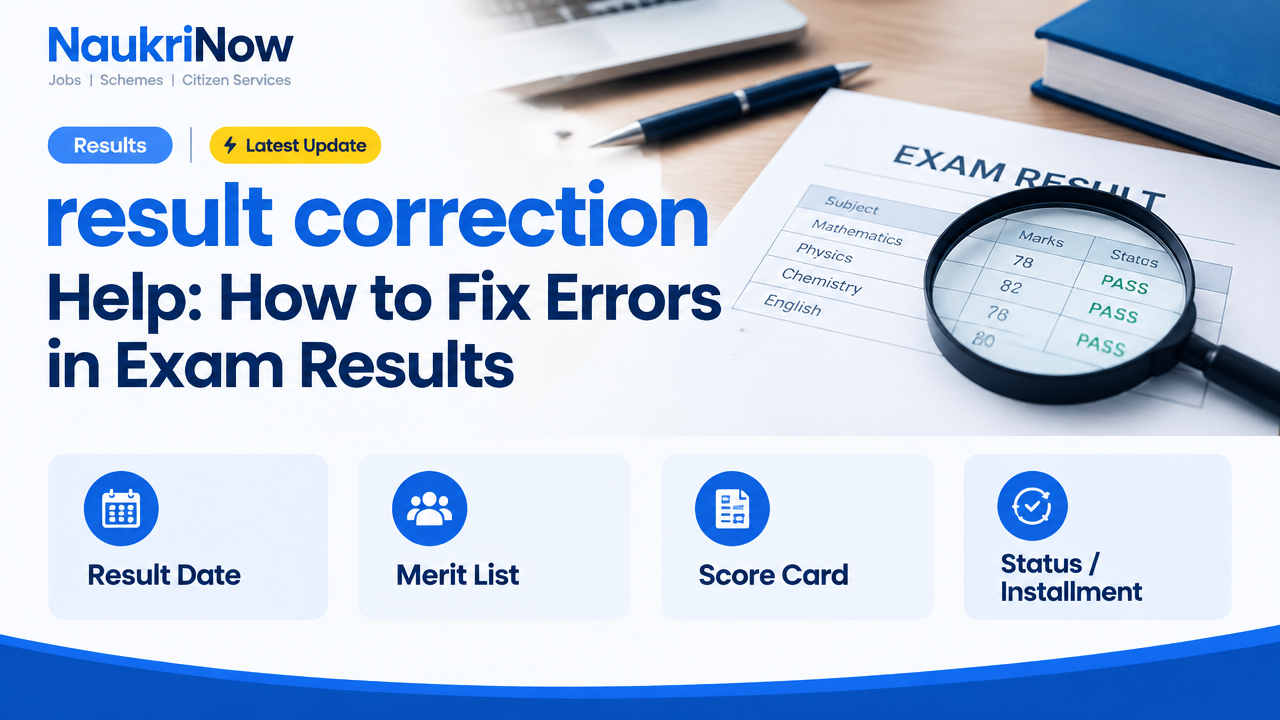
An error in an examination result can affect admission, eligibility, document verification or a job application. It may be a simple spelling mistake, a mismatch in personal details, an incorrect subject entry or a discrepancy between the result portal and the marksheet. The right way to address it depends on the examining authority and the type of error.
This guide explains how to seek a result correction in India, what evidence to gather, how to follow up and how to avoid common mistakes. It is general guidance, not a substitute for the current instructions of a school board, university, recruitment body or other examining authority. Procedures, forms, fees and deadlines can differ, so confirm them through the official website or office before acting.
What does result correction mean?
Result correction is a request to an examining authority to review or amend information recorded in an exam result or related record. It can concern personal details, the subjects shown, an examination status or marks that appear inconsistent with an official record. The authority may need to check the original answer-book data, attendance record, registration information, scanning records or other documents before deciding what to do.
A correction request is not automatically the same as rechecking, revaluation or a request for a duplicate marksheet. These are separate services in many examination systems, and the available options vary. A correction typically concerns a possible recording or processing error. Rechecking or revaluation concerns the assessment of an answer script, and may be available only under specific conditions. A duplicate document is generally requested when an existing certificate or marksheet is lost or damaged. Read the relevant official instructions to identify the correct service.
Also distinguish an error in the result record from an error in the information you originally submitted. If a name or date of birth was entered incorrectly in an application, the authority may require a different correction process and stronger supporting evidence. Do not assume that a result correction request will change the underlying registration record.
First identify the exact error
Before contacting anyone, compare the result with the records you already have. Check the online result, marksheet or provisional certificate, exam application, admit card and registration record, where available. Look at the spelling and order of your name, date of birth, roll or registration number, subject names, grades, marks, result status and any remarks. Confirm that you are viewing the correct examination session and that the document belongs to you.
Write down the issue in one precise sentence. For example: the marksheet lists a different subject from the one on the admit card, or a subject is marked absent even though the candidate attended. Avoid a broad complaint such as the result is wrong. A specific description helps the office direct your request to the right team and makes it easier to attach relevant proof.
Save evidence before a portal changes or a page becomes unavailable. Keep a clear copy of the result page or downloaded document, note the date you accessed it, and retain any official messages about the result. A screenshot can help explain a display issue, but it may not replace a certified document or official record requested by the authority.
Step-by-step: how to request a result correction
- Find the responsible authority. Use the official result notice, examination website, school or college office, or recruitment authority’s website to establish who controls the record. A school may help forward a request, while a board, university or examination body may make the final decision. Do not rely on a search result, social media post or third-party agent to identify the process.
- Check the current instructions. Look for the relevant examination, year or session and the specific service for correction, discrepancy, marksheet amendment or grievance. Read the eligibility conditions, submission method, required evidence and any stated time limit. If the instructions are unclear, ask the official office which channel applies to your case.
- Choose the correct request type. Select a personal-detail correction, result discrepancy complaint, rechecking or other service only if it matches your issue. If the portal offers several options and none clearly applies, contact the authority before submitting or paying for one.
- Prepare a concise application. State your name as recorded, examination and session, roll or registration number, the exact error and the correction you are requesting. Explain briefly how the attached records support your request. Be factual; do not include unrelated personal information or make claims you cannot support.
- Attach legible evidence. Follow the official list and file requirements. Use clear scans or photographs with all relevant text visible. Do not alter a document, crop out information that the authority needs to verify it, or send originals unless the official procedure specifically requires them.
- Submit through the authorised channel. This may be an official portal, designated office, institution or prescribed postal process. Keep a copy of the completed form and every attachment. If submitting in person, ask for an acknowledgement; if submitting online, save the confirmation page, reference number or receipt.
- Track the request and respond to queries. Use the reference number and the official tracking method, if one is provided. Check registered email, messages and the portal for requests for clarification. Reply through the channel named by the authority and keep copies of your response.
- Check the outcome carefully. If a corrected record is issued, verify every relevant field, not just the item you reported. Follow the instructions for obtaining an updated marksheet or certificate, and ask whether an earlier copy should be returned, invalidated or retained. Keep both the decision and the corrected record safely.
Documents and information to prepare
The required evidence depends on the issue and the authority’s rules. A document that supports one kind of request may not establish another. Use the official checklist first, and submit only what is requested or reasonably necessary. The following table is a preparation aid, not a universal list of mandatory documents.
| Possible item | When it may help | What to check |
|---|---|---|
| Result page or marksheet | Shows the entry you believe is incorrect | Use the document for the correct exam and session; keep a copy of the original version |
| Admit card or hall ticket | Helps confirm exam details, subjects or candidate number | Check that the name and number are readable |
| Application or registration record | May show what personal or subject details were submitted | Use an official copy or confirmation where available |
| Identity or date-of-birth evidence | May support a personal-detail correction | Submit only the evidence the authority accepts; names and dates must be clear |
| Previous academic record | May help explain a spelling or identity mismatch | Confirm whether the authority accepts it for this purpose |
| Fee receipt or submission acknowledgement | Helps prove that a request was lodged or a payment was made | Keep the transaction or reference details; do not share sensitive payment credentials |
| Written explanation | Summarises the discrepancy and requested action | Include candidate details, contact information and a clear list of attachments |
Before sending, make sure the candidate number and examination details match across the form and attachments. If documents show different spellings or dates, explain the difference rather than hoping the reviewer will infer it. If an authority asks for a certified copy, original document or a particular format, follow that instruction; do not assume an ordinary photocopy is sufficient.
Different errors need different evidence
Name, spelling or date-of-birth mismatch
Compare the result with the registration record and the identity or academic documents accepted by the examining authority. Establish whether the error first appeared in the application, admit card or result. That can help identify whether the issue belongs with the registration process or the result record. If a supporting document itself contains a different detail, explain the mismatch and ask what evidence is acceptable before submitting a request.
Incorrect marks, grade or subject status
Compare the marksheet with any official subject-wise record or result document made available to you. Check the paper or subject code as well as the subject name, because similar names can refer to different papers. If the issue concerns how an answer was assessed rather than how a result was recorded, check whether the authority provides a separate rechecking or revaluation route. Do not label an assessment disagreement as a clerical error unless the evidence points to a recording discrepancy.
Absent, withheld, incomplete or not found status
First confirm that the roll number, exam session and result link are correct. Keep evidence relevant to the concern, such as the admit card or official communication. If the result is withheld or incomplete, the authority may need to resolve a separate eligibility, attendance, document or processing issue. Ask what specific action is needed and whether your case is being treated as a result correction or another kind of query.
Online result and printed document do not match
Save copies of both versions and note which one is newer, if that can be established from the issue date or official notice. Contact the issuing authority to confirm which record is valid and whether a corrected document will be provided. Avoid presenting conflicting versions as though both are final; explain the discrepancy when submitting documents to a school, college or employer.
Common mistakes that can delay a request
- Using the wrong channel: A generic enquiry form may not reach the examination section. Follow the route specified for that exam and type of correction.
- Giving incomplete candidate details: A missing roll number, session or subject can make a case difficult to locate. Include the identifiers requested, but do not send extra sensitive data without a reason.
- Submitting unclear or inconsistent proof: Blurred scans, cut-off pages and conflicting names can prompt a request for more information. Review each file before uploading.
- Choosing revaluation for a data error, or correction for an assessment issue: These requests may have different forms and conditions. Check the description of each service.
- Assuming a request is complete without confirmation: A draft or failed upload is not necessarily a submitted case. Save the acknowledgement or reference number.
- Repeatedly filing duplicate complaints: Multiple cases can make tracking harder. Follow up on the existing reference unless the authority instructs you otherwise.
- Relying on unofficial promises: No agent, website or message can guarantee a changed result. Use only contact details and payment routes confirmed by the official authority.
- Waiting to check the final document: A correction can introduce a new typo or leave another field unresolved. Read the full document as soon as it is issued.
If there is no update or the correction is rejected
Start by checking the status using the official reference number and review any email, portal message or notice carefully. The request may be waiting for documents, routed to a different section or closed because the wrong service was selected. If the stated response period has passed, use the published follow-up route and provide the original reference number, submission date and a short summary. Avoid sending identity documents again unless requested or necessary for verification.
If the request is rejected, read the reason and any stated review or appeal option. Ask the authority to clarify what evidence or process applies if the reason is unclear. A school or college examination office may be able to explain how to route a query, but confirm who has authority to amend the record. If you still cannot resolve the issue, use the organisation’s formal grievance or escalation process, if one is provided. Keep the tone factual and retain copies of all communications.
When the result is needed for an admission, scholarship or recruitment process, contact that institution or employer promptly as well. Ask whether it can accept an official acknowledgement or pending-correction letter while the examining authority reviews the case. Do not assume it will extend a deadline or accept a provisional record; obtain its position in writing and verify the current requirements directly.
Protect your records and verify the final outcome
Keep a simple file containing the original result, supporting documents, application, acknowledgement, correspondence and final decision. Store digital copies securely and share them only through verified channels. An examination authority should not need your password, one-time password, card PIN or banking login to review a correction request. Be cautious of calls or messages demanding urgent payment to release or alter a result.
Before relying on a corrected result, confirm that the record is issued by the responsible authority and that the candidate number, examination, session, subjects, marks or grades and personal details are accurate. Check whether any associated certificate or online record also needs updating. If you have already submitted the earlier document for admission or employment, ask the receiving organisation how to replace or supplement it.
Rules can change and are not uniform across Indian boards, universities and examination bodies. Verify the latest official notice for the relevant exam, especially the permitted correction window, accepted evidence, application route, charges if any, processing expectations and appeal options. If any of these details are not published, contact the authority using contact information listed on its official website rather than relying on an old notice or an unofficial post.
Frequently Asked Questions
Can I request a correction after the result has been published?
You can ask the responsible authority whether a correction is possible, but acceptance and timing depend on its current rules and the kind of error. Check the official notice for the exam and contact the relevant office promptly. Do not assume that every error can be changed after publication.
Is result correction the same as revaluation?
No. A correction request generally concerns a possible error in recorded information or processing. Rechecking or revaluation concerns the assessment of an answer script, where that option is offered. Use the service that matches your issue and verify its conditions with the examining authority.
What if my name is wrong on both the admit card and result?
Check the application or registration record to see where the mismatch began. Contact the authority or institution responsible for the underlying candidate record and ask which correction process applies. Provide only accepted evidence and explain any differences across documents.
What should I do if I am marked absent but attended the exam?
Confirm the exam session and subject, then contact the official examination office through its stated discrepancy route. Keep your admit card and any relevant official communication. Ask whether additional evidence is required; the authority will determine what records it can use to review attendance or result processing.
Do I need to send original documents?
Not unless the current official instructions specifically require them. Start with clear copies and follow the stated submission method. If originals are requested, confirm how they should be submitted, whether they will be returned and what acknowledgement you will receive.
Can a correction request change my marks?
It may lead to a change if the authority verifies an error that affected the recorded result, but submitting a request does not guarantee a change. If you disagree with an assessment, check whether a separate review or revaluation process is available.
How can I check whether my request was submitted successfully?
Look for an official confirmation, receipt, acknowledgement or reference number. Save it and use the authority’s stated tracking method. If you did not receive confirmation, check the portal or contact the official office before filing another request.
What if a college or employer needs my result while a correction is pending?
Tell the receiving organisation that a correction request is under review and ask what interim evidence it will accept. Share an acknowledgement only if appropriate, and do not assume an extension or provisional acceptance. Confirm the organisation’s requirements in writing and continue following up with the examining authority.

Comments