Table of ContentsClick to view all sections
- What a selection list means
- Types of selection lists and related result documents
- How to find and check the correct selection list
- How to read your name, rank and status
- What to do after your name appears
- Documents and details to keep ready
- Common mistakes and how to troubleshoot problems
- What to verify in the official notice
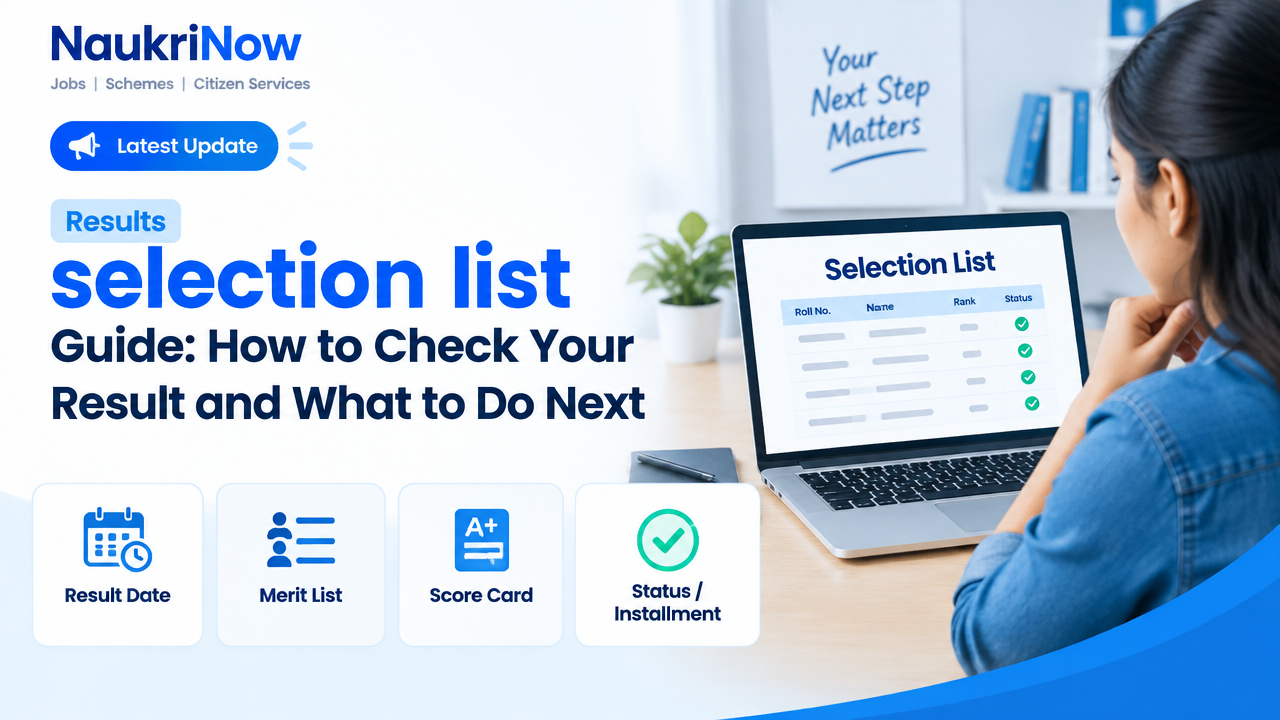
A selection list is an official record of candidates chosen at a particular stage of a recruitment, examination or admission process. Finding your name can be encouraging, but it is important to understand what the list confirms—and what it does not. In many processes, further checks, document verification, a medical examination, counselling or a final approval may follow.
This guide explains how to locate and read a selection list, what to do after it is published, which documents to prepare and how to respond if you cannot find your details. Procedures differ between organisations, so use this guide for general orientation and follow the latest official notice for the process you are taking part in.
What a selection list means
A selection list names candidates who have been chosen under the stated criteria for a particular stage. Depending on the process, selection may be based on an examination, interview, qualifying marks, a merit calculation, eligibility checks or a combination of these. Some lists show roll numbers rather than names to protect personal information or make the document easier to search.
Being listed does not always mean that an appointment, seat or admission is confirmed. A candidate may still have to meet eligibility conditions, produce original documents, complete a medical or other assessment, select a preference, or receive a separate offer. A list may also be provisional, subject to verification, or limited to a specific category, region, course or post.
Read the heading, date, stage and notes printed on the document. These details establish what the list is for. Do not assume that a result for one stage is the final outcome of the entire process.
Types of selection lists and related result documents
Organisations use different names for result documents. The terminology is not always consistent, so check the explanation in the official notice rather than relying on the document title alone.
| Document or list | What it commonly indicates | What to check next |
|---|---|---|
| Shortlist or qualified-candidate list | Candidates may proceed to a later stage, such as an interview, skill test or verification. | Stage instructions, schedule, required documents and attendance rules. |
| Merit list | Candidates are arranged according to the stated scoring or ranking method. | How rank is calculated, category information, tie-breaking notes and any cut-off details. |
| Provisional selection list | Candidates are selected subject to conditions or checks that are still pending. | Conditions, verification process and the deadline or method specified in the notice. |
| Final selection list | The organisation has published a final outcome for the stated stage or process. | Whether a separate offer, joining instruction, admission confirmation or appointment order will follow. |
| Waiting or reserve list | Additional candidates may be considered if a place becomes available, where the rules allow. | Validity, movement rules and whether candidates must take any action to remain eligible. |
A cut-off mark, score card and selection list are also different things. A cut-off is a threshold or boundary used in a particular context; a score card shows a candidate’s marks or result; a selection list identifies candidates selected or shortlisted. One document may include more than one of these details, but they should not be treated as interchangeable.
How to find and check the correct selection list
- Start with the organisation’s official website. Use the organisation named in your application or admit card. For a recruitment process, this could be the recruiting body or employer; for admission, it is generally the institution or authorised admission portal.
- Open the relevant results or recruitment section. Look for headings such as Results, Recruitment, Careers, Admissions or Notices. Site layouts vary, so use the website’s own search function if needed.
- Match the notice to your process. Check the post, course, examination, advertisement or reference number, year or cycle, and stage. Similar titles can refer to different groups of candidates.
- Open the result from the official page. A notice may link to a PDF, candidate login or separate portal. Avoid relying on a forwarded file unless you can confirm it matches the official publication.
- Read the instructions before searching. Look for notes about category-wise lists, withheld results, provisional status, spelling formats or separate lists for different stages.
- Search carefully. In a PDF, use the search function for your roll number or application number. If the list uses names, check likely spelling variations and confirm against another identifier where available.
- Save a copy for reference. Keep the downloaded notice and note the page, list title and publication information. Do not edit the document or treat a saved copy as proof of final appointment or admission.
If the website asks you to sign in, enter details only on the portal linked from the official website. Never share a password, one-time password or sensitive identity details with someone claiming they can reveal or change your result.
How to read your name, rank and status
First identify the exact column headings. A list may include a roll number, application number, rank, category, marks, post or course, and a status or remark. A number beside your name may be a rank, score or serial number; do not assume which one without checking the heading or accompanying notice.
Compare your result with the correct category, region, discipline or preference list, if the process publishes separate groups. A candidate may appear in more than one list, or a list may show only candidates called to the next stage. Check the footnotes for abbreviations such as provisional, withheld, pending or subject to verification. The organisation’s notice should explain what these terms mean in that process.
If the selection depends on a merit position, remember that a rank alone may not explain your outcome. Rules on eligibility, category allocation, preferences, tie-breaking and available seats or posts can affect how a list is prepared. These rules vary; do not infer them from another organisation’s process or from an unofficial summary.
Where marks or a cut-off are published, compare like with like: the same stage, category, post or course, and any applicable scoring method. A mark shown for one stage may not be the final combined score. If something appears inconsistent, first check the notice and any corrigendum before contacting the organisation.
What to do after your name appears
Take the next step promptly, but do not make travel, resignation, payment or other major decisions based only on a name appearing in a list. Follow the instructions attached to that specific result.
- Read every linked notice. The list may be accompanied by separate instructions for verification, counselling, an interview, a skill test, medical assessment or joining.
- Check your individual status. If the organisation provides a candidate login, review it for messages, document requirements or a call letter. A public list may not contain all personal instructions.
- Record any action dates and method. Note the reporting window, portal process or contact procedure stated in the notice. Do not rely on dates circulated in social media posts.
- Prepare documents early. Compare your records with the eligibility conditions and the exact list of documents requested. Resolve obvious name or date discrepancies through the proper issuing authority where possible.
- Keep proof of compliance. Save acknowledgements, submitted forms, payment receipts where applicable, and copies of correspondence. Follow the specified format and submission channel.
- Wait for the next formal communication. A shortlist or provisional result may be followed by a separate call letter or offer. Check the official website and registered communication channels regularly.
If you are not selected at this stage, keep a copy of the result and look for information about score cards, answer keys, objections or review procedures, if those are offered. A selection list by itself may not explain individual marks or the reason a candidate was not included.
Documents and details to keep ready
The required documents depend on the process. The list below is a preparation checklist, not a claim that every item is required. The official notice takes precedence, and an organisation may ask for original documents, copies, uploads or a particular format.
- Application records: application form or confirmation page, application or registration number, admit card and relevant call letters.
- Identity and date-of-birth proof: the documents accepted by the organisation for identity and age verification.
- Education records: mark sheets, certificates, degree or provisional certificate, and any required equivalence or recognition documents.
- Eligibility evidence: work experience, professional registration, licence, skills or other qualifications where the notice requires them.
- Category or reservation documents: only where applicable and in the format, issuing authority and validity conditions specified by the current notice.
- Photographs and signatures: recent images or signature files if the process requests them, paying attention to size, file type and other technical requirements.
- Other declarations: undertakings, medical forms or preference details only when specifically instructed.
Check that names, dates and other details are consistent across your application and supporting records. If there is a genuine discrepancy, do not alter a certificate or submit an explanation in place of a required document without permission. Ask the relevant issuing authority or organisation what correction or supporting evidence it accepts.
Common mistakes and how to troubleshoot problems
My name or roll number is not appearing
Confirm that you opened the correct list and stage. Search using the identifier requested by the document, remove accidental spaces and check whether the PDF has more than one section or category. If names are used, try reasonable spelling variations, but confirm any match against a second detail. A missing entry does not by itself explain why you were not listed; check whether the organisation has published a separate status or score-card facility.
The PDF will not open or the website is unavailable
Try downloading the file rather than previewing it in the browser, use an updated PDF reader, or return to the official page later if traffic is high. Check whether the page links to an alternate official portal. Avoid unknown download sites, browser extensions or apps that ask for unnecessary access to your device or personal information.
My name, category or other detail looks incorrect
Read the list’s notes and compare the entry with your application record. Keep a screenshot or saved copy for your reference, but do not post personal information publicly. Use only the correction or grievance channel described in the official notice, and keep the acknowledgement. A correction may not be possible after a stated stage, so act within the process and timing specified by the organisation.
I have been shortlisted but cannot find a call letter
Check the candidate login, registered email and any official notice for instructions on how call letters are issued. Confirm that your contact details and login credentials are correct. If the stated communication period has passed, use the official contact method in the notice and provide your application or roll number without sharing passwords or one-time passwords.
I found conflicting information online
Give priority to the latest notice or corrigendum on the responsible organisation’s website. A news report or coaching-site summary can help you understand a process, but it may be incomplete or based on an earlier update. Check the publication date, reference number and exact wording before acting.
What to verify in the official notice
Before treating a selection list as an instruction to act, verify these points in the notice and any later updates:
- Whether the list is provisional, final, stage-specific or subject to further checks.
- Which post, course, examination, category, region or candidate group it covers.
- How rank, marks, cut-offs, tie-breaks or preferences are described, if relevant.
- What candidates must do next, through which channel, and by when.
- Which original documents, copies, formats or declarations are required.
- Whether a separate call letter, offer, admission confirmation or appointment order will follow.
- How to report a discrepancy, seek clarification or raise a permitted objection.
- Whether a corrigendum, revised list or later notice has changed the instructions.
Rules and procedures are not universal. Do not assume that a waiting list works the same way everywhere, that a particular category document is accepted in every process, or that selection guarantees appointment or admission. If a detail is unclear, use the official clarification channel and retain a copy of the response.
Frequently Asked Questions
Is a selection list the same as a final result?
Not necessarily. It may show candidates shortlisted or provisionally selected for one stage. Check the title, notes and accompanying notice to find out whether further verification, assessment or approval remains.
Does appearing on the list guarantee a job or admission?
No general guarantee follows from the list alone. Some processes require document checks, medical or other assessments, preference confirmation or a separate offer. Follow the conditions stated by the responsible organisation.
How can I search a selection-list PDF?
Download the official PDF and use the search function for the roll number or application number specified in the list. If names are shown, search carefully for spelling variations and confirm a match using another listed detail.
What is the difference between a merit list and a waiting list?
A merit list generally presents candidates according to a stated ranking or scoring method. A waiting or reserve list may identify additional candidates who could be considered if places become available, subject to that process’s rules. Check the notice for the actual meaning and validity.
What should I do if my name is misspelled?
Compare the entry with your application and supporting records, then follow the official correction or grievance procedure. Keep evidence and an acknowledgement. Do not change the published file or share sensitive records in public comments.
Can I challenge a selection list?
Only use an objection, appeal or grievance route if the organisation provides one. Check the notice for eligibility, procedure and timing. A general email or an informal social-media message may not count as a valid submission.
Where can I find the most reliable selection list?
Start at the official website of the recruiting body, employer, examination authority or institution responsible for the process. Follow links to any authorised portal and confirm that the list matches your advertisement, course or examination reference.
Should I pay someone to check or secure my selection?
No one should be able to guarantee a place by changing a result or influencing a list. Do not pay an intermediary or share passwords and one-time passwords. Use official portals and report suspected fraud through appropriate official channels.

Comments