Table of ContentsClick to view all sections
- What does “state-wise scheme” mean?
- Common scheme categories and where to start
- How to find relevant schemes in your state
- Step-by-step: checking eligibility and applying
- Documents and details to prepare
- Common mistakes that can delay or derail an application
- Troubleshooting application problems
- What to verify officially before you act
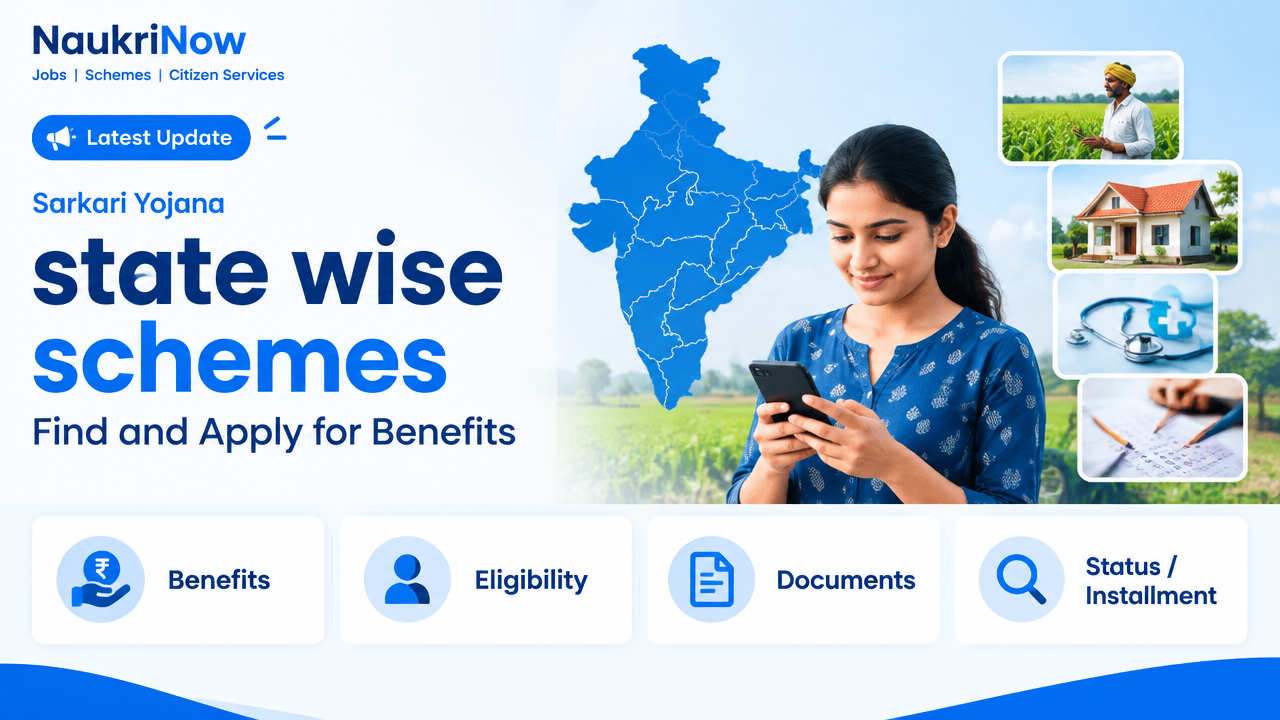
Government schemes can offer support with education, healthcare, housing, livelihoods, agriculture and other needs. Some are run by the Union government, some by state governments, and some are delivered jointly. The challenge is that eligibility, benefits, documents and application routes can differ across states and sometimes between districts. A scheme with a similar name in two states may not have the same rules.
This state wise scheme guide explains how to search for relevant programmes, assess whether you may qualify and apply through an appropriate official channel. It is an evergreen guide, not a live list of open applications. Always confirm the latest conditions with the department responsible for the scheme before submitting personal information or relying on a benefit.
What does “state-wise scheme” mean?
A state-wise scheme is a programme whose availability or administration is tied to a particular state or Union Territory. It may be funded by that government, delivered locally under a broader national programme, or offered alongside central schemes. The state or local department may set application procedures, identify eligible groups and manage verification.
Residence is often an important factor, but it is not the only one. A programme may be intended for a particular age group, income category, occupation, educational level, community, disability status or life circumstance. Some schemes support individuals; others provide services through schools, health facilities, local bodies or registered organisations. In some cases, an application is not required because an eligible person is identified through an existing government record. Do not assume that every benefit uses the same application method.
When comparing information, identify the exact state, scheme name, responsible department and intended applicant group. A search result, social media post or old article can help you discover a scheme, but it is not proof that its rules remain current or that applications are open.
Common scheme categories and where to start
Begin with the need you want to address rather than searching for a benefit amount. The table below can help you find the likely government department or service to check. It is a search aid, not a guarantee that a particular scheme exists in every state.
| Area of support | Possible department or service | What to check |
|---|---|---|
| School, college or skills support | Education, higher education, technical education or skill development department | Eligible course or institution, student category, academic conditions and application route |
| Health and disability support | Health, social justice, disability or medical services department | Covered services, approved facilities, eligibility documents and referral requirements |
| Farming and allied activities | Agriculture, horticulture, animal husbandry, fisheries or local rural offices | Eligible activity, land or registration conditions, permitted inputs and inspection process |
| Jobs, self-employment and enterprise | Employment, labour, industries, skill development or livelihood mission | Training or business criteria, registration steps, selection method and any repayment terms |
| Housing, water and local infrastructure | Housing, rural development, urban development, municipal or panchayat office | Area coverage, household criteria, survey or beneficiary-list procedure and local verification |
| Food and family assistance | Food and civil supplies, women and child development or social welfare department | Household or individual eligibility, linked records and the responsible local office |
These categories overlap. A rural livelihood programme, for example, may be managed by one department and delivered through local institutions. If you are unsure where to start, contact the district administration or a relevant local government office and ask which department owns the scheme. Ask for the scheme’s official name and the latest instructions in writing or on an official website.
How to find relevant schemes in your state
- Set your location accurately. Note your state or Union Territory and, where relevant, your district, block, municipality or village. Some programmes operate only in selected areas or use local verification.
- Describe the need clearly. For example, decide whether you are looking for student assistance, a health service, farm support, a training opportunity or help for an older family member. This makes searches more useful than entering a broad phrase such as “government money”.
- Search official government sources first. Look for a state government portal, the responsible department’s website, a district administration page or an official service-delivery portal. Government pages commonly identify the scheme, eligibility and application channel. Check the web address and the department name; a logo alone does not prove a site is official.
- Use other sources as leads, not final authority. News reports, public information sites and community organisations may help you discover a programme or understand its purpose. Cross-check every important detail against the department’s current notice, scheme guidelines or authorised office.
- Check whether the information is current. Look for a publication or revision date, a current application notice, updated forms and references to the responsible office. If you cannot tell whether a page is current, ask the department before acting.
- Compare central and state options. A person may be eligible for more than one service, but schemes can have rules about overlapping assistance. Ask the implementing department whether benefits can be combined; do not assume that they can or cannot.
Search phrases can include the state name, the likely department and the type of support, such as “education assistance” or “farmer support”. Treat search-engine summaries and sponsored results cautiously. Open the underlying government source and read the full conditions.
Step-by-step: checking eligibility and applying
1. Read the scheme instructions from start to finish
Find the official guidelines, current notice or application instructions. Confirm the scheme’s purpose, intended beneficiaries, geographic coverage, conditions, application channel and any selection or verification process. A short summary may leave out exclusions or special conditions.
2. Check each eligibility condition against your circumstances
Make a simple checklist from the official criteria. Review residence, age, household or income conditions, occupation, course or institution, land or business details and any other requirement that applies. Some conditions may need evidence from a specified authority. If a term is unclear, ask the department how it is interpreted rather than relying on assumptions or advice from an unofficial agent.
3. Confirm how applications are accepted
The route may be an online portal, a department office, a local body, a school or college, a health facility, a service centre, or another authorised channel. The process can vary by scheme. Verify whether you must apply yourself, whether an institution submits the form, whether in-person verification is needed and whether an acknowledgement will be issued.
4. Prepare and review the application
Use the form or portal identified by the responsible department. Enter your name, address and other details exactly as requested and consistent with the supporting records. Check spellings, dates, account details and document numbers before submitting. Upload clear, complete scans in the accepted format if the process is online. Do not leave required fields blank or attach extra sensitive documents unless the instructions request them.
5. Keep proof and respond to follow-up requests
Save the acknowledgement, application number, receipt or a copy of the submitted form. Note which office or portal received it and how the department says to check progress. If officials ask for clarification or further evidence, confirm the request is genuine and respond through the stated channel. Retain copies of documents you hand in, and ask for a receipt where one is available.
6. Check the outcome through the official route
Follow the scheme’s stated process to check whether the application is under review, approved, returned for correction or not accepted. An online status is not always the final decision, and an application acknowledgement does not mean a benefit has been approved. If the result is unclear, contact the department or office named in the instructions and keep a record of your enquiry.
Documents and details to prepare
There is no universal document set for state wise schemes. Requirements depend on the programme and applicant. Use the official checklist for the scheme, and submit only what it asks for. The following items are commonly requested in some processes, but they are not required in every case:
- Identity or age evidence: the specific document accepted by the scheme. Aadhaar may be requested in some processes, but do not assume it is compulsory for every scheme; check the official instructions.
- Residence evidence: a document or certificate accepted to establish the required state, district or local residence.
- Income or household information: an income certificate, ration-related record or other evidence only where the scheme requires it.
- Category or status certificate: for example, a disability, caste, widowhood or other certificate when relevant to the stated criteria.
- Education or occupation records: enrolment details, marksheets, institution information, employment details, farmer registration or business documents where applicable.
- Bank details: account information or proof in the form specified by the scheme, if payment through a bank is part of the process.
- Photograph, signature and contact details: in the size, format or method requested by the application channel.
Before applying, check that names and dates match across records, certificates are valid where a validity period applies, and scans are readable. If records differ, ask the issuing authority or implementing department how to correct the mismatch. Never alter a certificate or provide information you know to be inaccurate.
Common mistakes that can delay or derail an application
- Using an outdated guide. A saved article or old form may describe a previous process. Confirm the current instructions with the scheme-owning department.
- Confusing a similar scheme with the right one. Similar names can refer to different programmes, beneficiary groups or application routes. Match the exact name and department.
- Assuming residence alone proves eligibility. A state connection may be necessary but not sufficient. Read every condition, including exclusions and any local-area limits.
- Submitting incomplete or inconsistent details. A missing attachment, incorrect account number or name mismatch can create verification problems. Review the form against your records before submitting.
- Applying through an unauthorised website or person. Search results can lead to lookalike pages or paid intermediaries. Use the channel named by the department and ask whether any service charge is officially prescribed.
- Sharing sensitive information casually. Do not send one-time passwords, PINs or banking passwords to anyone. Share identity or financial documents only through a verified application process or authorised office.
- Expecting automatic approval or a guaranteed payment. Meeting apparent criteria does not always mean a place or benefit is assured. Verification, selection, available programme capacity or other rules may apply.
- Failing to keep a record. Without an acknowledgement or copy, it can be harder to follow up. Save the submission details and any official communication.
Troubleshooting application problems
If a portal does not load, a form will not submit or an upload fails, first check the official instructions for supported file types, file size and required fields. Try a reliable connection and keep a screenshot of any error that does not expose private information. Avoid repeatedly submitting the same form if that could create duplicate applications; ask the department how to proceed.
If you cannot find your application status, use the acknowledgement details and the status method described by the scheme. If an application is shown as incomplete, identify the exact missing item and ask whether it can be corrected online or must be provided to an office. If there is no clear response, contact the implementing office or district department using contact details published on an official government source. Keep the date and summary of each follow-up.
If your application is rejected, check whether the department has provided a reason and whether the scheme offers a correction, review or appeal process. Follow only the route and time limit stated in the current official instructions. Do not pay someone who promises to reverse a decision or guarantee approval.
What to verify officially before you act
Before sharing documents or making plans based on a scheme, confirm these points with the responsible department or authorised service channel:
- The exact scheme name and the department responsible for it.
- Whether it applies in your state and district, and whether your applicant group is covered.
- The current eligibility conditions, exclusions and any rules on receiving overlapping support.
- The official application route, required documents and whether in-person verification is involved.
- Any current application period, processing steps, selection method or service charge stated by the department.
- How to obtain an acknowledgement, check progress, correct an application or ask for a review.
- Whether the page, form, notice and contact details are published by a government department or an authorised implementing body.
Rules and delivery arrangements can change. If an official page conflicts with an older notice or a third-party summary, ask the responsible department which instruction currently applies. Keep a copy or note of the guidance you relied on.
Frequently Asked Questions
How do I find government schemes available in my state?
Start with your state government portal or the department connected to your need, then check district administration and authorised local service channels. Verify each scheme’s current conditions with the department responsible for it.
Are state schemes different from central government schemes?
Yes. They may have different administrators, eligibility criteria and application routes. Some programmes are delivered jointly, so check the official instructions to see which rules apply in your location.
Can I apply for more than one scheme?
Possibly, but some programmes restrict overlapping assistance or consider other benefits during eligibility checks. Ask each scheme’s implementing department before applying or accepting support.
Is Aadhaar required for every state scheme?
No single document rule applies to all schemes. Aadhaar may be requested in some processes, while others may accept different evidence. Follow the current official document list and ask the department if you do not have a requested document.
Can I apply through a Common Service Centre or another service centre?
Only if that centre is an authorised channel for the particular scheme. Confirm this through the department or official scheme instructions before sharing documents or paying any stated service charge.
Does submitting an application mean I will receive the benefit?
No. Submission is not the same as approval. The department may verify details, apply selection conditions or request further information. Check the official process for how decisions are made and communicated.
What should I do if my details do not match across documents?
Do not edit a document yourself or submit conflicting information without explanation. Ask the issuing authority how to correct the record and ask the scheme department what evidence it accepts while the correction is being made.
Where should I ask for help if I am unsure about a rule?
Contact the department named in the latest official scheme instructions, or ask the relevant district or local government office to direct you to the implementing authority. Use contact details published by a government source, not an unverified social media post.
Comments