Table of ContentsClick to view all sections
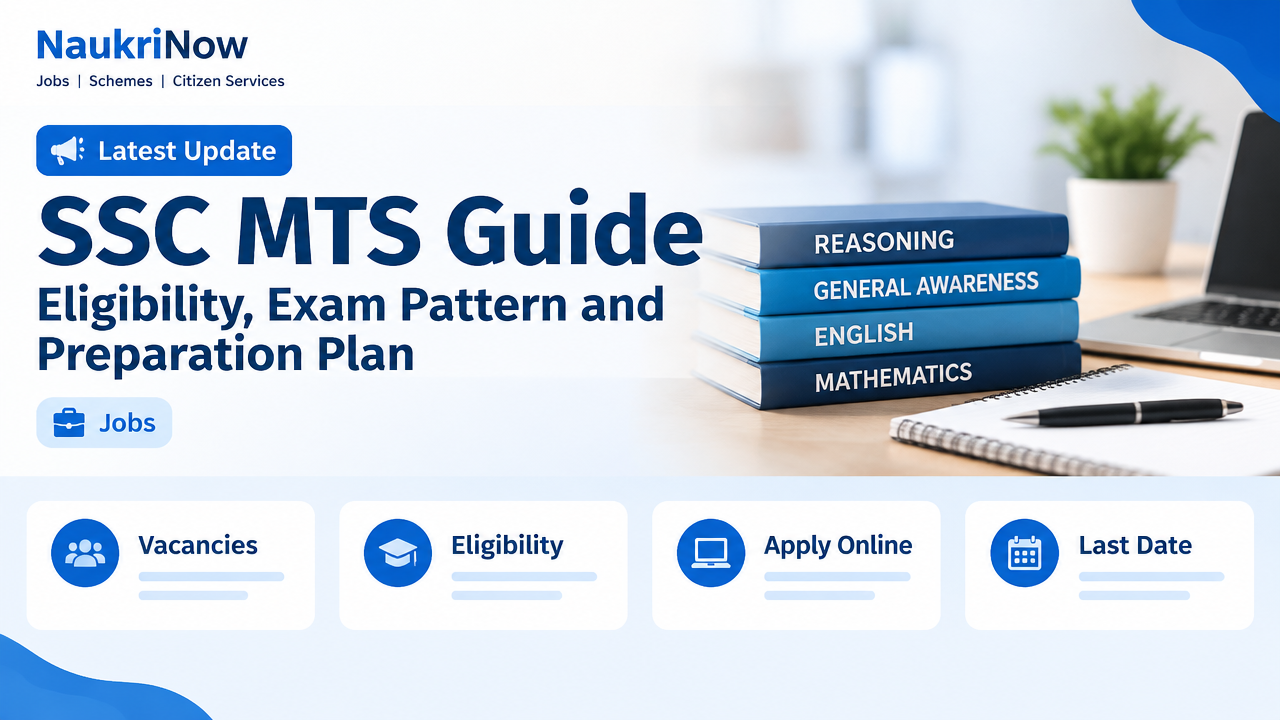
SSC MTS Guide: Eligibility, Exam Pattern and Preparation Plan
The Staff Selection Commission (SSC) Multi-Tasking Staff examination is a recruitment route for non-technical support posts in central government departments and offices. It can suit candidates looking for work that supports the day-to-day running of an office, but the post, department and working conditions can differ. A good plan starts with the official notification—not assumptions based on an older exam cycle.
This SSC MTS Guide explains how to check the rules, understand the broad selection process and prepare with a practical routine. Eligibility conditions, post details, exam structure, dates and other requirements can change between recruitment cycles. Treat the latest notification on the official SSC website, ssc.gov.in, as the final authority.
SSC MTS Guide: What does an MTS post involve?
Multi-Tasking Staff provide operational and office support. Depending on the department and assignment, duties may involve moving files or records, assisting with routine office tasks, delivering documents within an office, or other support work. The exact duties are not identical across all departments, and a candidate should not assume that every post has the same day-to-day responsibilities.
SSC MTS recruitment notices may also include Havaldar posts. Havaldar is a separate post with its own requirements and may involve physical tests. Do not treat the MTS and Havaldar processes as interchangeable: check the post-specific eligibility and selection stages in the notice before selecting preferences.
Check eligibility before you prepare
Eligibility is set out in the recruitment notification. Read it carefully before spending time or money on an application. The conditions below are areas to verify, not a substitute for the rules in a particular cycle.
- Educational qualification: Check the minimum qualification, the date by which it must have been obtained and which certificates or equivalents are accepted. MTS recruitment has commonly required a secondary-school qualification, but rely on the current notice for the precise wording and cut-off date.
- Age limit: Read the age range applicable to each post and the date used to calculate age. Do not use an age range from an older advertisement as proof that you qualify now.
- Age relaxation: Relaxations depend on the applicable category and rules. Check whether you qualify, which certificate or proof is required, and whether it must be available by a specified date.
- Nationality and other conditions: Confirm all nationality, identification and any other eligibility clauses that apply to the post.
- Post-specific requirements: If applying for a post with physical standards or tests, check those requirements separately. A written-exam preparation plan does not establish physical eligibility.
If any condition is unclear, check the detailed notice and its instructions or corrigenda on the SSC website. Avoid relying on coaching advertisements, social-media posts or informal interpretations for a decision that affects your eligibility.
Understand the selection process
SSC MTS recruitment has used a computer-based examination. Recent cycles have assessed numerical ability, reasoning, general awareness and English language skills, often organised into separate exam sessions. The structure, question distribution, marks, time limits, language options and marking rules are details to confirm in the current notification. Do not build a strategy around an old pattern without checking it first.
For MTS posts, selection is generally based on the prescribed computer-based examination and the recruitment rules. Havaldar candidates may also need to qualify in physical tests, as specified in the notice. Later steps can include document verification and checks conducted by the relevant authorities or department. Clearing an exam stage does not remove the need to satisfy every eligibility condition.
The Commission’s notice explains how scores, qualifying requirements, preferences and vacancies are handled for that cycle. Read the rules on post preferences and allocation before submitting choices. A preferred post is not guaranteed simply because it appears on an application.
How to prepare for the SSC MTS exam
A steady routine is more useful than collecting multiple books or attempting mock tests without reviewing them. Start by identifying what the current syllabus covers, then build a study plan around your available time and weakest areas.
- Read the latest notification and syllabus. Note the subjects, session structure, question format and marking rules. Make a short checklist of the topics you need to study.
- Take a diagnostic test. Try a small set of questions or one suitable practice test under timed conditions. Record where you lose marks: a knowledge gap, a calculation error, a misread question or slow working.
- Build fundamentals first. For numerical topics, practise arithmetic and basic calculations before moving to mixed questions. For reasoning, learn the logic behind common question types. For English, work on comprehension, vocabulary and grammar in context. For general awareness, revise from reliable material and review regularly.
- Practise a little every day. Short, focused sessions across subjects help maintain balance. If you have limited time, give extra attention to your weakest areas while keeping familiar topics in rotation.
- Review every practice set. Write down repeated errors and revisit the underlying concept. Merely counting correct answers will not show whether your accuracy or speed is improving.
- Add timed practice gradually. Once you understand the question types, practise within the time limits specified for the current exam. Use the official pattern as your guide.
- Keep a revision and application buffer. Reserve time for revision, mock-test review and application checks. Do not leave account details, documents or exam-day planning until the last moment.
What to focus on by subject
- Numerical ability: Practise calculations carefully and show working when learning a method. Build confidence with core arithmetic, then use mixed exercises to improve question selection and pace.
- Reasoning: Learn to identify the rule or relationship in each problem. After solving, check whether a quicker, equally reliable method exists, but do not sacrifice accuracy for speed.
- English: Read short passages and practise understanding meaning from context. Review grammar rules through examples and note vocabulary you encounter repeatedly rather than memorising long lists without usage.
- General awareness: Use a dependable study source and make concise revision notes. Separate facts you know from details that need checking; for time-sensitive topics, consult current and credible information rather than an outdated compilation.
Application checklist
Use the official SSC portal and follow the instructions for the relevant recruitment cycle. A careful application can prevent avoidable problems later.
- Confirm that the notification is for the recruitment cycle and post you intend to apply for.
- Check your name, date of birth and other personal details against the documents you will use later.
- Use an email address and mobile number you can access, and keep login and application information secure.
- Follow the current specifications for photographs, signatures, certificates and other uploads. Do not assume that an image or document accepted in another cycle will meet the present requirements.
- Read the instructions on post choices, category details and any fee or exemption conditions in the notice. Verify current amounts and rules there rather than relying on third-party pages.
- Review the completed form before final submission. Save or print the confirmation and application details for your own records.
- Check the official portal for notices, corrections, admit-card information, answer keys and results. Keep checking through the recruitment process.
Common mistakes to avoid
- Using an old notification as the rulebook: Even familiar parts of the exam can change. Start with the current notice and check any later official updates.
- Confusing MTS with Havaldar: Their post requirements and selection stages can differ. Read the details for the post you are applying for.
- Assuming a qualification or age rule: Check the required qualification date, age calculation date and applicable relaxation instead of relying on hearsay.
- Preparing without checking the syllabus: Broad study can leave important topics uncovered. Match your study list to the current syllabus.
- Taking mocks without analysing them: A score alone does not reveal why you lost marks. Review wrong answers, guesses and questions you left unfinished.
- Making a rushed application: Incorrect personal details, unsuitable uploads or missed instructions can create problems. Check the form before submitting it.
- Trusting unofficial claims about dates or results: Use SSC announcements for current recruitment information. Treat forwarded messages and unverified posts with caution.
Useful examples for planning
If you are still waiting for your final school result: Do not assume you will qualify because results are expected soon. Check the notification’s qualification requirement and the date by which the qualification must be held. If you cannot meet that condition, plan for a later cycle rather than submitting inaccurate details.
If you are eligible for more than one post: Compare the post descriptions and any additional requirements before choosing preferences. Rank them honestly according to your suitability and interest, while remembering that allocation follows the rules and availability stated for that recruitment.
If a mock-test score is low: Sort mistakes into categories. For example, if most errors come from arithmetic, spend the next study sessions rebuilding those basics; if you know the material but run out of time, practise selecting and completing questions efficiently. Retest after reviewing rather than repeating the same paper immediately.
Frequently Asked Questions
1. What is the SSC MTS examination for?
It is an SSC recruitment examination for Multi-Tasking Staff posts in central government departments and offices. Post duties and conditions depend on the department and the recruitment notice.
2. Is Havaldar the same as MTS?
No. Havaldar is a distinct post that may be advertised alongside MTS. It can have additional eligibility conditions and physical tests. Check the notice for the post-specific process.
3. What qualification is needed for SSC MTS?
Recent recruitment cycles have commonly required a secondary-school qualification, but the exact qualification and the date by which it must be obtained are controlled by the current notification. Confirm both before applying.
4. What subjects should I study?
Recent exam patterns have covered numerical ability, reasoning, general awareness and English. Verify the current syllabus, session arrangement and marking rules on the official SSC website before planning your study.
5. Where can I check application dates and fees?
Check the latest SSC notification and official application portal. Dates, fee rules and exemptions can change, so do not rely on an old notice or an unofficial summary.
6. Does qualifying in the computer-based exam guarantee appointment?
No. Candidates must meet the full eligibility and selection requirements, and any applicable verification or post-specific tests. Final selection and allocation follow the rules set out for that recruitment cycle.
7. How should I know whether an SSC MTS update is genuine?
Look for it on the official SSC website or the official portal linked from it. Check the notice date and recruitment cycle, and look for later corrections or updates before acting on the information.
Conclusion
Prepare for SSC MTS by combining careful rule-checking with consistent practice. Verify your eligibility and the current selection process first, study the subjects listed in the official syllabus, and use practice tests to find and correct specific weaknesses. Keep your application details accurate and follow recruitment updates directly through SSC. That approach will help you make informed decisions without relying on outdated dates, rules or advice.
Comments