Table of ContentsClick to view all sections
- PM Awas Yojana 2026: PMAY-G MIS report: what it shows
- What you can do with this dashboard
- Before you start
- How to check your name: step by step
- Moving around: path, Back and Start over
- Report details: understanding common PMAY-G terms
- PMAY-G instalment history and schedule
- Search tips
- Save, print or share the list
- Using the dashboard on your mobile
- Name not in the list? Try this
- Advantages and limitations of MIS reports
- Common problems and quick fixes
- Conclusion
- Important links
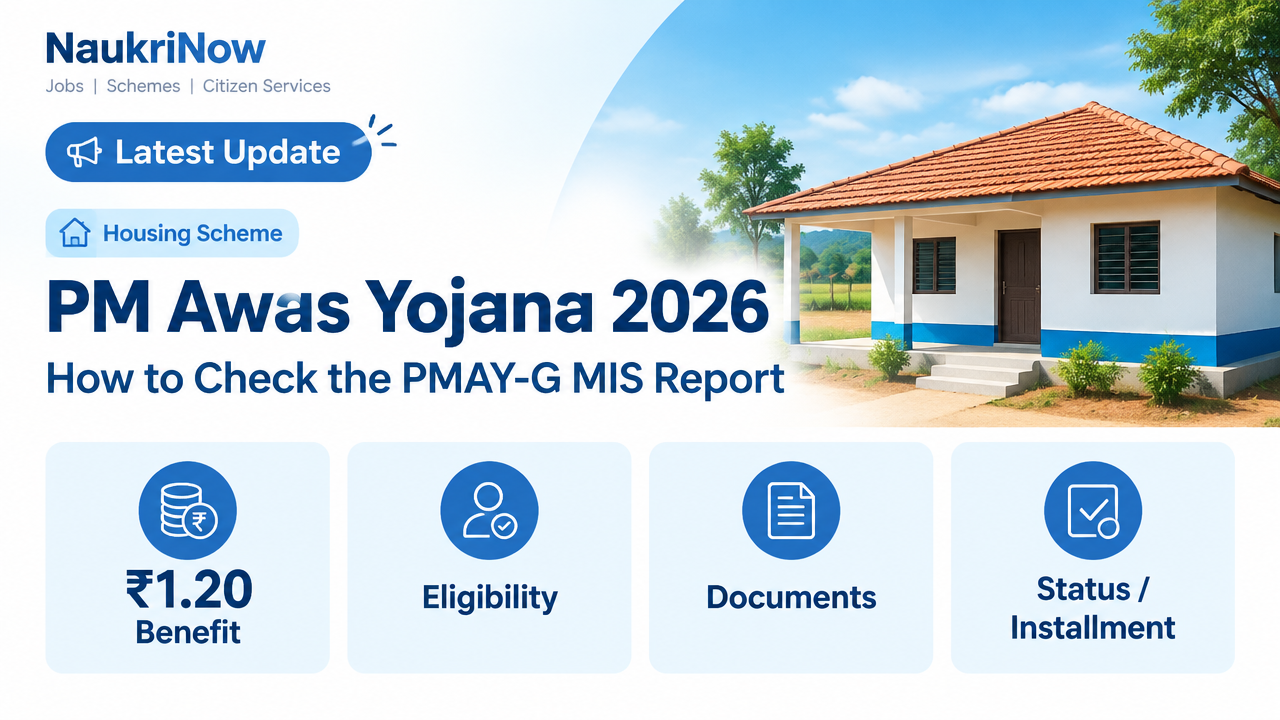
Searches for PM Awas Yojana 2026 may lead to the PMAY-G Management Information System (MIS) report. The report can help you review rural housing progress and look for beneficiary records by year and location. It is a way to inspect information recorded in the system—not an application form, an eligibility decision or a guarantee of payment. This guide explains how to navigate the dashboard, what common status labels generally mean, how to search carefully and what to do if you cannot find a name.
PM Awas Yojana 2026: PMAY-G MIS report: what it shows
Pradhan Mantri Awaas Yojana–Gramin (PMAY-G) is a rural housing scheme run by the Ministry of Rural Development, Government of India. The scheme began in 2016, replacing Indira Awaas Yojana. Its MIS contains reports on targets, registrations, sanctions, construction progress and completion. Which reports, fields and filters are available can vary by year, so the exact dashboard may not look the same each time you visit.
A report may present summary figures for a selected area or let you move through location levels to a more detailed list. Some pages show figures as links that can be opened to view the next level; others use filters or a different layout. Follow the controls displayed on the particular report rather than assuming every page follows an identical path.
| Item | Information |
|---|---|
| Scheme | Pradhan Mantri Awaas Yojana–Gramin (PMAY-G) |
| Responsible ministry | Ministry of Rural Development, Government of India |
| Housing assistance stated in the scheme information | ₹1.20 lakh in plain areas and ₹1.30 lakh in hilly, difficult and North-Eastern areas |
| Other support described | ₹12,000 for a toilet under Swachh Bharat Mission (Gramin), and 90 days of MGNREGA work (95 days in hilly and difficult areas) for house construction |
| Current phase stated in the scheme information | Two crore additional houses for 2024–25 to 2028–29 |
Assistance and phase details are subject to official scheme rules and updates. Confirm current information through the official PMAY-G portal or your local administration. These scheme details provide context; they do not establish whether a particular household qualifies or what amount applies to its record.
What you can do with this dashboard
- Review progress figures for a state or smaller area, such as a district, block, gram panchayat or village, if the selected report provides that level of detail.
- Look for beneficiary records and house progress, including whether a record is shown as registered, sanctioned or completed.
- Check target, geo-tagging and instalment fields when they are available for the chosen report and period.
- Use recorded information to prepare a more specific question for the Gram Panchayat or Block Development Office.
- Save or print a report using options offered on the page or by your browser, where available.
A dashboard figure is not, by itself, proof of eligibility, a sanction letter or confirmation that a payment has reached a bank account. If a result needs an official explanation or correction, ask the relevant local office to verify the underlying record.
Before you start
Having the right location and year to hand can make a search easier. For a PM Awas Yojana 2026 search, gather whatever information you already know; you do not need to guess or fill in details that are unknown.
- Note the beneficiary’s state, district, block, gram panchayat and village. A village may be listed within a gram panchayat, so the administrative label matters.
- If known, keep the financial year of sanction and the PMAY-G registration number handy. The registration number may be on the sanction letter.
- Write down the beneficiary’s name as it may appear in an official record. If useful, also note the father’s or husband’s name, but search those details only if the report supports them.
- Be ready to try English and Hindi spellings or common variations. A name may be entered differently from the way it is usually written locally.
- Use the official portal for scheme information. Dashboard layouts and available filters can change, so follow the options that are actually displayed.
How to check your name: step by step
The usual approach is to open a relevant report, choose a year and scheme if prompted, and then narrow the results by location. Some reports use a linked sequence of totals rather than separate drop-down menus. The steps below describe the general process; labels and order can differ between reports.
Step 1: Open the dashboard
Visit the official PMAY-G website at pmayg.nic.in and look for the relevant MIS or report option. Use the official site rather than relying on a forwarded screenshot or an unofficial page for a status decision. Menus can change, so read the page headings and select the report that matches the information you want to check.
Step 2: Choose the financial year
If the report asks for a financial year, select the one that may apply to the beneficiary’s record. If you do not know the year, review the available years one at a time. A record may not appear in the year you first expect, so a single unsuccessful search should not be treated as a final answer. Note which year you checked so you can explain your search if you ask the local office for help.
Step 3: Choose the scheme
If a scheme selector appears, choose Pradhan Mantri Awaas Yojana–Gramin (PMAY-G) for a rural housing record. Do not confuse the rural PMAY-G report with a PMAY-Urban resource. The official PMAY-Urban portal is pmaymis.gov.in; the applicable scheme and report depend on the record you are trying to find.
Step 4: Choose your state and tap Submit
Select the state shown in the beneficiary’s local records. If the page has a Submit, Continue or similar control, use it and give the report time to load before making the next selection. Some later filters may only appear after an earlier choice has been submitted. If nothing happens, check whether a required selection is still blank and try again once the current page has finished responding.
Step 5: Tap names and numbers to go deeper
Continue through the relevant location levels, such as district, block, gram panchayat and village, where the report provides them. On some pages, a total or location name may be clickable and open a more detailed table. On others, you may need to choose the next location from a filter. Make sure the village and panchayat correspond to the beneficiary’s area; nearby villages can be listed under the same panchayat, and similar names can be easy to confuse.
Step 6: Find your name
Search within the correct beneficiary list if it has a search box. Start with a short part of the name, then try the full name or another supported field. If you have a PMAY-G registration number, use it where the report permits. A search box may filter only the rows currently displayed, so first confirm that you are in the right year and location. If no search box is offered, use the table’s available navigation or review the entries shown.
Step 7: Save or share
If you need a copy, use the report’s own download, print or export controls when available. A browser print dialogue may offer a way to save a page as a PDF. Before saving, check whether a search term or filter is limiting the displayed rows. When sharing a report link or notes with someone, include the year and location you selected; a link may open at the report’s starting page rather than the exact filtered list.
Moving around: path, Back and Start over
When you move through several location levels, keep track of the route you took: year, scheme, state, district, block, gram panchayat and village, as applicable. Some reports show a path or breadcrumb that lets you return to an earlier level. If there is a Back control, use it to review another area without starting from the beginning. If your selections become confusing or the page stops responding, return to the report’s starting point and make the selections again in order.
Take care when using your browser’s Back button: depending on the page, it may return to an earlier report or leave the dashboard. If you start again, verify each selection rather than assuming the earlier year and location are still active. This simple check can prevent a search in the wrong list from being mistaken for a missing record.
Report details: understanding common PMAY-G terms
Column labels and reporting details may differ by year. The descriptions below explain what these terms generally indicate; read the selected report’s notes, if available, and ask the block office if a figure or status is unclear.
| Report term | What it generally indicates |
|---|---|
| Target | The number of houses allocated as a target for an area for the reporting year. |
| Registered | Families entered in the PMAY-G system, AwaasSoft, against the target. |
| Geo-tagged | A photograph of the house site or a construction stage has been recorded with GPS location information. |
| Sanctioned | The house has been approved and a sanction order has been issued. |
| 1st / 2nd / 3rd instalment | An instalment has been released in stages to the beneficiary’s bank account, according to the record shown. |
| Completed | The house is recorded as having reached completion. |
These labels should be read as entries in the selected report, not as a complete explanation of every decision or transaction. For example, an instalment field tells you what the report records; it may not resolve a question about the timing or receipt of a payment. Check the beneficiary’s official record with the relevant office when the displayed information does not answer your question.
PMAY-G instalment history and schedule
A report may show first, second and third instalment fields. These labels indicate staged releases; the amount and release conditions are not specified here because they can depend on the applicable rules and the beneficiary’s record. Check the sanction details and official records for the payment applicable to a particular house.
| Instalment field | What to check |
|---|---|
| 1st instalment | Whether the report records a release for the beneficiary. |
| 2nd instalment | Whether a subsequent release is recorded. |
| 3rd instalment | Whether a further release is recorded, where applicable. |
If an instalment appears missing, do not assume from the report alone that a payment was not made or that a particular explanation applies. Note the beneficiary and location details, then ask the Gram Panchayat or Block Development Office to verify the official record and payment details.
Search tips
- Search a short part of the name first, then try the full name. This can help when spelling or spacing differs.
- Try common spelling variations and both Hindi and English entries if the report supports them.
- Use a registration number if you have one and the report provides a matching search field; it may help distinguish people with similar names.
- Check a parent’s or spouse’s name only if that field is available and relevant to the list.
- Confirm the selected year, district, block, gram panchayat and village before deciding a record is absent.
- Keep a note of which reports and spellings you already tried. This makes a follow-up with the local office clearer and avoids repeating the same search.
- Do not treat a name that looks similar as a confirmed match. Compare other displayed details, such as location or registration number, where available.
Save, print or share the list
Report pages do not necessarily offer the same download controls. If the page provides a download, copy, CSV or print option, check what is selected before saving. A search filter may limit the visible or exported rows. If you use your browser’s print dialogue, select a PDF destination if one is available and review the print preview to see whether the relevant table is included.
When sharing information, make clear that it is a report view and identify the year and location. Avoid presenting a screenshot or partial table as a final eligibility or payment decision. If a local official needs to investigate, the relevant beneficiary details and the path through the report may be more useful than an image without context.
Using the dashboard on your mobile
A report table may be wider than a phone screen. Swipe sideways within the table to view additional columns, or turn the phone to landscape if that makes the information easier to read. If the page is slow, allow the current selection to finish loading before submitting it again. Take care not to tap a nearby location link by mistake when the table is crowded; check the selected location after opening a detailed list.
If the page is difficult to use on a phone, you can try another browser or a larger screen, if available. The report’s layout may differ across devices, but the same checks still matter: correct scheme, year and administrative area, followed by a careful review of the displayed record.
Name not in the list? Try this
A missing name in one MIS list does not, on its own, establish that a household is ineligible or excluded. The record may be associated with another financial year, a different spelling, or another village or panchayat. The report is a way to inspect recorded information, not a complete eligibility assessment. If you cannot find a PM Awas Yojana 2026 record, check the relevant year and location before asking the local office to verify it.
- Confirm that you opened a PMAY-G report, not a different scheme’s page.
- Check the year again, including other relevant years available in the report.
- Review the state and local area selections, especially the district, block, panchayat and village.
- Try spelling variations or another supported search field, such as a registration number.
- Ask the Gram Panchayat, Panchayat Secretary or Block Development Office to check the official record and explain the applicable rules.
Do not treat a search result as an application or approval. For questions about selection, inclusion, corrections or any survey process, ask the local administration how to proceed. Do not pay an intermediary to add a name or promise a sanction.
Advantages and limitations of MIS reports
The MIS is useful for checking recorded information, but it has limits. Use it as a starting point for understanding what the system displays, and seek an official explanation when you need a decision or a correction.
| Advantages | Limitations |
|---|---|
| Lets users review recorded progress and beneficiary information by location where the report allows it. | Report fields, menu names and update timing can vary; a displayed figure may not reflect a very recent change. |
| Can help a family identify which year or local area to ask about when following up. | A search result is not an application, sanction letter, eligibility decision or guaranteed payment confirmation. |
| Official reports can be checked without relying on an unofficial claim about a beneficiary’s status. | Some report pages may load slowly or require several location selections. |
| Where available, status fields can help users frame a specific question about registration, sanction, progress or recorded instalments. | Different reports may show different fields, and a label may need interpretation by the relevant local office. |
Common problems and quick fixes
| Problem | What to try |
|---|---|
| The report is slow or does not open | Wait and retry later. Government services can be busy; avoid repeatedly submitting the same request in quick succession. |
| A filter is unavailable | Complete the earlier selection first, such as the year or state, then wait for the next options to load. |
| The beneficiary is not found | Check another relevant year, spelling, language and location. Try the registration number if available. |
| The figures seem old | Check the report’s displayed update information, if provided. MIS data may not change immediately after a local event or payment. |
| The status and payment information do not match | Do not assume the report alone explains the difference. Ask the block office to verify the beneficiary’s official record and payment details. |
| A saved file does not show the expected rows | Check whether a search term, page selection or location filter was active when you used the export or print option. |
Frequently Asked Questions
Is this the official PMAY-G website?
The official PMAY-G portal link is https://pmayg.nic.in. Use that portal for PMAY-G scheme information and reports. A page or message that copies the scheme name is not necessarily an official source.
Is it free to use?
The official portal is provided for scheme information. Do not pay anyone merely to view a report or search for a name, and do not pay an intermediary who promises to add a name or secure a sanction.
How up to date is the data?
Update timing can vary by report. Check for displayed update information or notes on the selected page, if provided. A recent local event or payment may not immediately appear in a report, so verify an urgent or unclear matter with the relevant office.
Can I download the list as a PDF?
If the page offers a print option, use your browser’s print dialogue and select a PDF destination if available. Download and export options vary by report. Review the preview and any active filters before saving.
Do you save my searches or personal details?
This guide cannot confirm how the portal handles data or searches. To check the site’s practices, consult the official portal’s privacy information. When browsing a report, use only the fields the page provides and avoid sharing personal or banking details in an unofficial message or with an intermediary.
Why does it sometimes take time to load?
Some reports load data from government systems and may take time. Wait for the current selection to finish before submitting it again. If the page continues to fail, try again later rather than repeatedly sending the same request.
Can I apply for PM Awas Yojana 2026 through the MIS report?
No. A MIS report is for checking information, not applying. Ask your Gram Panchayat or Block Development Office about the process and rules that apply to your area. A report result does not itself submit an application or guarantee approval.
Can I check a beneficiary by name?
If the selected report provides a search field, try part of the name and check spelling variations. You may also be able to search by registration number or other displayed fields. Search only after confirming the correct year and location.
What if I do not know the financial year?
Check the available years one at a time and note which ones you reviewed. Confirm the relevant year with the Gram Panchayat or block office if you remain unsure.
Does the report confirm that money has reached the beneficiary?
A report may show instalment information, but a displayed status may not resolve every payment query. Verify the beneficiary’s official payment record with the relevant office.
Conclusion
To check a PM Awas Yojana 2026 rural housing record, use the official PMAY-G portal, select the relevant year and location, and search the correct beneficiary list. Check spellings and nearby administrative areas before concluding that a name is absent. Treat report fields as recorded information rather than a complete eligibility or payment decision. For selection, corrections or payment questions, confirm the record with the Gram Panchayat or Block Development Office.
Important links
| Resource | Link |
|---|---|
| PMAY-G official portal | https://pmayg.nic.in |
| PMAY-Urban official portal | https://pmaymis.gov.in |
| National Government Services Portal | https://www.india.gov.in |
Comments