Table of ContentsClick to view all sections
- Selection Process Guide: Start with the official instructions
- Common stages and what they may involve
- A practical preparation plan
- Preparing for an interview
- Organising documents for verification
- Follow updates and protect yourself from scams
- Useful examples: how to respond to common situations
- Mistakes to avoid
- Conclusion
Selection Process Guide: How to Prepare for Every Recruitment Stage
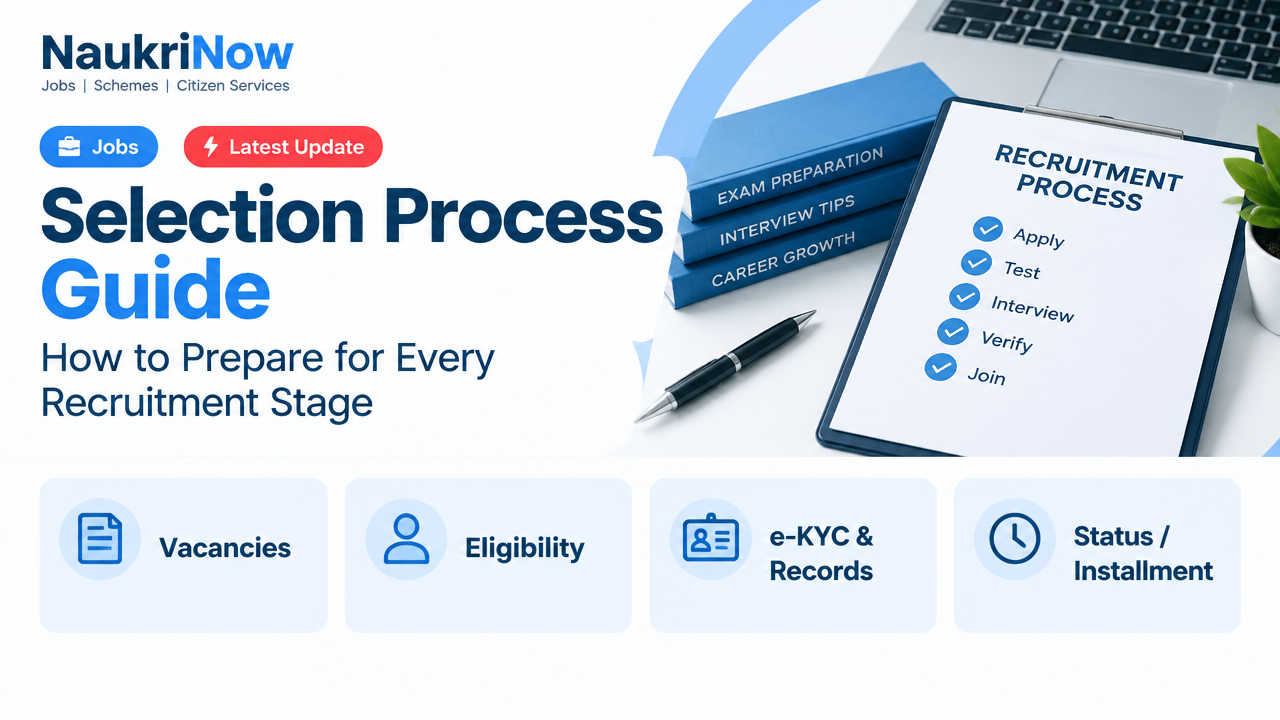
A recruitment process can involve an application review, a test, an interview, document checks or other assessments. The order and requirements vary between employers, roles and recruitment campaigns. Government recruitment may follow a published notification and set procedure, while private employers may use several interview rounds or role-specific exercises.
The safest way to prepare is to understand the process described for the role you applied for, keep your information organised and check updates through the responsible employer’s official channel. This guide explains common stages and practical ways to approach them without assuming that every selection process works the same way.
Selection Process Guide: Start with the official instructions
Before you prepare for a particular stage, locate the recruitment notice, job advertisement or candidate instructions issued by the employer. For public-sector recruitment, use the official website or portal named in the notification. For a private employer, check its careers page and use contact details or application links published through its verified channels.
Read the instructions from start to finish, including any annexures, candidate handbooks and later notices. Pay particular attention to the role, eligibility criteria, selection stages, assessment format, documents required and instructions for attending. If a later official update changes an earlier instruction, follow the latest applicable notice and retain a copy for reference.
Do not assume that a process used in a previous recruitment cycle applies to a new one. Even when the same employer recruits for a similar role, stages, formats and requirements can differ. If an instruction is unclear, seek clarification using the official contact route given for that recruitment rather than relying on an old social media post or an unverified message.
Common stages and what they may involve
The stages below are common examples, not a guaranteed sequence. A recruitment drive may use only some of them, combine them or include other assessments. Treat the official notice for your role as the definitive guide.
- Application screening: The employer checks the submitted application against the stated criteria. This may include education, experience, skills, eligibility details and the completeness of the form. Make sure your application is accurate and consistent with your supporting records.
- Written or online assessment: Depending on the role, this could test subject knowledge, reasoning, language, job-related skills or other abilities. The notice may explain the format, permitted materials and instructions for the assessment. Do not assume a test pattern from a different employer or recruitment cycle.
- Skill or practical assessment: Some roles require candidates to demonstrate a task, such as working with a tool, preparing a written response or completing a job-related exercise. Understand what will be assessed and follow the stated rules. Ask in advance through official channels if you need an accommodation or clarification.
- Interview: An interview may explore your experience, role knowledge, communication, judgement and examples of how you work. It may be conducted in person or remotely, depending on the employer’s instructions.
- Group exercise or presentation: Where relevant, candidates may be asked to discuss a topic, solve a problem together or explain an idea. These activities can assess how you listen, reason, contribute and communicate, rather than how often you speak.
- Document verification: The employer may compare information in your application with original documents or copies requested under the instructions. The timing and documents required vary. Bring or submit only what the official instructions ask for.
- Medical, background or reference checks: Some employers include checks relevant to the role or their policies. These are not universal stages. Follow the employer’s official directions and ask how sensitive information will be submitted if the process is not clear.
- Final decision and offer: A communication may explain the outcome or next steps. Read any offer or appointment terms carefully and confirm important details through an official channel before making decisions based on an informal message.
A practical preparation plan
- Make a stage-by-stage list. Write down every step named in the notice and any action you need to take for it. Note instructions that apply to all stages, such as identity requirements or restrictions on devices. Keep questions separate so you can resolve them before the assessment.
- Check the role requirements. Compare the stated criteria with your application and records. Prepare a brief explanation of your education, experience and relevant skills. If the form asks for a particular fact, answer it accurately; do not alter dates, titles or achievements to sound more suitable.
- Prepare for the assessment that is actually specified. For a subject test, revise relevant topics and practise answering questions under realistic time limits. For a practical task, refresh the skills used in the role. For an interview, prepare examples from your own experience. Use the instructions for the specific recruitment rather than relying on generic claims about what will be tested.
- Practise clear, honest answers. A useful structure is to describe the situation, your responsibility, the action you took and the result. Keep the example focused. If you have limited experience, use a truthful example from study, volunteering, a project or another relevant setting, and explain what you learned.
- Plan the logistics. Confirm the venue or online platform, reporting instructions, time zone if applicable, travel time and any permitted items. For an online assessment or interview, check your connection, device, audio and quiet space in advance. Do not click unfamiliar links received outside the official channel.
- Organise your records. Match the documents you prepare to the official list. Keep originals, copies or digital files in the form requested. Store sensitive records securely, and avoid sending personal documents to an unverified address or person.
- Review shortly before the stage. Recheck the latest official instructions for changes. Make sure you know how to contact the recruitment team if there is a genuine problem, using only the details provided by the employer.
Preparing for an interview
Start by understanding the responsibilities and essential requirements described for the role. Be ready to explain why your background is relevant, what you know about the work and how you approach tasks that matter to the employer. For a technical or specialist role, review the fundamentals you may need to discuss, but avoid memorising answers that you cannot explain in your own words.
Prepare a few specific examples that show your skills. These might involve solving a problem, learning something quickly, working with others, handling a mistake or meeting a commitment. Describe your own contribution clearly, especially where a result came from a team effort. If you do not know an answer, say so honestly and explain how you would find out or approach the problem.
For an online interview, join using the official link and follow any identity or platform instructions. For an in-person interview, plan to arrive with enough time for the stated check-in process. Dress appropriately for the role and setting. Listen to each question, ask for clarification when needed and keep answers relevant. You do not need to make every answer sound perfect; a clear, genuine response is more useful than an exaggerated claim.
Organising documents for verification
Use the document list in the relevant notice as your checklist. Depending on the recruitment, requested records might include proof of identity, education, experience or other details entered in the application. This list is illustrative only; do not treat it as a universal requirement. The employer’s instructions determine which records are needed, in what form and at what stage.
Check that names, dates and other details are consistent across your application and records. If there is a genuine difference, do not change or conceal information. Follow the official instructions for explaining or documenting it. Keep files legible and correctly labelled if uploads are requested, and observe any stated format or size limits. Do not submit extra sensitive documents unless requested through a verified process.
Bring originals only when instructed, and keep them secure while travelling. If you are asked to send documents digitally, verify the destination before uploading. Never share account passwords, one-time passcodes, banking PINs or card security details as part of recruitment. If someone asks for these, stop and check with the employer using a separately verified official contact route.
Follow updates and protect yourself from scams
Use the portal, careers page or other official channel identified for the recruitment. Check it regularly, but avoid treating search results, discussion groups or forwarded messages as confirmation. A message can look convincing while linking to a fake page. Before entering personal details, check that the channel belongs to the responsible employer and matches the instructions in the original notice.
Be cautious of anyone promising selection, an interview slot or a job in exchange for money, confidential information or a favour. Recruitment procedures and any permitted charges, if applicable, must be described by the responsible organisation. Do not rely on a caller’s claim or pay an intermediary based on an informal promise. Verify any request against the official recruitment instructions before acting.
Keep a simple record of applications, notices and communications, such as the role name, application reference and date you checked an update. Store this information privately. Do not post application numbers, identity documents or private correspondence publicly while asking for help.
Useful examples: how to respond to common situations
The notice and a social media post give different instructions. Go back to the employer’s official recruitment page and check for an authorised update. Follow the applicable official notice. If the difference remains unresolved, contact the recruitment team through its published channel.
Your document has a spelling difference from the application. Do not edit a document or make a new claim to hide the mismatch. Check the verification instructions and ask the responsible team how to provide an accurate explanation or supporting record.
You receive an unexpected request for payment or an OTP. Do not act on the message. Do not share an OTP, password or banking credential. Verify the request independently through the employer’s official website or the contact details in the recruitment notice.
You are asked a question you cannot answer in an interview. Avoid guessing and presenting it as fact. Explain what you do know, be clear about the limit of your knowledge and describe a sensible way you would investigate or solve the issue.
Mistakes to avoid
- Preparing from an old notice without checking the current instructions for your recruitment.
- Assuming that every employer uses the same test, interview format, shortlist criteria or order of stages.
- Submitting an incomplete application or giving details that do not match your records.
- Memorising scripted interview answers instead of preparing truthful examples you can discuss naturally.
- Ignoring instructions about reporting time, venue, permitted items, online access or document format.
- Relying on unofficial posts for results, schedule changes or selection claims.
- Sharing sensitive personal, identity or financial information with an unverified person or link.
- Making irreversible plans based on an informal assurance rather than a formal communication.
Frequently Asked Questions
Is there one standard selection process for all jobs in India?
No. Stages depend on the employer, role and recruitment campaign. The official notice or candidate instructions for your application are the best source for the process that applies to you.
Does every recruitment include a written test and an interview?
No. Some recruitments use one of these stages, both or neither, and may include other assessments. Check the current official instructions rather than assuming a particular format.
What should I study for a selection test?
First check whether a test is specified and what information is provided about it. Prepare for the skills or subjects identified in the notice. If the format is not explained, seek clarification through the employer’s official channel instead of treating an unrelated sample paper as a confirmed pattern.
Which documents should I bring to verification?
Bring or upload the documents requested for your recruitment, in the specified form. Common examples may include identity, qualification or experience records, but requirements differ. The official list takes priority over general advice.
How can I confirm whether a recruitment update is genuine?
Open the employer’s official website or portal independently and look for the update there. You can also use the contact route stated in the recruitment notice. Do not rely only on a forwarded message or a link sent by an unknown person.
What should I do if an instruction is unclear?
Read the full notice and any related candidate instructions first. If your question is still unanswered, contact the responsible recruitment team using verified details published by the employer. Keep a record of the clarification you receive.
Can a recruiter ask for my password or one-time passcode?
Do not share passwords, one-time passcodes, banking PINs or card security details. If a message requests them, stop and verify the request with the employer through an independently confirmed official channel.
Conclusion
A good preparation plan begins with the instructions for the specific role, not assumptions about how recruitment usually works. Identify the stated stages, practise relevant skills, prepare accurate documents and plan the practical details of each assessment. Check changes and outcomes through the responsible employer’s official channel, and protect your personal information throughout. These habits help you approach each stage with greater clarity, whatever form the selection process takes.
Comments