Table of ContentsClick to view all sections
- Which IBPS recruitment route should you consider?
- Read the notification before you plan around an exam
- Check eligibility carefully
- How to prepare and submit an application
- Build a preparation plan around the notified pattern
- After applying: track instructions and keep documents ready
- Common mistakes to avoid
- Conclusion
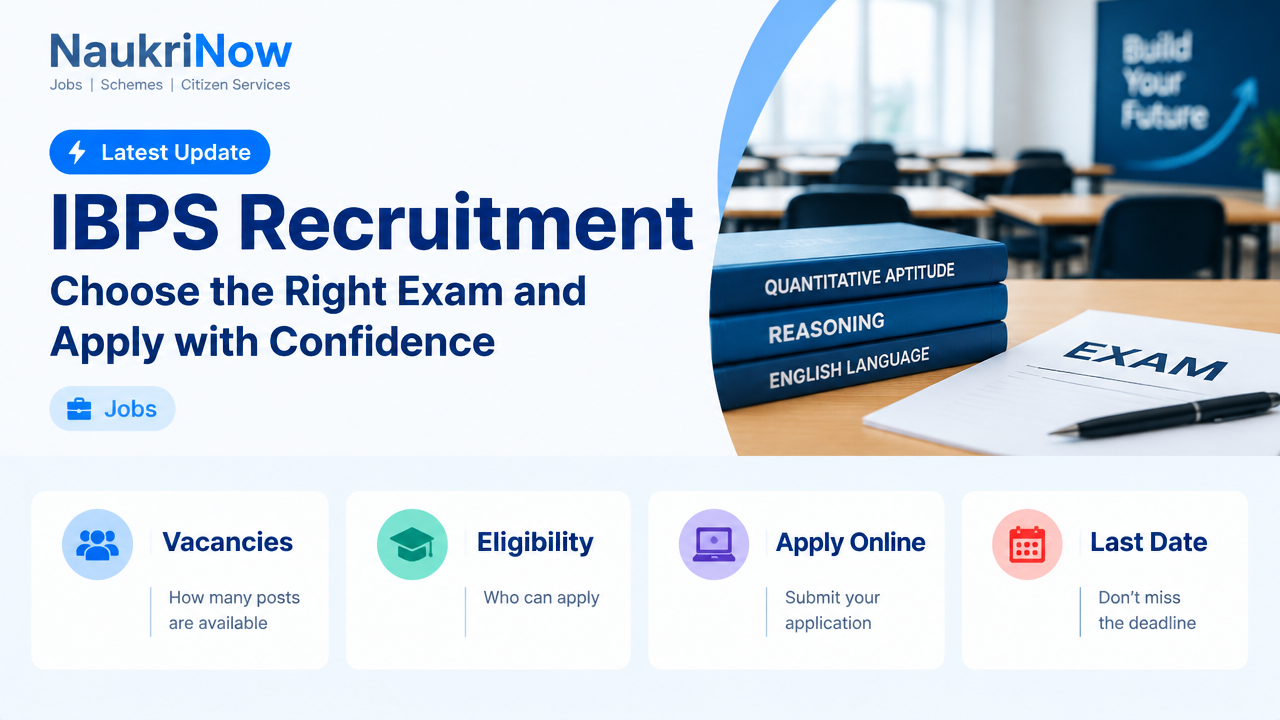
IBPS recruitment can be a route to roles in participating public sector banks and regional rural banks, but the process is not the same for every post. Eligibility, exam stages, application instructions and selection arrangements depend on the particular recruitment notification. Use this guide to understand the usual process and prepare well; use the relevant official notice to confirm every current detail before acting.
The Institute of Banking Personnel Selection (IBPS) conducts common recruitment processes for participating institutions. It is generally the participating bank or institution, rather than IBPS itself, that employs a selected candidate. A result, score or provisional allotment should therefore be understood in the context of the notification and the institution’s subsequent requirements.
Which IBPS recruitment route should you consider?
Start with the work you want to do and the qualifications you hold. A familiar exam name is not enough reason to apply: the right route depends on the post’s duties, eligibility rules, location and selection stages.
- Probationary Officer or Management Trainee recruitment: This route is intended for officer-level roles. The selection process may include more than one online examination stage and an interview, but the notice for that recruitment cycle sets out the actual stages and how they are used.
- Clerical recruitment: This route is for customer-facing and operational work in participating banks. The post name and process can change between cycles. Read the current notice rather than relying on an older guide or a previous recruitment’s terminology.
- Regional Rural Bank recruitment: RRB notices may cover different posts, such as officer and office-assistant roles. Requirements and selection stages can differ by post, so check the specific section that applies to you.
- Specialist Officer recruitment: These posts require qualifications or experience related to a specialist field. A degree that is suitable for one specialist post may not meet the rules for another; compare your exact subject, qualification level and any experience with the notice.
These descriptions are broad orientation, not eligibility decisions. Recruitment names, post structures and participating institutions can change. Confirm the current options through the IBPS website at ibps.in and the relevant official notification.
Read the notification before you plan around an exam
The notification is the controlling document for that recruitment. Read it from beginning to end, including annexures, instructions and any later corrigenda. A coaching article or social-media post may help explain a concept, but it cannot replace the official rules.
Pay particular attention to the post name, participating institutions, eligibility conditions, application window, examination stages, test language options, document requirements and instructions for submitting the form. Check whether the notice refers to a particular date for calculating age, qualifications or work experience. Meeting a condition today does not necessarily mean you meet it on the date specified in the notification.
Also note any rules about category claims, disability-related provisions, local-language requirements or preferences. These can have specific documentation standards. Do not assume that a rule from another IBPS exam, another year or another recruiting body applies to your application.
Check eligibility carefully
Eligibility is more than holding a degree or falling within a broad age range. The notification may set conditions for nationality, age, education, subject specialisation, experience or other criteria. It may also prescribe how a qualification must be recognised and the date by which it must have been completed.
- Match the post to your qualification. For a generalist role, check the stated education requirement and any conditions for proof of completion. For a specialist role, compare the exact subject, degree title and level with the wording in the notice.
- Check age using the stated calculation date. Use the notification’s method and reference date. If a relaxation may apply to you, verify the category, conditions and accepted evidence instead of estimating from a general online summary.
- Review other personal eligibility conditions. Confirm nationality and any post-specific requirements. For an RRB post or a role with a language condition, read the relevant clause closely.
- Make sure you can prove each claim. The application is a declaration, not a substitute for documentary evidence. Check that certificates and identity details are accurate, consistent and available when required.
Example: Suppose you are completing your final semester and want to apply for a post that requires a completed degree. Do not rely on a friend’s experience from an earlier cycle. Find the current notice’s qualification clause and its completion date. If your result is issued after the permitted date, you may not meet that condition even if your examinations are already finished.
How to prepare and submit an application
Once you have confirmed that a route fits your circumstances, follow the application instructions on the official IBPS portal. Keep a copy of the notification open while completing each section. A rushed application can create avoidable problems with eligibility, contact details, documents or payment.
- Collect information first. Keep your personal details, education history, category information where relevant, contact details and supporting documents to hand. Enter names and dates as they appear on the appropriate records.
- Prepare uploads to the stated specifications. The notice or application portal will describe the required files and formats. Follow its instructions for photographs, signatures, certificates or other documents. Do not assume an old file will meet the current requirements.
- Complete the form in one careful pass. Check each answer, especially the selected post, examination preferences, category and qualification details. Use a contact email address and phone number that you can access throughout the process.
- Review before final submission. Use the preview or review facility if one is provided. Look for spelling differences, incorrect dates, missing fields and mismatches with your documents. Check whether the portal allows corrections later; do not count on being able to change an error.
- Follow the current payment instructions. Application charges, exemptions, payment methods and deadlines can vary. Check the official notice and portal for the rules that apply to you. Keep the transaction confirmation and application receipt.
- Save the records. Download or print the submitted application and confirmation pages, and keep copies of relevant notices and messages. Store them securely and note any later instructions about admit cards, examination arrangements or verification.
Apply only through the official route specified by IBPS. Be cautious of websites or individuals offering guaranteed selection, paid access to an application, or shortcuts to a job. Never share passwords, one-time codes or sensitive documents with an unverified contact.
Build a preparation plan around the notified pattern
There is no single study plan that fits every IBPS post. The subjects, question formats, stages, time limits and scoring rules must be checked in the current notification. In particular, do not assume that a previous cycle’s pattern or a different exam route applies to yours. If negative marking, sectional requirements or interview assessment are relevant, confirm the details in the notice.
Begin with a diagnostic practice paper that reflects the notified format. Use it to identify weaknesses, not to judge your potential from one score. Divide your preparation into topic learning, timed practice, review of mistakes and full-length mock tests. Give extra attention to areas where you lose marks through misunderstanding or rushed decisions.
For reasoning and quantitative topics, practise explaining why an answer is correct and why alternatives fail. For English, combine comprehension and usage practice with careful review of errors. If the exam includes general or banking awareness, use a consistent, reliable study source and revise regularly. Specialist candidates should reserve enough time for their professional subject rather than treating it as an afterthought.
Mocks are most useful when followed by analysis. Record recurring errors, such as misreading a question, spending too long on one problem or making an avoidable calculation mistake. Practise choosing which questions to attempt and when to move on. The aim is to improve accuracy and time management under the format described in the notification, not simply to complete the largest number of tests.
Check the permitted language options and any regional-language condition for the post you choose. If an interview or document-verification stage applies, prepare to explain your education and experience clearly and keep your evidence organised. Do not rely on unofficial claims about likely questions or guaranteed cut-offs.
After applying: track instructions and keep documents ready
After submission, monitor the official IBPS website and the contact details used in your application for updates relevant to your recruitment. Download an admit card or call letter only from the official channel specified in the notice. Read its instructions well before the examination, including any requirements for identification or reporting.
Keep original documents and clear copies organised for later stages. The required evidence may include education records, identity proof, category or disability certificates where applicable, and other documents specified for your case. The exact list and format depend on the notification and later instructions. If a document contains a discrepancy, seek clarification through the official process rather than editing or altering it yourself.
Selection may involve different stages depending on the post, and clearing one stage does not by itself guarantee appointment. Any provisional allotment, verification, suitability checks or offer is subject to the official rules and the participating institution’s process. Wait for formal communication through the authorised channel before making decisions based on an unofficial result claim.
Common mistakes to avoid
- Applying based on an old notice: Past eligibility, post names and exam arrangements are not a reliable substitute for the current notification.
- Skimming the age or qualification clause: The calculation date and proof requirements can matter as much as the headline condition.
- Choosing a specialist post by title alone: Check the exact qualification and experience wording before paying or submitting a form.
- Entering details from memory: Small differences in names, dates or category information can complicate verification. Refer to original records.
- Waiting until the last moment: Technical issues, upload problems or a failed transaction can take time to resolve. Follow the published schedule and avoid unnecessary delay.
- Trusting predicted dates, cut-offs or guaranteed outcomes: Treat these as speculation unless confirmed in an official notice or result communication.
- Ignoring later notices: A corrigendum or candidate instruction may clarify or update the original notice. Recheck the official recruitment page.
Frequently Asked Questions
Is IBPS the employer for every recruitment it conducts?
IBPS conducts common recruitment processes for participating institutions. The employing institution is generally the relevant bank or organisation. Check the notification and any formal communication to understand who is responsible for the post and subsequent employment steps.
Can I apply while I am waiting for my final degree result?
It depends on the exact qualification clause and the date by which the qualification must be completed or evidenced. Read the current notice carefully; being in the final year is not automatically sufficient.
Are the exam pattern and selection stages the same for every IBPS post?
No. Stages and test arrangements can differ across recruitment routes and cycles. Use the notification for your chosen post as the definitive guide.
Where should I check application dates, fees and vacancies?
Check the relevant recruitment notice and application portal on the official IBPS website at ibps.in. Do not rely on a third-party page for changing details, and review any official corrigendum.
What if I notice a mistake after submitting my form?
Check the official instructions to see whether a correction facility is available and what it permits. If the notice does not answer your question, use the official contact or grievance route stated for that recruitment. Do not submit duplicate applications unless the instructions expressly allow it.
Does a good mock-test score guarantee selection?
No. Mock tests are practice tools, and their scores do not determine an official result. Selection depends on the notified assessment and rules for that recruitment.
How can I tell whether a recruitment message is genuine?
Confirm the announcement on the official IBPS website or the participating institution’s official channel. Be wary of requests for passwords, one-time codes or extra payments, and of anyone promising a job or favourable result.
Conclusion
A sound IBPS recruitment plan starts with choosing the right post, then checking every eligibility condition against the current official notice. Prepare documents before applying, submit the form carefully and build a study routine around the notified pattern. Keep monitoring official updates and treat unofficial predictions as unconfirmed. These habits will help you make informed decisions without confusing general guidance with the rules for a particular recruitment cycle.

Comments