Table of ContentsClick to view all sections
- Joining Document Checklist: Start with the employer’s instructions
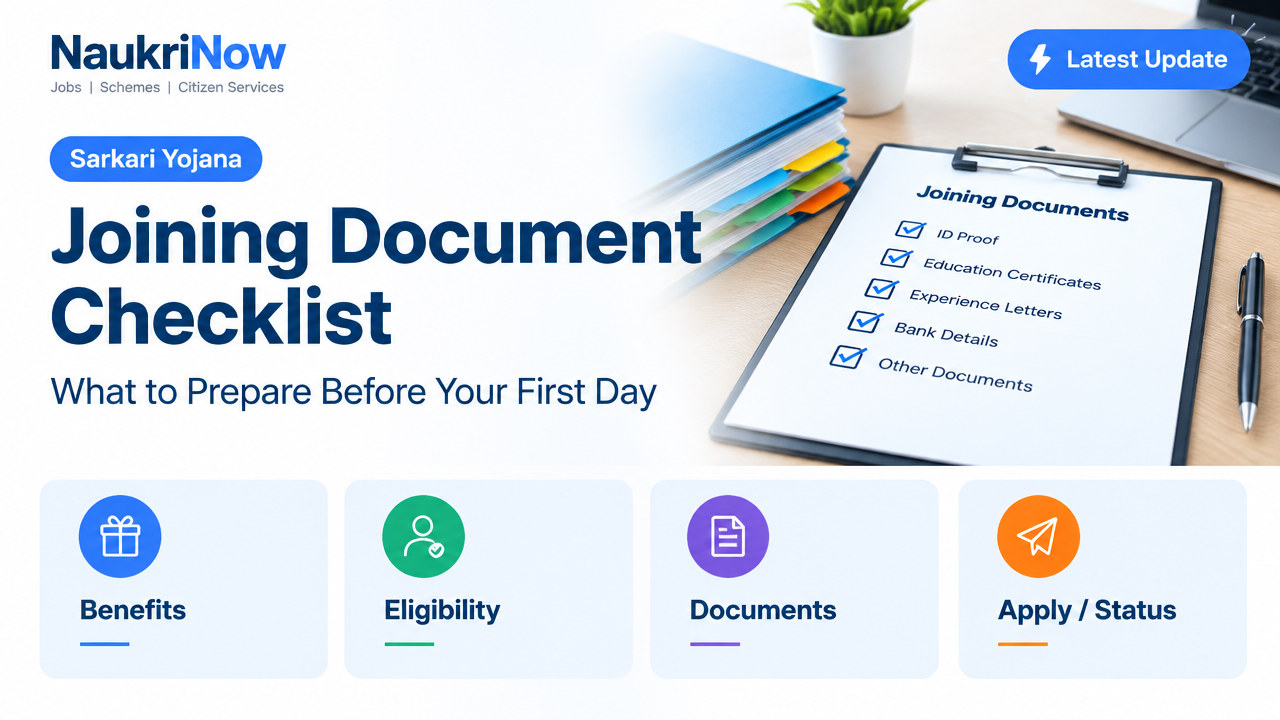
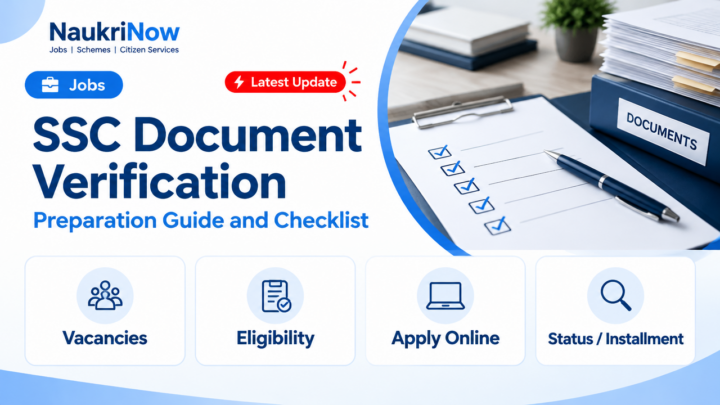
- Documents to check and prepare
- Check names, dates and details before submission
- Organise originals, copies and digital files
- Examples: adapting the list to your situation
- Common joining-document mistakes to avoid
- A simple final check before you leave
- Conclusion
Joining Document Checklist: What to Prepare Before Your First Day
Starting a new job often involves more paperwork than candidates expect. An employer may need to verify your identity, education, previous employment, bank details or other information before completing your joining formalities. The documents requested can vary by role, employer and appointment process, so there is no single checklist that applies to everyone.
Use this guide to prepare the records commonly requested in India, check them for accuracy and carry them in a sensible format. Your offer letter, joining instructions or official recruitment portal should remain the final authority on what you need to submit. If an instruction is unclear, ask the employer’s authorised HR or recruitment contact before your joining date.
Joining Document Checklist: Start with the employer’s instructions
Before collecting paperwork, read the offer or appointment communication carefully. Check whether the employer has provided a joining form, document list, upload portal or specific instructions about originals and photocopies. Note the submission method, format and any stated deadline. Requirements may differ even between organisations in the same industry.
If you are joining a government department, public-sector organisation or an employer using a formal recruitment process, follow the relevant appointment communication and official portal instructions. Do not rely on an old notice, a social media post or another candidate’s experience as proof of current requirements. For a private employer, confirm details through the official company contact or HR channel rather than an unverified number or message.
Make a personal checklist from the instructions and mark each item as required, if applicable or to confirm. This helps you avoid carrying unnecessary sensitive records while still spotting questions early.
Documents to check and prepare
The items below are commonly requested, but they are not universal requirements. Submit only what your employer or appointing authority asks for, and ask how to handle any document that does not apply to you.
- Offer or appointment communication: Keep a copy of the offer letter, appointment letter or joining instructions. You may also need to complete acceptance or declaration forms provided by the employer.
- Identity proof: Prepare an accepted identity document if requested. Check the joining instructions for which forms of identification are accepted. Do not assume that one particular identity document is compulsory for every employer or process.
- Address details: Have the address information or supporting proof specified by the employer ready. If your current and permanent addresses differ, use the forms to show each accurately.
- Education and qualification records: Gather relevant degree, diploma, school, professional qualification or training certificates and mark sheets. Include only records needed to establish the qualifications stated in your application or required for the role.
- Experience and employment records: If you have worked before, check whether the employer asks for experience letters, relieving or separation documents, employment dates, or other proof of work history. Requirements differ; ask HR what to provide if a former employer has not issued a document yet.
- Bank and payroll information: The employer may request account details to set up salary payments. Confirm the accepted proof and the secure method for sharing it. Enter account information carefully and check every digit before submitting.
- Tax and payroll forms: Complete any employee, tax or payroll declarations supplied by the employer. Follow the current instructions from the employer or relevant official source; do not rely on an old form or a colleague’s assumptions.
- Photographs: Carry or upload photographs only if the joining instructions specify them, including any required size or format.
- Role-specific or conditional records: Some roles or appointment processes may ask for additional declarations, licences, registrations, medical documents or other evidence. Check the official list rather than guessing what applies.
Check names, dates and details before submission
Small differences across records can cause avoidable follow-up. Compare the name on your application with the name on your identity, education and employment documents. Check spelling, initials, date of birth, qualification titles and employment dates. Also make sure the details you enter on joining forms match the supporting records where they are meant to.
If a genuine difference exists, do not alter a document or try to conceal it. Ask the employer which supporting explanation or record they will accept. For example, a candidate whose surname changed after marriage can ask whether the employer needs a linking document. Someone whose certificate uses initials can ask how to enter their name on the joining form. The right way to resolve a mismatch depends on the employer’s process and the records involved.
Check that scans are readable, complete and not cropped at the edges. Use the file type and size stated by the employer’s portal. For paper copies, make sure the text and seals are legible. Sign or self-attest copies only if the instructions ask you to do so; do not add marks that might obscure important details.
Organise originals, copies and digital files
Keep documents in three groups so you can find them quickly:
- Originals for inspection: Carry the originals specifically requested for verification. Keep them protected in a folder and return each one to its place after it is checked.
- Paper copies for submission: Arrange the requested photocopies in the same order as the employer’s list. If the instructions call for signed or self-attested copies, complete that step as directed.
- Digital copies: Save clear scans in a secure, easy-to-find folder. Use simple filenames such as “Degree certificate” or “Experience letter” so you can identify files without opening each one.
Keep a personal copy of anything you submit, along with a note of the date and method of submission. If you hand over an original because an authorised process requires it, ask for a written acknowledgement or receipt and clarify when and how it will be returned. Do not leave original documents behind without a clear reason and record.
Take only the information needed for the stated purpose. Avoid sharing passwords, one-time passcodes or unrelated financial information. If someone asks you to upload sensitive documents through an unfamiliar link or send them to a personal account, pause and verify the request through the employer’s official contact details.
Examples: adapting the list to your situation
If this is your first job
Focus on the joining instructions, identity and address details requested, education records, payroll information and any forms supplied by the employer. You will not have previous-employment documents, so you should not try to produce them. If a form assumes you have prior work experience, ask HR how a fresher should complete that section.
If you are changing employers
In addition to the common records, review the list for employment history or separation documents. Check that the dates and job titles you provide are consistent with your application. If your final document from your previous employer is pending, tell the new employer and ask what evidence or update they need in the meantime. Do not submit an edited or unofficial substitute as though it were a final certificate.
If a required record is unavailable or incorrect
Contact the responsible HR team or appointing authority as soon as you notice the problem. Explain which document is missing or contains a discrepancy, and ask about the accepted next step. Keep copies of your messages and any instructions you receive. The solution may depend on the employer’s rules, so avoid relying on a workaround suggested informally by someone else.
Common joining-document mistakes to avoid
- Assuming every employer asks for the same papers: Use the current list issued for your own role and appointment.
- Waiting until the joining morning: Check records and request replacements or clarification as early as practical.
- Carrying originals but forgetting requested copies: Separate the two sets and tick off each item against the official list.
- Uploading incomplete scans: Check every page, both sides where relevant, and the final file before submission.
- Guessing how to answer a form: Ask the authorised contact if a field does not fit your circumstances.
- Sending documents to an unverified recipient: Confirm the email address, portal or handover process using an official channel.
- Leaving originals without acknowledgement: Ask why an original is needed, how it will be handled and how its return will be recorded.
- Changing or embellishing records: Submit accurate documents and explain genuine discrepancies instead of editing evidence.
A simple final check before you leave
The day before joining, review the employer’s list one last time. Confirm the reporting location and any instructions about document verification from the official communication. Pack the requested originals separately from copies, charge your phone if you will need to access digital files, and keep the relevant contact details available. If you are submitting files online, confirm that the upload is complete and save any acknowledgement provided by the system.
On arrival, follow the instructions of the authorised staff member handling onboarding. Ask for clarification if a requested item differs from what you were told to bring. A calm, accurate explanation is better than handing over unrelated or incorrect paperwork simply to fill a gap.
Frequently Asked Questions
1. Is there one joining document checklist for every job in India?
No. The list depends on the employer, role and appointment process. Treat your offer, joining instructions and official recruitment communication as the final guide, and confirm unclear items with the authorised contact.
2. Should I bring original documents on my first day?
Bring originals if the employer’s instructions ask for them for inspection or verification. Carry them securely and keep track of them. If an original must be handed over, ask for a written acknowledgement and return details.
3. Do I need to submit every identity or education document I own?
No. Provide the documents requested for the stated purpose. Check which identity proof and qualifications the employer accepts, and avoid sending unrelated sensitive records.
4. What if my name is different across two documents?
Do not change either record yourself. Tell the employer about the difference and ask what explanation or supporting document is accepted in that process. The answer depends on the records and the employer’s instructions.
5. What can I do if a previous employer has not issued my relieving or experience document?
Inform your new employer promptly and explain what is pending. Ask whether they will accept another form of evidence temporarily or need an update by a specified point. Do not present an unofficial document as a final one.
6. Are digital copies enough, or should I carry photocopies too?
Follow the joining instructions. Some employers accept portal uploads, while others may ask to inspect originals or collect paper copies. Keep secure digital copies for your own reference, but do not assume they replace a specifically requested format.
7. How can I verify a request for sensitive documents?
Check the request against the official offer or joining communication and confirm it through the employer’s published or authorised HR channel. Do not share passwords or one-time passcodes, and be cautious of unfamiliar links or personal email accounts.
Conclusion
A reliable joining document checklist is built from your employer’s actual instructions, not from assumptions about what every workplace requires. Gather the relevant records, check them for accuracy, organise originals and copies separately, and clarify missing or mismatched documents early. For current, role-specific requirements, use the responsible employer, department or official recruitment source. A little preparation can make verification smoother and help you begin your new role with confidence.
Comments