Table of ContentsClick to view all sections
- PM Awas Yojana at a glance
- Urban and rural PMAY: which route applies to you?
- Eligibility: checks to make before applying
- Benefits and house or land conditions
- Documents to keep ready
- How to find the right application route
- How to check PMAY beneficiary status
- Advantages and limitations
- Common problems and practical fixes
- Conclusion
- Official quick links
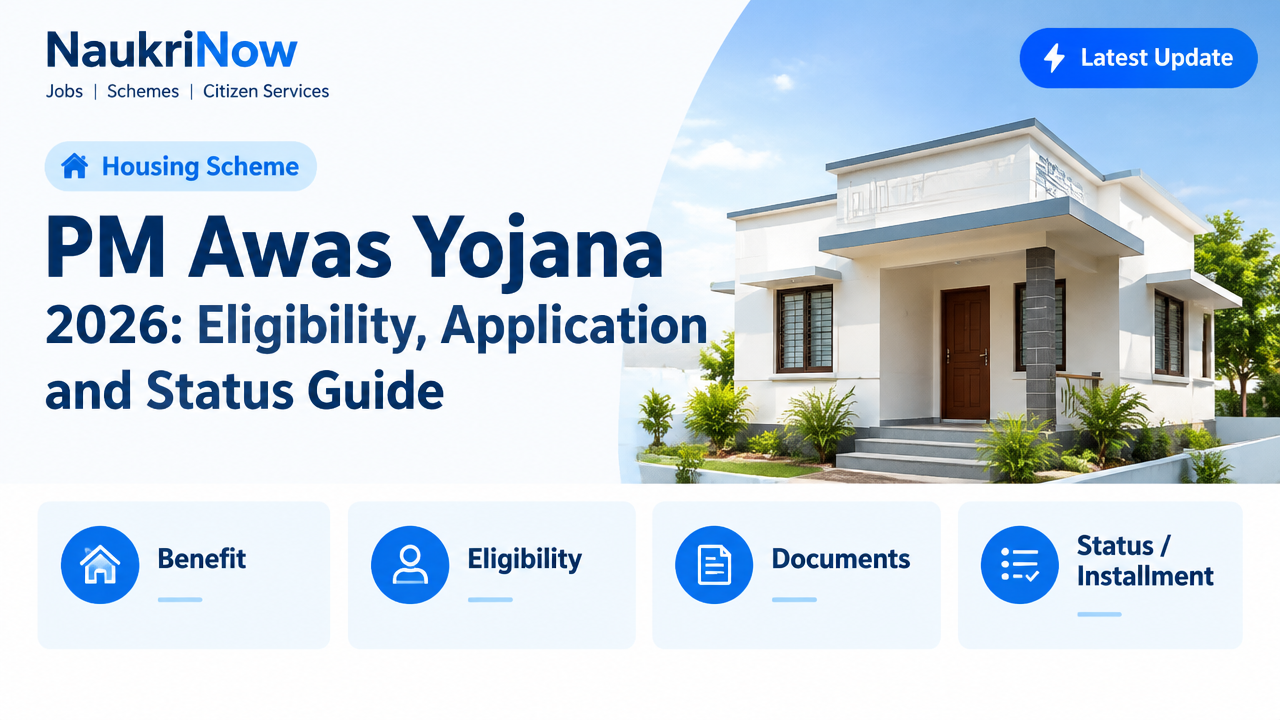
PM Awas Yojana 2026 is not a single application route for every household: the process depends on whether you live in an urban or rural area and which housing component applies. This guide explains the main differences, the eligibility checks to make, how to find application or beneficiary information, and where to confirm current rules on official portals.
Scheme rules, application windows and local procedures can change. Treat this as a practical starting point, then verify the requirements for your state and scheme component before submitting documents or paying anyone. For PM Awas Yojana, confirm the correct route with the relevant official portal or local authority before taking action.
PM Awas Yojana at a glance
| Item | What to know |
|---|---|
| Urban programme | Pradhan Mantri Awas Yojana–Urban (PMAY-U); check the official urban portal for the current programme and applicable component, including PMAY-U 2.0. |
| Rural programme | Pradhan Mantri Awaas Yojana–Gramin (PMAY-G); beneficiary identification and progress information are handled through rural housing systems and local authorities. |
| Purpose | Support eligible households in accessing housing assistance. The form of support and conditions depend on the scheme component and location. |
| Who should verify first | Applicants, existing beneficiaries, and households checking a name, application or construction progress. |
| Where to begin | Use the official PMAY-U or PMAY-G portal, or ask the relevant urban local body, Gram Panchayat or block office which route applies. |
Urban and rural PMAY: which route applies to you?
| Question | PMAY-Urban | PMAY-Gramin |
|---|---|---|
| Where it applies | Eligible urban households, subject to the component and local implementation. | Eligible rural households identified under the rural programme. |
| How support is arranged | Different components may support individual house construction, partnership housing, rental housing or eligible home-loan borrowers. Not every component is open to every applicant. | Housing assistance is linked to beneficiary selection and construction progress under the rural programme. |
| How to check eligibility | Review the current PMAY-U 2.0 guidelines and component conditions, then confirm with the urban local body or authorised channel. | Check the official beneficiary or survey information and confirm your case with the Gram Panchayat or block office. |
| How to check status | Use the current status or application facilities on the official urban portal, where available, or contact the implementing local body. | Use official PMAY-G reporting facilities where applicable, or ask the Gram Panchayat or block office to verify the beneficiary record. |
Eligibility: checks to make before applying
There is no one eligibility test that covers every PMAY component. For PM Awas Yojana, a household should match the conditions for its location and the type of support sought. In particular, do not assume that finding your name in one list automatically makes you eligible for a different component.
| Check | What to verify |
|---|---|
| Urban household and income | For PMAY-U 2.0, check the applicable income category and component rules in the current official guidelines. The relevant income limits and other conditions must be assessed together. |
| Existing house ownership | Check the rules on pucca-house ownership by the beneficiary family. The definition of family and the locations covered matter; confirm the exact wording in the applicable guidelines. |
| Previous housing assistance | Check whether past assistance under another government housing scheme affects eligibility for the component you are considering. |
| Urban component conditions | Some components have additional requirements relating to the house, land, loan, beneficiary contribution or project. Check these before starting an application. |
| Rural beneficiary selection | PMAY-G beneficiaries are identified through the programme’s prescribed rural selection and verification process. Ask the local authority how your household’s survey or list status is recorded. |
| Land or construction readiness | For a house-construction route, confirm what proof of land, site or construction stage is required locally. A land-related issue may need to be resolved with the relevant authority before assistance can proceed. |
Exclusions and reasons an application may not qualify
- A household does not meet the income, ownership or other conditions for the selected component.
- The household has already received housing support that makes it ineligible under the current rules.
- Required land, loan, project or construction conditions are not met for the chosen route.
- For PMAY-G, the household is not included or verified through the applicable beneficiary identification process.
- Records do not match, or the application contains incomplete or incorrect information.
These are common checks, not a complete list of exclusions. The relevant scheme guidelines and the decision of the authorised implementing body govern each case.
Benefits and house or land conditions
PMAY support is not necessarily a cash payment made at the time of application. Depending on the programme and component, assistance may be linked to construction, an approved housing project or an eligible home loan. Amounts, funding arrangements and release conditions can differ by component, state and beneficiary circumstances, so check the current official rules rather than relying on a forwarded message or an old-year figure.
- Urban households: identify the precise PMAY-U component first. A construction-related route, project-based housing and a loan-linked route can have different requirements.
- Rural households: assistance is subject to beneficiary selection and prescribed construction and verification procedures.
- House or site: confirm who must own or provide the land, what documents establish the claim, and whether the proposed house meets the applicable conditions.
- Payments: do not assume one nationwide release calendar or a fixed number of instalments. Ask the implementing authority for the schedule applicable to your approved case.
Documents to keep ready
The required documents depend on the scheme route and local verification process. These are examples that may be requested, not a universal mandatory checklist:
- Aadhaar or another accepted identity document, as required by the applicable process.
- Proof of residence and household details.
- Income or category documents where required for the selected component.
- Bank account details for an approved benefit, where applicable.
- Land, ownership or site-related records for a construction route, where required.
- Home-loan or property documents for a loan-linked component, where applicable.
- Application, survey or beneficiary reference number for a status enquiry.
Use only the official portal or an authorised office to submit personal information. Do not share OTPs, bank credentials or document copies with an unknown agent.
How to find the right application route
| Step | Action |
|---|---|
| 1 | Decide whether your household falls under the urban or rural programme. |
| 2 | Open the official PMAY-U or PMAY-G portal and read the current scheme and component instructions. |
| 3 | For an urban application, confirm the available component and process with your urban local body or the authorised channel named by the portal. |
| 4 | For a rural household, ask the Gram Panchayat or block office about beneficiary identification, survey records and the process applicable in your area. |
| 5 | Submit details only through the official route, keep the acknowledgement or reference number, and save copies of submitted records. |
| 6 | Follow up using the official status facility, if available, or the implementing office. Ask what correction or verification is pending if the record is held up. |
PMAY-G is not necessarily a general open-registration scheme in which any household can directly enrol online. Rural beneficiary selection follows the programme’s prescribed process; check locally how to raise a missing or incorrect survey record.
How to check PMAY beneficiary status
| Step | Action |
|---|---|
| 1 | Choose the correct programme: PMAY-U for an urban application or PMAY-G for a rural beneficiary record. |
| 2 | Visit the official programme portal from the links below and look for its current beneficiary, application or reporting facility. |
| 3 | Enter the identifier requested by that facility, such as an application or beneficiary reference. Available search options can change. |
| 4 | Check the displayed name, location and status carefully. If the record is missing or details differ, contact the relevant local implementing office with your reference number. |
| 5 | For a rural record, ask the Gram Panchayat or block office to check the official beneficiary or survey entry. For an urban case, contact the urban local body or the authority handling your application. |
When checking PM Awas Yojana status, remember that a missing online result does not by itself confirm rejection. Records may require verification, or the portal may offer a different search route for your case. Ask the implementing office to explain the record and the next action.
Advantages and limitations
| Advantages | Limitations to keep in mind |
|---|---|
| Separate urban and rural programmes provide routes designed for different housing needs. | Eligibility, application channels and support differ by programme and component. |
| Official portals can help applicants find scheme information and check available records. | Online information may not settle a local land, survey or verification issue; an implementing office may need to review it. |
| Approved assistance can reduce part of the eligible household’s housing burden. | Assistance is conditional and should not be treated as guaranteed before approval. |
| Keeping a reference number and checking progress can make follow-up clearer. | There may be no single nationwide payment date or one status method for every case. |
Common problems and practical fixes
- Cannot find a name: confirm you are using the correct urban or rural portal and the exact reference details. Then request a local record check.
- Name or details are incorrect: ask the implementing office how to correct the entry and which supporting documents it accepts. Avoid submitting a second application unless instructed.
- Application is pending: ask whether document scrutiny, site verification, survey validation or another step remains. Keep the acknowledgement number.
- Payment has not arrived: first confirm that the benefit was approved and that the relevant construction or verification condition is complete. Check bank details only through the authorised process.
- Someone demands a fee to guarantee selection: do not pay for a promised approval. Verify any legitimate service charge with the official portal or local authority.
- Conflicting rules online: prefer current scheme guidelines and instructions from the responsible department over old articles, social posts or unofficial lists.
Conclusion
To use PM Awas Yojana 2026 effectively, first identify whether your case belongs to PMAY-U or PMAY-G, then check the specific eligibility and application route for that programme. Keep your documents and reference number, verify beneficiary information through official channels, and ask the responsible local office about any record or payment issue. No online listing or informal promise replaces approval under the applicable scheme rules.
Frequently Asked Questions
Is PMAY-U the same as PMAY-G?
No. PMAY-U is the urban housing programme, while PMAY-G is the rural housing programme. Their beneficiary processes, conditions and status systems are different.
Can I apply for PMAY online in 2026?
The route depends on the programme, component and current application process. Check the official portal and confirm with the urban local body or rural authority before submitting an application.
Can every rural household register directly for PMAY-G?
Do not assume that PMAY-G is open to unrestricted self-registration. Beneficiaries are identified through the prescribed rural process. Ask the Gram Panchayat or block office how to check or correct your survey record.
How can I check my PMAY beneficiary status?
Use the official portal for the correct programme and the search facility currently available there. If you cannot find a record, contact the implementing local body with your application or beneficiary reference.
Does owning a house affect PMAY eligibility?
It may. Ownership conditions apply under relevant components, but the definition of the beneficiary family and the exact test depend on the current guidelines. Check the rules for your chosen route.
What documents are needed for PMAY?
Requirements vary. Identity, household, income, bank, land or loan records may be requested depending on the component and verification process. Follow the official checklist for your application rather than relying on a generic list.
Are PMAY benefits paid in one instalment?
There is no single payment schedule that can be assumed for every PMAY case. Release arrangements depend on the programme, component, state and applicable verification or construction conditions.
What should I do if my application is pending or missing online?
Keep your acknowledgement or reference number and contact the office implementing your case. Ask whether a document, survey, identity or site verification is pending and how to correct any mismatch.
Official quick links
| Resource | Link |
|---|---|
| PMAY-Urban official portal | https://pmay-urban.gov.in/ |
| PMAY-Gramin official portal | https://pmayg.nic.in/ |
| PMAY-G reporting portal | https://rhreporting.nic.in/ |
| myScheme government scheme discovery platform | https://www.myscheme.gov.in/ |
Comments