Table of ContentsClick to view all sections
- Bank Admit Card: What a bank exam admit card is for
- Where to find the official call letter
- Check the details as soon as you download it
- Printing and keeping your call letter ready
- Plan the documents and journey for exam day
- If the download does not work
- Common mistakes to avoid
- Useful examples
- Conclusion
Bank Admit Card — this guide explains the latest verified details, eligibility, benefits, application or status steps, and official resources relevant to this topic.
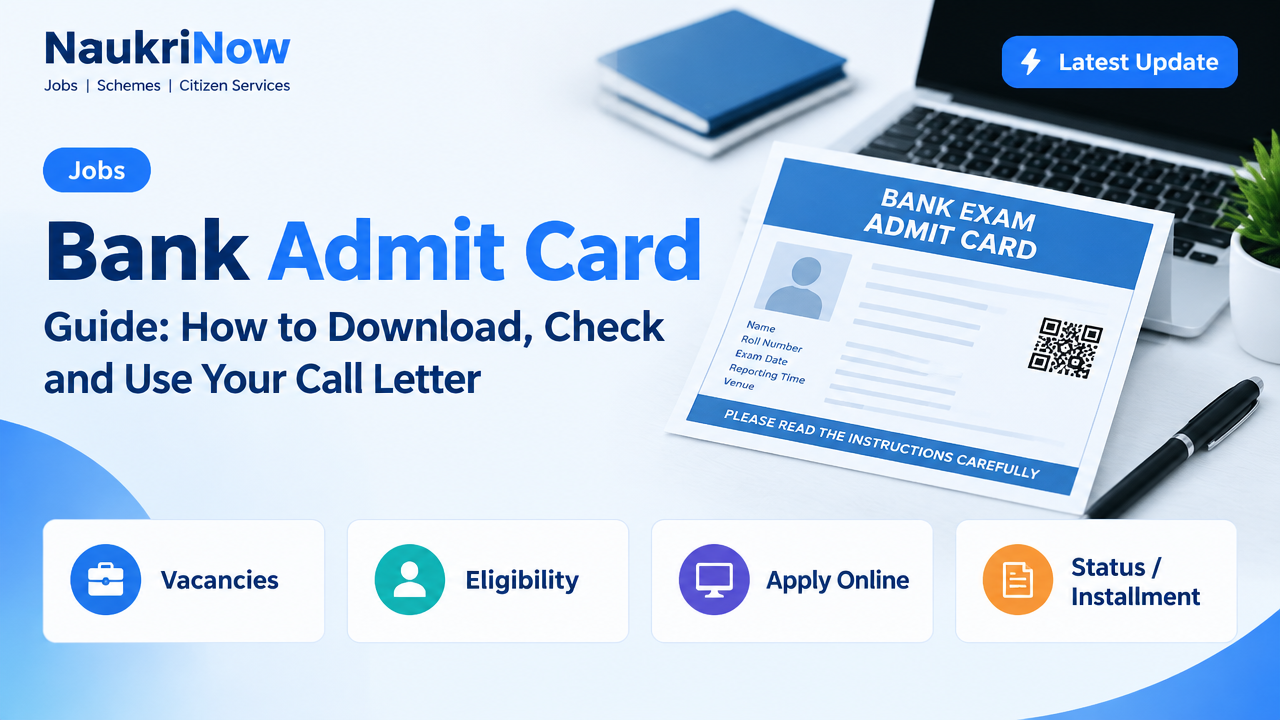
A bank exam admit card, often called a call letter, is an important document for a recruitment test or another stage of selection. It tells you where and when to report and may include instructions you must follow at the venue. The issuing bank or examination authority determines the format, download process and entry requirements, so details can differ between recruitments and stages.
Use this guide to find the right official source, download and check your document, and plan for exam day. For current release information, accepted identification, reporting instructions and any changes, rely on the official recruitment website and the latest notice for your specific application. Do not treat old notices, search results or social media posts as confirmation.
Bank Admit Card: What a bank exam admit card is for
The admit card connects your application to a particular exam or selection stage. Depending on the recruitment, separate call letters may be issued for different tests, interviews or other assessments. A previous-stage document is not automatically valid for a later stage. Download the document specifically issued for the event you are attending.
It may show your name, application or registration details, exam date and shift, venue, reporting time, photograph or signature, and instructions. Not every call letter displays the same information. Read the full document, including text below the main details and any page that contains exam-day rules. If a separate instruction notice is linked from the official site, read that as well.
Where to find the official call letter
- Start with your application or recruitment notice. Find the official website of the bank or the examination body named in the notice. Use the application confirmation, notification or official recruitment page to identify the correct site. A bank’s general homepage may not be the page used for recruitment, so follow the route given in the official notice.
- Look for the relevant recruitment and stage. On the official site, find the recruitment you applied for and the link for its current stage. Check the post or examination name carefully. Similar-looking recruitment links can relate to different roles, years or stages.
- Open the download link from that official page. Read any accompanying announcement before signing in. Check that it refers to your recruitment and not a different examination. If you reach a login page from a message or search listing, return to the official recruitment page and navigate to it from there.
- Enter only the requested application details. The portal will state which credentials it accepts. These may include an application identifier and another verification detail, but formats differ. Use the information from your application record and enter it exactly as requested. Do not share passwords, one-time codes or other private login details with someone offering to download the card for you.
- Download and save the complete file. Keep the original PDF or other file supplied by the portal. Open it to confirm it is readable and includes every page. Save a copy in a secure, easy-to-find place and, if useful, keep a backup on a second device or storage location.
If you cannot find a download link, do not assume the call letter has been released or that your application is rejected. Check the recruitment page and notices again, then use the official process described there for questions or technical issues. Release arrangements and portal access periods vary, so do not rely on a schedule from an unrelated recruitment.
Check the details as soon as you download it
Compare the call letter against your application confirmation and the official exam notice. Check each field rather than looking only at the date. If something appears wrong, follow the correction or contact instructions on the official recruitment page promptly. Keep your application details and a copy of the document available when raising an issue. Do not edit the PDF yourself; an altered document may not be accepted.
- Name and personal details: Check the spelling and other identifying details against your application and accepted identification. Small differences can matter, so use the official instructions to establish what to do if you spot a mismatch.
- Application or registration information: Confirm that the identifiers and recruitment details correspond to your own application. Avoid posting the call letter publicly, since it can contain personal information.
- Exam or selection stage: Verify the post, examination and stage shown. Make sure you have not opened a call letter for another application or an earlier stage.
- Date, shift and reporting instructions: Note the date, time and reporting requirement exactly as printed. Reporting time and test start time may not be the same. Follow the venue-entry instructions rather than planning to arrive at the start time.
- Venue: Read the full address and any location details shown. Check the route in advance using a reliable map, but treat the address on the official call letter as the reference. If you see an apparent error, ask the issuing authority through its official channel rather than choosing a different venue yourself.
- Photograph, signature and other fields: Check whether the image is present and clear and whether any candidate action is requested, such as bringing a photograph or signing in a specified place. Follow the actual call letter; do not assume that a requirement from another exam applies.
- Exam-day rules: Look for requirements about identification, permitted items, documents, dress or conduct. These rules can differ. The call letter and the current official instructions take precedence over general advice.
Printing and keeping your call letter ready
Follow the instructions on the call letter about printing and presentation. If a printed copy is required, print the complete document in a legible format and check that text, photograph, barcode or other printed details are not cut off or blurred. Do not assume that a file on your phone will replace a printout unless the official instructions explicitly allow it.
Keep the document clean and unaltered. Avoid writing over information, changing the image or trimming sections that appear unimportant. If the call letter directs you to attach a photograph, sign a declaration or complete a specific section, do so only in the manner stated. If it does not ask for an action, do not add one based on another candidate’s experience.
Plan the documents and journey for exam day
Make a short preparation checklist after reading the instructions. The exact requirements come from the issuing authority, but your planning can include:
- The printed call letter, if required, and any additional page or undertaking specifically requested.
- An original photo identity document from the list accepted in the current instructions. Check the exact document name and any conditions; do not assume that a photocopy, digital image or a document not listed will be accepted.
- A photograph or other item only if the official instructions require it, in the format described there.
- The venue address, planned route and enough time for travel, while allowing for delays and the stated reporting process.
- A review of the prohibited-items list. Leave restricted belongings at home where possible instead of relying on storage arrangements at the venue.
Keep essential papers together the evening before and check that the name and other details on your identity document are usable for verification. If the official rules describe what to do when a name differs, follow that procedure. Do not rely on a general internet answer for an identity mismatch.
Follow the reporting time and entry instructions printed for your test. Examination venues may have their own verification and security process, and arriving after a stated cut-off may create a serious problem. Plan to reach the area early enough to locate the venue, but use the official instructions for when candidates should report and where they should go.
If the download does not work
A failed download can be caused by a mistyped credential, a temporary browser problem, a PDF viewer issue or a portal-side problem. Try the steps below without giving your login information to unofficial websites or agents:
- Return to the official recruitment page and confirm that you selected the correct recruitment and stage.
- Check each character in the requested login details, including any distinctions between letters and numbers. Use the recovery option shown on the official portal if you have forgotten a credential.
- Try a current browser or another device, check your internet connection and allow the PDF to finish downloading. If it opens in a new browser tab, use the browser’s download or print function.
- Open the saved file with a PDF reader and check whether the complete document has downloaded. If the file is blank or damaged, download it again from the official portal.
- If the problem continues, follow the technical support or contact route given on the official recruitment page. Keep a note of the issue and any relevant application reference, but do not send sensitive details to an unverified address or account.
If information on the call letter appears incorrect, save the unedited file and contact the responsible authority promptly through the published official process. Do not wait until you reach the centre to raise a correctable issue, and do not assume that the exam venue can change your record.
Common mistakes to avoid
- Using an unofficial download page: Search results, forwarded messages and third-party sites can be outdated or misleading. Begin at the official recruitment page and verify the notice.
- Checking only the exam date: A wrong shift, venue, stage or reporting instruction can disrupt your plan. Review every page and field.
- Assuming all bank exams use the same rules: Accepted identity documents, photographs, printing requirements and permitted items can vary. Use the instructions for your own recruitment.
- Waiting until the last moment: Leaving the download, printing or route check until exam day gives you little time to resolve an access or document problem. Prepare once the official call letter is available to you.
- Editing, cropping or marking the file: Keep the supplied document intact and follow only the actions requested by the issuing authority.
- Trusting an unverified change or promise: If a message claims a revised venue, date or special entry arrangement, confirm it on the official website or through the official contact method before acting.
- Sharing personal details publicly: Do not post a full call letter, login credentials or identity-document images in public groups. Use secure, official channels for genuine support requests.
Useful examples
You cannot remember your login detail: Check your application confirmation and use the recovery option on the official portal if one is provided. Do not try a password-reset link sent by an unknown person.
Your call letter shows an unfamiliar venue: Compare the complete address with the official document and check for an official correction notice. Do not travel to a venue suggested in a chat group unless the responsible authority confirms it.
Your printed photograph looks faint: Check the PDF on screen and print a fresh complete copy if the printer caused the problem. If the image is unclear in the downloaded file itself, use the official query process rather than replacing or editing it.
Your identity document has a different spelling: Read the instructions for name mismatches and contact the issuing authority through its stated channel if the answer is unclear. Carrying extra papers may be sensible, but it does not guarantee acceptance unless the official rules say so.
Frequently Asked Questions
Is an admit card the same as a call letter?
Recruitment notices may use either term for an entry document. Check the document’s stated purpose and stage. If a later selection stage has its own call letter, use the one issued for that stage.
Where should I download my bank exam admit card?
Use the official recruitment website of the bank or examination body named in your application notice. Navigate from its recruitment page and confirm the post and stage before entering any details.
Which login details will I need?
The portal specifies the required credentials, and they can differ by recruitment. Use the details in your application record and the recovery method on the official site if you cannot sign in.
Can I show the admit card on my phone?
Do not assume a digital copy is enough. Follow the current call-letter instructions about printing and presentation, and bring a printed copy if one is required.
What should I do if a detail is wrong?
Keep the original, unedited file and contact the responsible authority through the official process as soon as possible. Explain the discrepancy clearly and retain any response. Do not alter the document or assume the venue can correct it.
Can I change my exam centre after the call letter is issued?
Do not assume a centre change is possible. Check the official notice for the applicable process and contact the authority only through its published channel. A request does not mean a change has been approved.
What if the admit card link is unavailable?
Check the official recruitment page and notices for updates, confirm you are on the correct portal and try again if the page appears to have a technical issue. Use only the official support route for persistent problems; do not rely on an unverified release date.
Conclusion
A careful check of your bank admit card can prevent avoidable problems on exam day. Download it from the official recruitment page, verify your personal and venue details, read every instruction and prepare only the documents the authority specifies. When information is missing, conflicting or incorrect, seek confirmation from the responsible official source rather than relying on old notices or informal advice.
Comments