Table of ContentsClick to view all sections
Final Result Guide: How to Check and Understand Recruitment Results
A recruitment final result can determine whether you move closer to a job, but finding the right notice and understanding its wording are just as important as seeing your name on a list. This guide explains how to check a result through the responsible organisation’s official channels, interpret common result terms and prepare for what may follow.
Recruitment processes differ by employer and post. Treat this as general guidance: the recruiting body’s latest official notice is the authority for the result, selection conditions, timelines and next steps. Do not rely on an unofficial post or an old notice for current information.
Final Result Guide: What a final result usually means
A final result is the recruiting authority’s published outcome for a particular stage or process. It may identify selected candidates, state that a candidate has qualified, or explain that selection is subject to further checks. The label alone does not tell you exactly what happens next. Read the result notice and any linked instructions together.
In some recruitments, the result is issued after all assessed stages have been completed. In others, candidates may still need to complete document verification, a medical examination, eligibility checks or another stated formal step. A result can also be provisional or conditional. Selection in a result notice should not automatically be treated as an appointment unless the recruiting authority says so.
How to check a recruitment final result
- Identify the recruiting authority. Confirm which department, public-sector organisation, board, commission or employer conducted the recruitment. Use the organisation named in your application or official recruitment notice, not a lookalike website.
- Open its official website directly. Type the known web address yourself or use a bookmark you have previously verified. Look for the recruitment, careers, results or notices section. If the process uses an official candidate portal, reach it through the organisation’s website.
- Match the notice to your application. Check the post or exam name, recruitment reference, advertisement number, year and result stage. Similar posts can have separate result notices. An older result for a different cycle may appear in search results.
- Read the full notice before opening a list. Look for instructions on how the result is presented, whether it is provisional, what the status means and whether any follow-up action is required. Check whether a separate notice explains document verification or other steps.
- Use the stated lookup method. A result may be a searchable PDF, a list of roll numbers, a candidate login page or an individual status page. Follow the method described by the authority. If the result is in a PDF, use the search function for your roll number or other identifier, then verify the surrounding entry.
- Confirm your identity details carefully. Compare the displayed roll number, registration number or other permitted identifier with your records. Do not assume that a similar name belongs to you; many candidates can share a name.
- Save the official record. Download the result notice and any relevant instructions from the official site. Keep a copy of your application details and record the date you checked the page. Revisit the official source if the notice says that further instructions will follow.
How to read result status and merit-list details
Result language is not always uniform. Interpret it using the definitions and conditions in that recruitment’s notice rather than assuming that a familiar phrase has the same meaning everywhere.
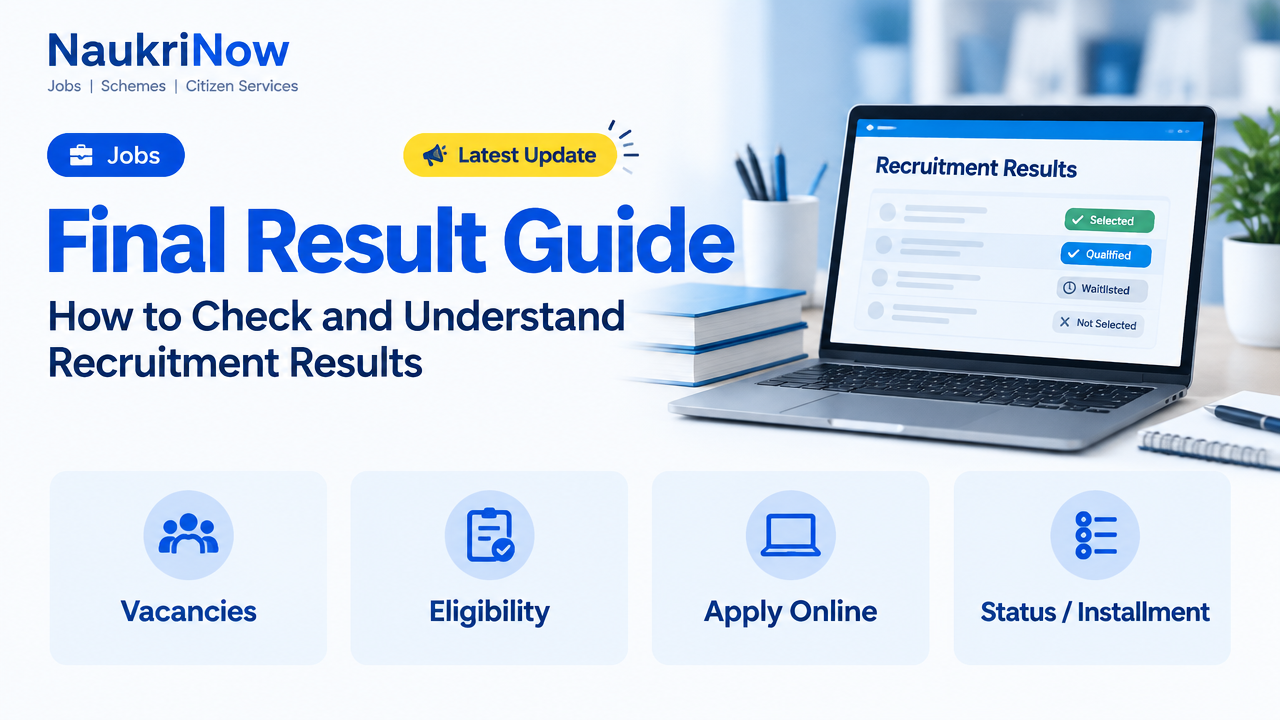
- Selected or recommended: This generally indicates that the candidate appears in the outcome for the stated stage. Check whether the notice makes selection subject to eligibility checks, verification or another condition.
- Qualified: This may mean that a candidate has met a requirement or passed a stage. It does not necessarily mean that the candidate has been offered a post.
- Provisionally selected: The result may depend on checks such as supporting documents or eligibility. Follow the stated instructions and do not treat a provisional status as an unconditional appointment.
- Waitlisted or reserve list: This indicates a different position from being selected for immediate appointment. Whether and how a reserve list is used depends on the official recruitment rules and notices.
- Not shortlisted or not selected: This describes the published outcome for that stage or process. Check the notice for any explanation, available review route or information about future recruitment. Do not infer an appeal right or deadline that is not stated.
A merit list may be arranged by rank, category, roll number or another method. Read its heading and notes before drawing conclusions. If the authority publishes marks, ranks or cut-offs, use the figures and definitions in that official publication. Do not compare numbers from different posts, categories, stages or recruitment cycles as if they were interchangeable.
Also distinguish a merit list from a vacancy list and an appointment order. A candidate’s appearance in one document does not necessarily establish the contents of another. The recruiting authority’s notice should explain what each document represents and whether further action is required.
What to do after checking your result
If the notice indicates selection or a further stage, make a short action plan based on its instructions:
- Note every stated action, submission method and deadline. Use the official notice as your reference and check for later corrigenda or additional instructions.
- Gather the documents the authority specifically requests. Depending on the recruitment, this may include identity, education, category or experience records, but requirements vary. Do not assume that this list is complete or that every item applies to you.
- Check that names, dates and other details are consistent across your application and supporting records. If you find a discrepancy, use the contact or correction procedure given in the official notice.
- Keep copies of submissions and confirmations. If an official portal is involved, save the acknowledgement or status shown after completing the stated step.
- Use only the official method for any required verification, communication or payment. A message asking for money or sensitive information should be checked against the recruiting authority’s published instructions before you act.
If the notice says that a later communication will be issued, monitor the official website and any candidate account identified by the authority. Check your registered email or phone as well, but do not treat an unverified message as a substitute for an official instruction.
If you cannot find your details or open the result
First check that you have the correct recruitment cycle and post. Search the official site’s result or notice section using the exact post name or reference shown on your application. If a PDF is slow to load, try downloading it or opening it with a PDF reader; on a phone, a desktop browser may be easier for a long list.
If a candidate portal does not accept your details, re-enter them carefully and check whether the notice specifies a particular registration or roll number format. Avoid repeatedly sharing your login details with other people or entering them on unofficial result-checking sites. If the problem continues, use the official support or contact route stated by the recruiting authority. Do not rely on a phone number or email address copied from a social-media post.
When a name or number appears to be missing, check the complete list and its notes before reaching a conclusion. If the authority provides an official correction, grievance or query process, follow its instructions and keep a record of your communication. Do not submit personal documents through an unverified form.
Common mistakes to avoid
- Trusting a search-result snippet: Search engines and third-party sites may show incomplete or outdated information. Open the official notice and verify the recruitment reference.
- Stopping at a name match: Confirm the roll number or other identifying details and read any qualifying conditions attached to the result.
- Confusing qualification with appointment: A passed stage, merit-list entry or provisional selection may be followed by further checks. Follow the exact wording in the official notice.
- Using an old notice as current guidance: Recruitment instructions can differ across cycles. Check for newer notices, corrections or updates for your own process.
- Assuming a cut-off or rank from another source applies: Use only figures published by the responsible authority for the relevant post and stage.
- Paying an unverified person to secure a result: No intermediary can reliably change an official selection outcome. Verify any fee or payment request through the recruiting authority’s own notice before proceeding.
- Sharing sensitive information publicly: Avoid posting application numbers, identity documents, passwords or one-time codes in comments or messaging groups.
Useful examples
Example 1: Your roll number appears in a list headed provisionally selected. Check the accompanying notice for the meaning of provisional selection and any verification requirements. Save the notice and prepare only the documents or actions the authority specifies. Do not assume that an appointment has been issued.
Example 2: You passed an earlier test but cannot find your name in the final list. Confirm that you are looking at the correct post, category or recruitment cycle and read the result notes. If the outcome remains unclear, use the official query route if one is provided. A result from an earlier stage does not guarantee inclusion in a later one.
Example 3: A message says your result is available and asks you to pay to confirm a place. Do not pay or share personal details based on the message alone. Visit the recruiting authority’s official website independently and compare the request with its published instructions. Treat claims of guaranteed selection with caution.
Quick checklist
- Have I opened the website of the responsible recruiting authority?
- Does the notice match my exact post, cycle and result stage?
- Have I checked my identifier and read the full notice, including conditions?
- Have I noted any official next steps and saved the relevant documents?
- Have I verified any payment, contact request or follow-up message independently?
Frequently Asked Questions
Where should I check a final recruitment result?
Start with the official website of the organisation responsible for the recruitment. Use its results, careers, recruitment or candidate-portal section, as applicable. The official notice should identify the relevant post and process.
Does a final result mean I have an appointment?
Not necessarily. The result may confirm an outcome while further eligibility checks, document verification or other stated steps remain. Look for an appointment or offer communication and follow the recruiting authority’s instructions.
What should I do if my name is misspelled?
Check whether the displayed entry is linked to your roll number or another identifier. Then consult the result notice for a correction or query process. Contact the authority only through the official route it provides.
What is the difference between a merit list and a waiting list?
A merit list records candidates according to the method stated by the authority. A waiting or reserve list has a separate purpose and does not necessarily mean immediate selection. The recruitment notice explains how each list is used.
Can I rely on a third-party result website?
You can use a third-party page as a pointer, but verify the result and all instructions on the responsible authority’s official website. Do not enter sensitive information or make payments on an unverified site.
What if the official result page is unavailable?
Try again later, check the authority’s other official notices or candidate portal, and confirm that you have the correct web address. If the issue persists, use the official contact route stated in the recruitment notice. Avoid relying on forwarded links.
Are cut-offs and result rules the same for every recruitment?
No. They can vary by post, stage, category and recruitment process. Use only the figures and rules published for your specific recruitment by the responsible authority.
Conclusion
Checking a final result carefully means more than searching for a name. Confirm the recruitment and source, read the full notice, understand any conditions and act only on instructions published by the responsible authority. Keep a record of what you find, protect your personal information and verify any uncertain update through an official channel.

Comments