Table of ContentsClick to view all sections
- Selection List Guide: What is a selection list?
- Selection list, merit list and waiting list: how they may differ
- Where to find the official list
- How to check your name or result accurately
- What your result may mean
- What to do after your name appears
- Prepare for document verification
- Useful examples
- Mistakes to avoid
- Conclusion
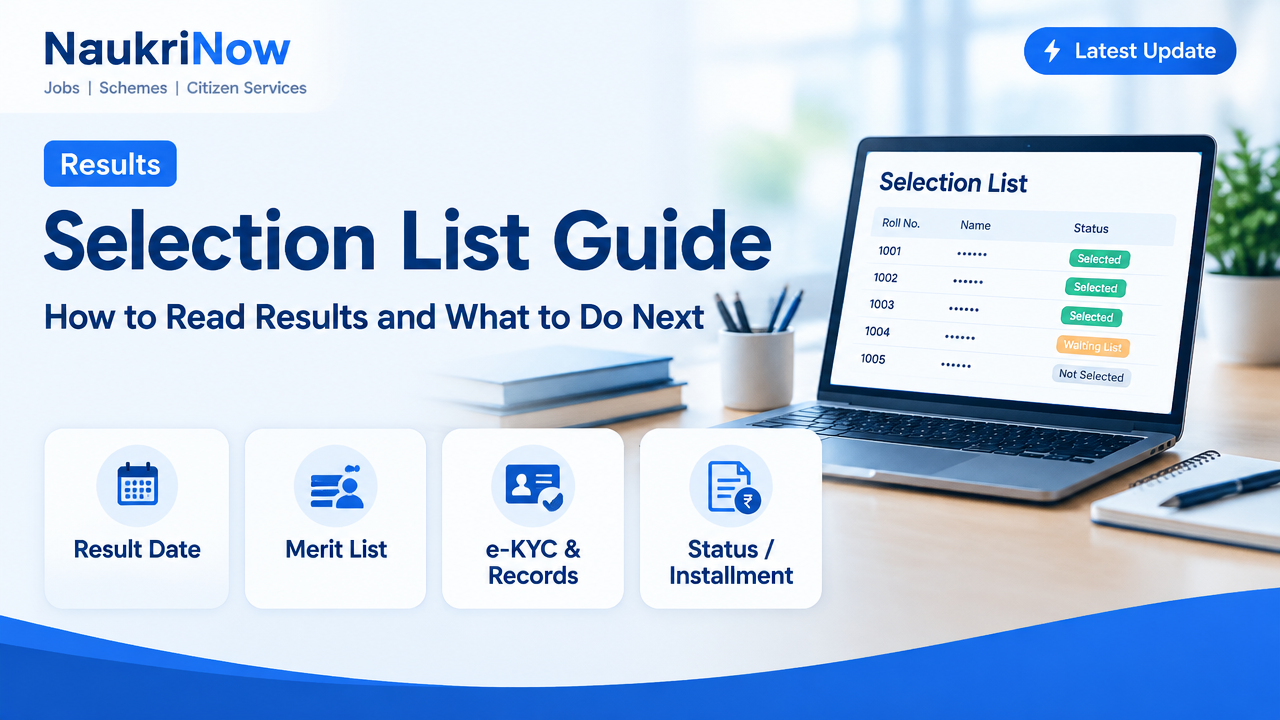
Selection List Guide — this guide explains the latest verified details, eligibility, benefits, application or status steps, and official resources relevant to this topic.
A selection list can be an important step in a recruitment process, entrance examination or admission exercise. But seeing your name on a list does not always mean the process is complete, and not finding it on one list does not always tell the whole story. The meaning depends on the official notice, the stage of selection and the rules set by the responsible organisation.
This guide explains how to find and read a selection list, check your status carefully and prepare for the next step. Procedures vary between organisations, so use the relevant recruiting body, examination authority or institution as the final source for current instructions, dates, eligibility conditions and outcomes.
Selection List Guide: What is a selection list?
A selection list is an official record of candidates who have been selected, provisionally selected, shortlisted or placed in another defined position at a particular stage. It may follow an examination, interview, skill test, counselling round, document check or a combination of assessments. Some lists name candidates; others use roll numbers, application numbers or registration IDs.
The label matters, but the accompanying notice matters more. Organisations may use terms such as merit list, shortlist, provisional list, final list, panel or waiting list differently. Do not assume that two organisations use these terms in the same way. Read the notice that was issued with your list and any later correction or update.
Selection list, merit list and waiting list: how they may differ
These labels often appear together, but they do not necessarily describe the same thing. A merit list commonly arranges candidates according to an assessment or ranking method. A selection list identifies candidates chosen at a particular stage or for a stated number of places. A waiting list or reserve panel may contain candidates who could be considered later if the rules allow it. These are common uses, not universal definitions.
| Label on the notice | What it may indicate | What to confirm |
|---|---|---|
| Provisional selection | Your selection may depend on checks or completion of stated conditions. | Which documents, verifications or other steps remain, and by when. |
| Final selection | The organisation may have completed a defined selection stage. | Whether appointment, admission or joining instructions are still to follow. |
| Merit list | Candidates may be arranged by marks, rank or another stated measure. | How rank is calculated, and whether the list itself confirms selection. |
| Waiting list or reserve panel | You may be considered later if a place becomes available under the rules. | Whether the panel is active, how it is used and its stated validity. |
A candidate should not infer a guaranteed appointment, admission or future offer from a label alone. The official notification and list-specific instructions determine what the status means in that particular process.
Where to find the official list
Start with the website or candidate portal of the organisation responsible for the process. This could be a recruiting authority, examination body, university, college or other institution. Use the official notification or application materials to identify the correct website and the name of the relevant examination or recruitment process.
- Look for a results, notices, recruitment, examination or admissions section on the official website.
- Match the list to the correct post, course, examination, recruitment cycle and stage.
- Check the publication date and whether a later notice, corrigendum or revised list has been issued.
- Use the official candidate login if the organisation directs candidates to check individual status there.
- Save a copy of the notice and list for your records, along with the date you accessed them.
Search-engine results, social-media posts, messaging groups and third-party result pages may help you discover that a notice exists, but they are not substitutes for the official publication. Avoid entering application details on a site unless you have confirmed that it belongs to the responsible organisation.
How to check your name or result accurately
- Read the notice before opening the list. Confirm what stage it covers, who is eligible to appear in it and whether the list is provisional, final or subject to further checks.
- Open the correct file or portal. Check the post, course, category, examination stage and cycle. Similar titles can refer to different groups or rounds.
- Search using the identifier requested. If the document is searchable, use your roll number, application number or another identifier specified in the notice. Names can be spelt differently or shared by multiple candidates.
- Check the complete entry. Compare your identifier and any other displayed details. Do not rely on a similar name or a cropped screenshot.
- Read any status code or remarks. Codes, abbreviations and notes may affect what you need to do. Use the explanation in the same notice rather than guessing.
- Confirm the next instruction separately. The list may tell you the outcome, while another notice or portal page explains document verification, counselling, joining or admission.
If a PDF is large, its search function may help, but a failed search is not conclusive. The file may be scanned as an image, or the identifier may have a different format. Check the relevant pages manually or use the official portal’s search facility if one is provided. If your details appear incorrect or the file will not open, follow the contact or representation process stated by the organisation.
What your result may mean
Selected or shortlisted: Read the notice to find out whether this is a final outcome or an invitation to a further stage. A shortlist usually indicates that you must still complete the next step described by the authority.
Provisionally selected: This commonly means that some condition or verification remains, but the exact condition is process-specific. Check the instructions, required evidence and method for completing the step. Do not assume that provisional status will automatically become final.
Waitlisted or placed on a panel: This is not necessarily the same as being offered a place. The notice should explain whether the list can be used, under what conditions and for how long. Do not make plans based on a possible future offer unless the organisation confirms one.
Not listed: Check whether the list is complete, whether results are being issued in stages and whether you are looking at the correct category, post, course or round. If the official result is final and your details are absent, use only the review or grievance route, if any, described by the authority.
What to do after your name appears
First, note every action the official notice requires. This may include document verification, counselling, a medical or skill-related stage, acceptance of an offer, fee payment, joining formalities or an additional assessment. These steps are not identical across processes, and some may not apply to yours.
- Make a personal checklist. Record each required action, the method for completing it and any deadline stated in the official notice. Recheck the official portal for updates.
- Gather relevant documents. Compare the requested documents with your application and the eligibility requirements. Check that names, dates and other details are consistent. Follow the authority’s instructions about originals, copies, formats and attestations.
- Keep access details secure. Store your application number and login information safely. Do not post passwords, one-time codes or unredacted identity documents in public groups.
- Keep proof of completion. Save permitted acknowledgements, submitted forms and official communications. Keep copies in a safe place and retain originals unless the organisation formally requires them.
- Monitor the official channel. A selection list may be followed by separate instructions. Check the website or portal identified by the authority rather than relying solely on forwarded messages.
If you cannot attend a required step, find out whether the authority allows another arrangement and how to request it. Do not assume that a representative, email or late submission will be accepted unless the official rules say so.
Prepare for document verification
Verification checks whether the information and eligibility stated in your application are supported by acceptable evidence. Requirements differ, so the notice is the checklist to follow—not a general list from another recruitment or admission process.
Before attending or uploading documents, compare each requested item with the name and details in your application. If records differ, find out whether the authority accepts supporting evidence or requires a correction through a specific process. Never alter a certificate or provide a document that does not belong to you. If you are unsure whether a document meets the requirement, seek clarification through the official channel before the stated step, where possible.
For online verification, use the official portal and follow its file type, size and submission instructions. Review each upload before submitting and save the acknowledgement if one is provided. For in-person verification, follow the venue and attendance instructions in the notice. Do not carry or send extra sensitive information unless requested through an official process.
Useful examples
Example 1: A name in a provisional list. A candidate finds their application number under a heading marked provisional. They read the attached notice and discover that a verification step is still required. The sensible next action is to follow that notice, prepare the specified evidence and check for further official instructions—not to treat the list as an unconditional appointment.
Example 2: A name is not found in a PDF. A candidate searches a list by name and gets no result. Before drawing a conclusion, they confirm that they opened the right examination cycle, search by the requested application identifier and check whether the PDF is searchable. They then review the official notice for information about staged publication or the process for queries.
Example 3: A candidate is on a reserve panel. The candidate reads the panel instructions and finds that any further offer depends on the organisation’s stated rules. They keep their contact details current as instructed and continue to rely on confirmed information rather than assuming that a place is guaranteed.
These examples are illustrative only. The rules in the relevant official notice take precedence in every real case.
Mistakes to avoid
- Assuming every list is final. Check its title, stage and conditions before deciding what it means.
- Relying on a screenshot or forwarded message. Open the full notice on the responsible organisation’s official website or portal.
- Checking the wrong list. Match the process, post or course, cycle, round and category where applicable.
- Ignoring later updates. A revised notice may change instructions or correct an earlier publication. Confirm the latest official information.
- Missing a required step. Do not wait for a personal reminder if the notice tells you to complete an action.
- Assuming a waiting-list position guarantees selection. Follow the terms stated for that panel and wait for direct official confirmation.
- Paying an unverified person or website. Use a payment route only when it is explicitly required and provided by the responsible organisation. Treat unsolicited demands and promises of guaranteed selection with caution.
- Sharing sensitive details publicly. Do not post login credentials, one-time codes or full identity documents to seek informal help.
Frequently Asked Questions
Does appearing on a selection list mean I have been appointed or admitted?
Not always. The list may be provisional or may identify candidates who still need to complete another stage. Read the accompanying notice for the meaning of the status and the steps that remain.
What is the difference between a selection list and a merit list?
A merit list often presents candidates by rank or another assessment measure, while a selection list identifies candidates chosen at a stated stage. Organisations may use the terms differently, so follow the definitions and rules in the relevant notice.
Why can I not find my name in the list?
You may be checking the wrong cycle or document, using a different identifier from the one printed, or viewing a file that does not support text search. Check the full official notice and list. If your details still appear to be missing or incorrect, use the official enquiry or review process, if one is provided.
Is a waiting list the same as being selected?
Not necessarily. A waiting list or reserve panel may be used only under stated conditions and may have a defined validity period. Check the official notice and wait for a formal offer before treating a place as confirmed.
Can a selection list be revised?
An organisation may publish a correction or revised list if its rules and circumstances allow. Check the responsible authority’s website for later notices and rely on the latest applicable official publication rather than an older copy.
What should I do if a detail in my entry is wrong?
Read the notice for a correction, representation or grievance procedure and use the stated channel. Keep a copy of the relevant entry and any acknowledgement. Do not edit the published list or send personal documents to unofficial accounts.
Where should I confirm deadlines and document requirements?
Use the official notification, result notice and candidate portal of the responsible organisation. Deadlines, acceptable documents and later-stage instructions can vary between processes and may be updated.
Conclusion
A selection list is useful only when you understand which stage it covers and what the organisation expects next. Confirm your details using the correct official list, read every status note, and act on the instructions issued by the responsible authority. Because procedures and requirements differ, use the relevant official website or candidate portal for current facts and keep a record of important notices and completed steps.


Comments