Table of ContentsClick to view all sections
- Merit List Guide: What a merit list tells you
- Before you look for your result
- How to check a merit list step by step
- How to read rank, score and cut-off
- Provisional lists, final lists and waiting lists
- What to do if your name is on the list
- What to do if you cannot find your name
- Simple examples
- Mistakes to avoid
- Conclusion
Merit List Guide — this guide explains the latest verified details, eligibility, benefits, application or status steps, and official resources relevant to this topic.
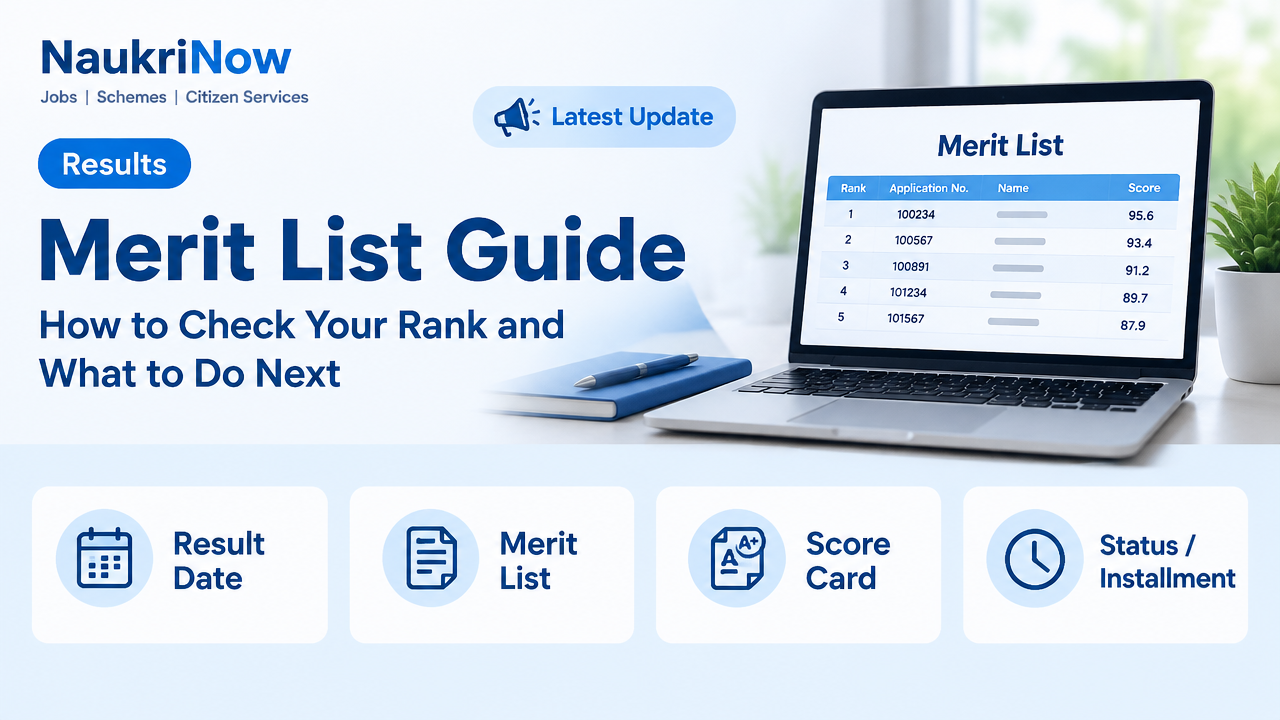
A merit list shows how applicants have been placed according to the selection rules for a particular recruitment, admission or other process. Seeing your name—or not seeing it—can raise questions about rank, cut-offs, categories and what happens next. The answers depend on the notice and rules issued by the organisation responsible for that process.
This guide explains how to read a merit list, check your details and plan your next step without relying on rumours or assumptions. It is general guidance: for current results, deadlines, eligibility, document requirements and selection rules, use the official website and notices of the recruiting body, institution or other authority concerned.
Merit List Guide: What a merit list tells you
A merit list arranges candidates by a measure of merit defined in the applicable selection rules. That measure may be an examination score, a combined score from several stages, academic marks or another stated method. Some lists show every candidate who qualified at a stage; others show only candidates being considered for a particular number of seats or posts.
A merit list is not always the same as a final selection list. A person may qualify for a further stage but still need to pass document verification, an interview, a medical examination or another check. In an admission process, a listed candidate may still need to accept a seat and complete enrolment formalities. Read the heading and accompanying notice carefully to understand what the list actually confirms.
Names and numbers also vary between organisations. A list might show a roll number, application number, registration number, score, rank, category or status. A higher score does not always translate into the same rank across different lists: the scoring method, tie-breaking rules and relevant applicant group may differ.
Before you look for your result
Start with the organisation that conducted the process. Find its official website, recruitment or admissions page, and the notice connected with your application. If a result is announced through an official portal, use the link published there rather than a search result, social media post or message from an unknown sender.
- Keep your application or registration number, roll number and any login details used for the process handy.
- Check the exact post, course, programme, subject or category to which the list applies.
- Note whether the notice describes the list as provisional, revised, final, a shortlist, a waiting list or a selection list.
- Read the instructions for the result, including any stated next stage, document checks or response process.
- Use a private device and a secure connection when signing in. Do not share passwords, one-time passwords or other confidential login details.
How to check a merit list step by step
- Open the official source. Navigate from the organisation’s main website to the relevant result, recruitment or admissions section. Confirm that the notice refers to the same process and year or cycle as your application.
- Choose the right list. There may be separate lists for different posts, courses, categories, regions, subjects or stages. A similar title is not enough; compare the notice and identifiers with your application.
- Read the result instructions first. Find out whether the list is a PDF, a searchable page or a personal dashboard. Check whether it reports marks, rank, qualifying status or selection for a further stage. These terms are not interchangeable.
- Search using the right identifier. In a PDF, use the search function for your roll number or application number. Searching only by name can be unreliable because names may have different spellings, initials or spacing. If you use a portal, enter details only into the official login page.
- Confirm the full entry. Compare your identifier and any other displayed details with your records. If the list shows a category, score or status, check that you are reading the correct row and column.
- Save a copy for your records. Download the result and notice from the official source where possible. Keep the date or version information, since a provisional list may later be corrected or replaced.
- Act on the notice, not just the result. Make a note of any instructions and deadlines stated by the authority. A result may require a separate application, document submission, counselling choice, attendance or confirmation.
How to read rank, score and cut-off
Score or marks tell you the result under the scoring method used for that process. If the exam had several papers, stages or sessions, the notice may explain how those components were combined or adjusted. Do not compare your score with another candidate’s unless you know that both scores were calculated on the same basis.
Rank or merit position indicates your position in a defined list. Ask what the ranking covers: all candidates, a particular category, a subject, a region or only those who qualified. A rank by itself does not promise appointment or admission. The number of available places, preferences, eligibility checks and later-stage requirements may all matter.
Cut-off usually refers to a minimum score or position used for a stated purpose, such as qualifying for a next stage or being considered for selection. There may be different cut-offs for different categories, posts, courses or stages, where the rules provide for them. A past cut-off is not a guarantee of a future one: applicant numbers, available places, paper difficulty and the selection method can change.
Be cautious with cut-offs shared by coaching pages, social posts or unofficial result sites. They may be estimates, refer to a different category, or confuse a qualifying threshold with a final selection threshold. Use figures published by the responsible authority and check what each figure means.
Provisional lists, final lists and waiting lists
A provisional merit list may be issued before checks or corrections are complete. The notice may invite candidates to report errors, submit claims or attend verification. Follow only the process and time limits stated by the authority. If a detail appears wrong, keep evidence of your application and raise the issue through the official channel described in the notice.
A final list is issued after the authority completes the relevant stage or review. Even then, it may not mean that every listed candidate has completed all remaining formalities. Read the result notice to find out whether selection is conditional and what must happen before appointment, admission or enrolment is confirmed.
A waiting list or reserve list may be used if places become available, but being on one does not guarantee that an offer will follow. Its operation, validity and order of consideration are determined by the rules for that process. Do not assume a waiting-list position remains active indefinitely; look for official instructions.
What to do if your name is on the list
First, identify exactly what the result means. A shortlist can invite you to a next stage without confirming final selection. A selection list can still require verification or acceptance. Check the notice for the next action, how to complete it and any deadline. If there is a portal, access it using the official link and save confirmation of any submission.
Prepare documents only according to the authority’s stated requirements. Depending on the process, candidates may be asked to provide identity, educational, category, experience or other records. This is not a universal list: the applicable notice determines what is required, in what form and at what stage. Check that names, dates and other details are consistent across your records. If they differ, seek guidance through the official channel rather than altering a document yourself.
Keep copies of submitted forms, receipts and correspondence. Attend any scheduled stage as instructed and check the official website for revised notices. Avoid making travel, resignation or payment decisions based only on an unofficial message or an unconfirmed prediction.
What to do if you cannot find your name
Before concluding that you have not been selected, check that you opened the correct list and searched using the correct identifier. Review any separate category, subject, post or stage lists that apply to your application. If the process uses a login portal, check the result shown in your own account as well as any published list, if the authority provides both.
If you still cannot locate your entry, read the notice for an explanation of the result and the process for queries. There could be a separate list, a later stage or a stated way to report a mismatch. Do not assume an omission is an error, but do not ignore a possible error either. Contact the authority through the details or grievance method published on its official website. Keep your application number and relevant records available, and describe the issue clearly.
If you are not selected, use any score or feedback that the authority makes available to plan your next attempt. Check the official notification for future eligibility and process details when they are published. Avoid relying on a rumoured vacancy, result date or expected cut-off as a basis for important decisions.
Simple examples
Example 1: Shortlisted for the next stage. A candidate finds a roll number in a list titled for an interview stage. That confirms shortlisting only if the notice says so; the candidate should then follow the stated interview and verification instructions. It does not, by itself, prove final appointment.
Example 2: A rank without a seat offer. An applicant sees a merit rank in an admissions list but no confirmed allotment. The rank may be used in later counselling rounds, or the applicant may need to submit preferences. The official counselling notice explains the process; the rank alone does not establish that a seat has been assigned.
Example 3: Similar names in a PDF. Two candidates have the same name. Searching by name creates uncertainty, so each checks the roll number and other details against their own application. The identifier, not the name alone, helps confirm the correct entry.
Mistakes to avoid
- Treating every list as final selection. Check whether it is a shortlist, provisional result, waiting list or final selection notice.
- Using the wrong list. A list for another post, category, region or stage may look similar but does not apply to your application.
- Assuming a past cut-off will repeat. Previous results can offer context, not a promise about a new selection cycle.
- Missing the instructions after checking your result. A candidate may still need to complete a separate step by the stated deadline.
- Trusting unofficial links or payment demands. Verify messages and links on the authority’s official website. Do not pay an unknown person for a guaranteed place or result.
- Sharing private credentials. Never disclose passwords or one-time passwords to someone claiming they can change your rank or secure selection.
- Ignoring a possible discrepancy. If your details appear incorrect, follow the official correction or grievance process promptly and keep a record of your submission.
Frequently Asked Questions
Is a merit list the same as a selection list?
Not always. A merit list may show ranking or qualification at one stage, while a selection list identifies candidates selected under the process. The title and instructions issued by the responsible authority determine what a particular list means.
Does a higher rank guarantee a job or admission?
No general rule guarantees that. Eligibility, available posts or seats, preferences, category rules, verification and further stages may affect the outcome. Follow the instructions for the specific process.
Why do I see my score but not my rank?
Some authorities publish scores without ranks, while others provide ranks through a separate list or personal login. Check the result notice and official portal to see what information is released.
Can a provisional merit list change?
It can, if the authority’s process allows corrections or further checks. Read the notice for the list’s status, the method for raising an issue and any relevant time limit. Do not rely on an unofficial revised list.
What should I do if my name or category appears incorrect?
Compare the entry with your application and supporting records. Then use the official correction or grievance route specified by the authority. Keep copies of your application, evidence and any acknowledgement.
Where can I find the correct cut-off?
Look for an official result notice or document that states the cut-off for the relevant process, category and stage. Check the explanation alongside the figure; online estimates and previous cut-offs are not substitutes.
How do I know whether a result message is genuine?
Do not rely on the message alone. Visit the authority’s official website independently and check for the same announcement. Avoid unknown links and never share login credentials or pay someone who promises a result or selection.
Conclusion
A merit list is useful only when you understand which process and stage it covers. Verify your entry with the correct identifier, read the instructions around the list, and distinguish a score, rank, shortlist and confirmed selection. Keep records and act within the deadlines stated by the authority. For current results, rules, cut-offs and next steps, the responsible organisation’s official website and notices are the reliable sources.


Comments