Table of ContentsClick to view all sections
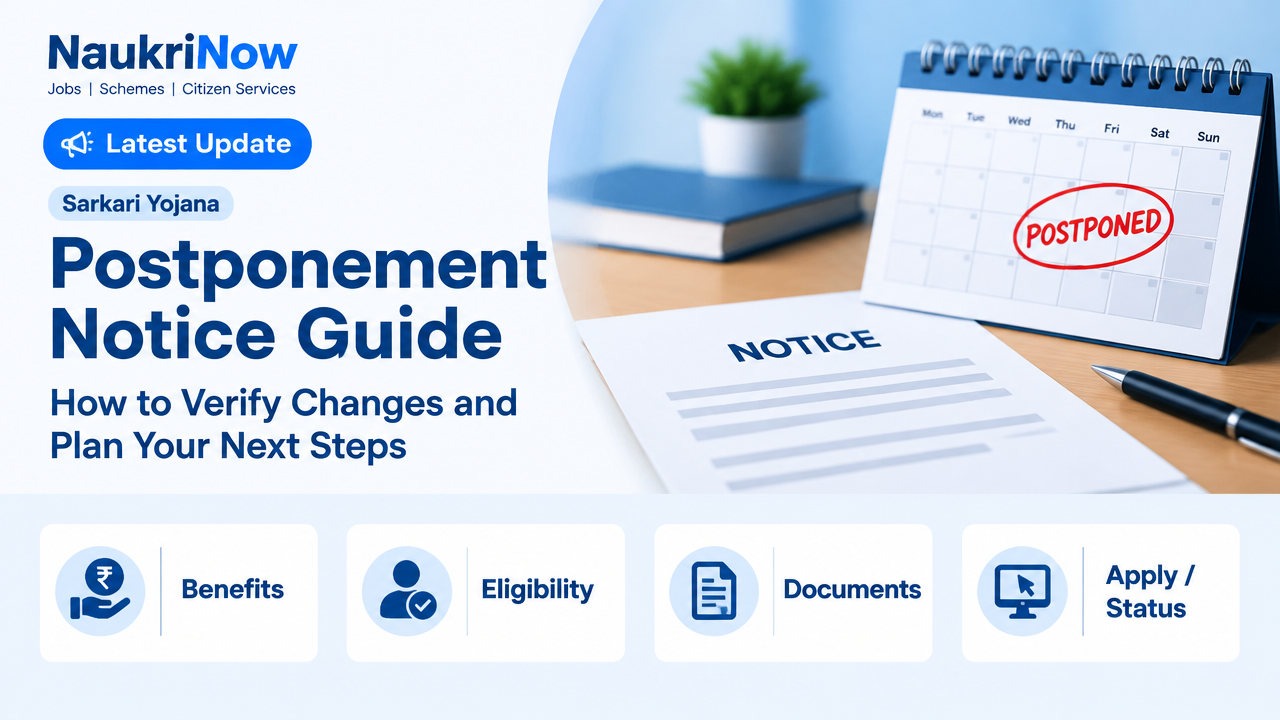
A postponement notice can affect an exam, interview, recruitment stage, admission process or public event. It may give a new date, say that a revised schedule will follow, or move only one part of a larger process. The wording matters: a postponement is not automatically a cancellation, and it does not always mean that every related deadline has changed.
This Postponement Notice Guide explains how to verify an update, identify what has actually changed and decide what to do next. Because schedules and instructions vary by organisation, always rely on the latest notice from the authority responsible for the event or process. Treat news reports, social media posts and forwarded messages as leads to check—not as final confirmation.
Postponement Notice Guide: What a postponement notice means
A postponement notice is an official communication that moves an activity to a later time or date, or puts its schedule on hold until further notice. It may apply to one session, one location, a particular group of candidates or the entire programme. Read the scope carefully before assuming that the change applies to you.
Common wording can point to different situations:
- Postponed: The activity will not take place as originally scheduled, but may be held later.
- Rescheduled: A replacement date or time has been set. Check whether it applies to everyone or only to a specified group.
- Deferred until further notice: The previous schedule is no longer in effect, but a new one has not yet been announced.
- Cancelled: The activity will not proceed in its current form. Any next steps, such as refunds or a replacement process, depend on the organiser’s instructions.
These terms are not a substitute for the full notice. For example, a notice may postpone an interview round but leave application deadlines or other stages unchanged. Do not infer those details unless the issuing authority says so.
How to check whether a notice is genuine
Begin with the organisation responsible for the event or process. Depending on the situation, that may be a recruiting body, government department, educational institution, examination authority, employer or event organiser. Use its official website, candidate or applicant portal, and verified communication channels. If a notice names a particular portal or section, check there too.
- Find the original source. Open the organisation’s website yourself or use a trusted bookmark. Avoid relying only on a screenshot, forwarded PDF or link shared in a group.
- Match the notice to your process. Check the organisation name, examination or recruitment title, post or course, stage, location and candidate category. Similar-looking processes can have separate schedules.
- Read the full document. Look for the issue date, notice number if provided, signatory or issuing office, affected dates, scope and instructions. A cropped image may leave out a key qualification.
- Compare it with portal information. If the portal and notice appear inconsistent, do not guess which instruction applies. Recheck the official source and contact the authority through details published on its own website.
- Save a record. Keep the complete notice, its official webpage or PDF, and a note of when you checked it. This helps you refer back to the actual instruction rather than relying on memory.
Look for signs of an unreliable message: an unfamiliar web address, poor-quality image with no source, pressure to act immediately, requests for payment to “secure” a new slot, or instructions to share passwords or one-time codes. These signs do not by themselves prove fraud, but they are reasons to verify independently. Do not submit personal or financial information through a link unless you have confirmed that it belongs to the responsible organisation.
What to check in the notice
Once you have found the official communication, identify exactly what it changes. Make a short list rather than relying on a quick reading.
- Who is affected? Note any named exam, recruitment, stage, venue, region, shift, category or group.
- What is postponed? It may be a written test, interview, document verification, counselling session, application deadline or the whole event.
- What happens to the original schedule? Check whether the old date is expressly withdrawn or whether only a particular session has changed.
- Is a replacement date given? If it is, record the date, reporting time, venue, mode and any time-zone information. If no new date is given, do not treat a guessed date as confirmed.
- Are there revised instructions? Look for changes to admit cards, entry arrangements, documents, travel, application steps or other requirements.
- What does the notice say about existing applications or registrations? Do not assume they remain valid or must be repeated; follow the specific wording and portal instructions.
- When and where will further updates appear? Note the official webpage or portal identified by the issuer and check it for later notices.
Pay particular attention to words such as “only”, “until further notice”, “all candidates” and “separately”. These can define the difference between a change that applies to you and one that does not. If an important detail is missing, the safe position is that it is unconfirmed—not that the most widely shared interpretation is correct.
Practical next steps after a postponement
1. Confirm how the change applies to you
Match the notice against your application details, stage, venue or session. If the notice covers only certain candidates, check your own records rather than relying on another person’s experience. Keep your application or registration number available when checking the official portal, but do not post it publicly.
2. Update your calendar, but keep the original record
Mark the original schedule as superseded only if the notice clearly changes it. Add a new date when one is officially provided. If the notice says a fresh schedule will be announced later, set a reminder to check the named official source periodically. Keeping both the old and new information in your notes can help you understand the sequence of updates.
3. Continue preparation unless instructed otherwise
A delay does not necessarily change the syllabus, selection criteria or preparation requirements. Keep studying or preparing for the interview using the applicable official materials. If the notice announces a change to the process, follow that instruction; otherwise, avoid basing your plans on speculation about why the event moved.
4. Recheck practical arrangements
If you have booked travel, accommodation or time away from work, review the provider’s own change or cancellation terms. Do not assume that an organiser will cover your costs unless its official notice explicitly says so. Before making fresh bookings, confirm that the replacement date is final and check whether the location or reporting arrangements have also changed.
5. Keep following any unchanged requirements
A notice that postpones a test may not extend an application deadline, document-submission date or fee-payment window. Check each relevant instruction separately. Unless the authority confirms an extension or change, treat other stated deadlines as still in force.
6. Ask questions through a verified channel
If the notice does not resolve a question that affects your plans, use the contact method published by the responsible organisation. Explain the issue clearly, include only the details needed to identify the process and keep a copy of your message. Never send passwords, one-time codes or unnecessary identity or banking information in response to an informal message.
Illustrative examples: reading the scope correctly
Example 1: An exam session is postponed. Suppose an official notice says that one session at named centres is postponed and a revised schedule will be published later. A candidate in another session should not assume their own sitting is affected. The candidate named in the notice should wait for the official replacement schedule and keep checking the specified source. This example is illustrative; it does not describe a real examination or date.
Example 2: An interview date changes, but a document deadline is not mentioned. The notice moves the interview and says nothing about document submission. The applicant should not assume the document deadline has moved too. They should check the original instructions and any later official update, and submit materials according to the current confirmed directions. This example is also illustrative.
Example 3: A message circulates with an unverified new date. A group chat shares a screenshot claiming that a postponed event will happen on a specific date, but the responsible organisation has not published that information. The date remains unconfirmed. The practical step is to check the official source, not to book travel based on the screenshot.
Common mistakes to avoid
- Confusing postponement with cancellation. A delayed activity may still take place. Look for explicit wording about cancellation or replacement arrangements.
- Assuming a new date. Do not infer one from rumours, previous schedules or another person’s message.
- Assuming every deadline has moved. A change to one stage does not automatically alter the rest of the process.
- Relying on an old notice or admit card without checking for updates. Revisit the official source before acting, especially when the original date is near.
- Forwarding a cropped or unverified message as fact. Share the original official link where possible, and make clear when something is still unconfirmed.
- Paying an unofficial agent to arrange a new slot. Use only procedures and payment routes expressly provided by the responsible organisation.
- Ignoring later corrections. An authority may issue a clarification or a newer notice. Check publication dates and follow the latest applicable official instruction.
- Taking irreversible action too early. Before cancelling travel or making replacement bookings, check the notice’s exact scope and confirm that any new schedule is final.
A quick postponement-notice checklist
Before you change your plans, make sure you can answer these questions:
- Did I find the notice on the responsible organisation’s official channel?
- Does it clearly apply to my process, stage, location or group?
- What exactly has been postponed, and what remains unchanged?
- Is a replacement date confirmed, or is it still awaited?
- Are there separate deadlines or instructions I must continue to follow?
- Have I saved the notice and noted where future updates will appear?
- Am I being asked to pay, share sensitive information or use an unofficial link?
Frequently Asked Questions
Does a postponement notice mean the event is cancelled?
Not necessarily. Postponement generally indicates a delay, while cancellation means the activity will not proceed as planned. Read the official notice for the organiser’s exact wording and any further instructions.
What should I do if no new date is announced?
Treat the new schedule as unconfirmed. Keep a copy of the notice, continue with any requirements that have not been changed, and check the official source identified by the issuer for updates. Do not rely on predicted dates.
Will my application, registration or admit card remain valid?
That depends on the instructions for the specific process. A postponement alone does not tell you whether a document remains valid or needs to be reissued. Check the notice and the official portal before acting.
Do other deadlines automatically get extended?
No. A postponed exam, interview or event does not automatically change separate application, document or payment deadlines. Look for an explicit extension or a separate official update.
How can I check a notice shared on WhatsApp or social media?
Search for the same notice on the responsible organisation’s official website or portal. Check that the document and its scope match the message. Until you verify it, do not treat a forwarded image or link as final confirmation.
What if the official website and portal show different information?
Save both records and check whether one is a newer update. If the conflict remains, contact the responsible organisation through the contact details it publishes on its own website. Avoid choosing the version that seems more convenient.
Should I cancel travel after receiving a postponement notice?
First check whether the notice applies to your session or location and whether a replacement schedule has been announced. Then review your booking provider’s terms. The notice itself may not explain travel refunds or reimbursements, so confirm those matters directly with the relevant provider.
Conclusion
A postponement notice is useful only when you understand its source, scope and exact instructions. Verify it through the responsible organisation, check whether it applies to your situation, and separate confirmed changes from assumptions. Keep records, continue to follow requirements that have not been changed, and make major arrangements only on the basis of official information. For current dates, deadlines and process-specific rules, the latest communication from the issuing authority is the source to trust.

Comments