Table of ContentsClick to view all sections
- UPSC Documents Guide: Start with the right examination notice
- Documents worth organising in advance
- Follow the document trail through each stage
- Check certificates carefully
- Examples of checks that prevent problems
- Common document mistakes to avoid
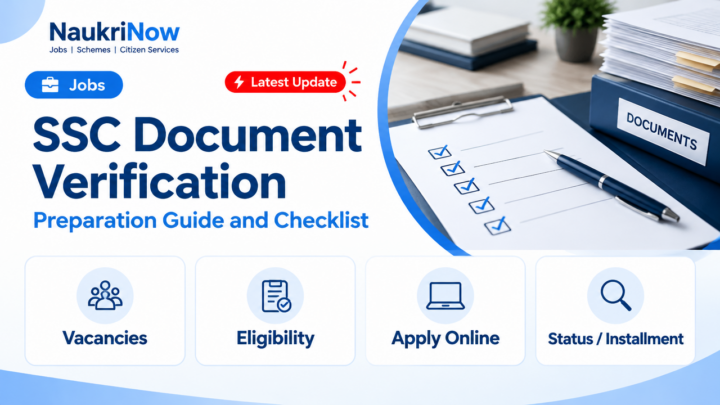
- A practical document-preparation checklist
- Conclusion
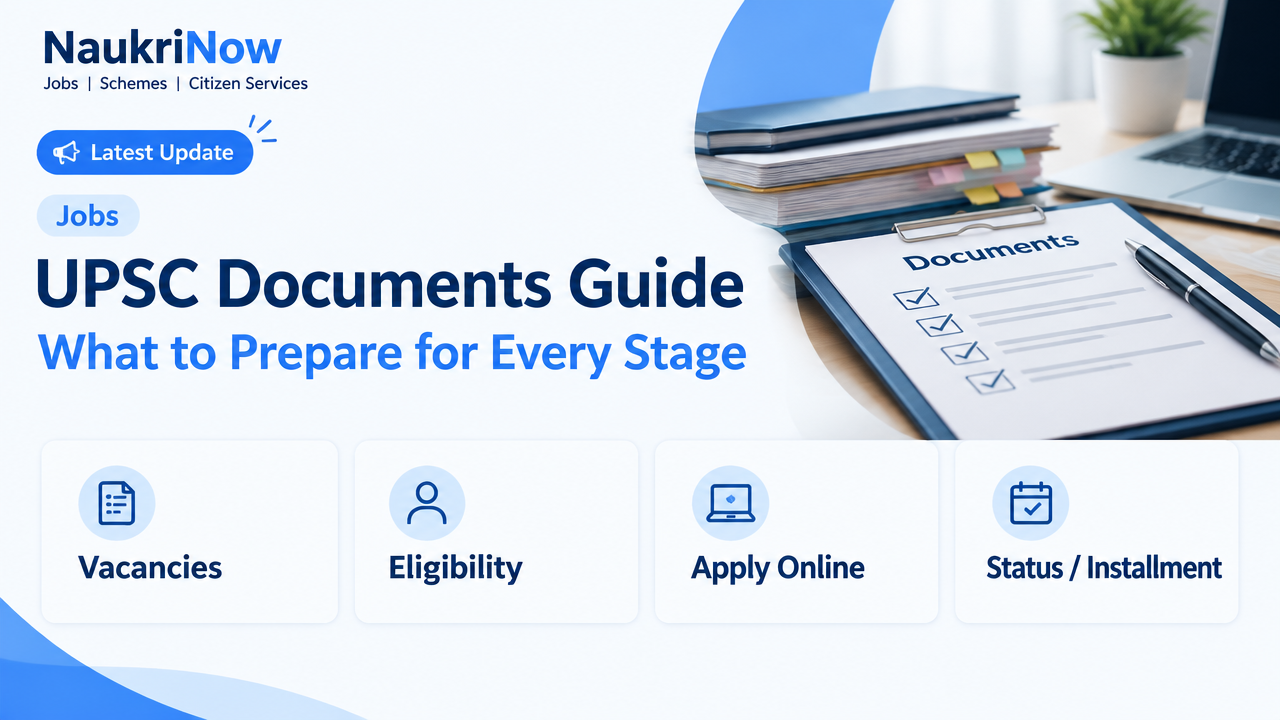
Preparing documents for a UPSC examination is not just a matter of collecting certificates. You also need to enter information accurately, use documents in the required format and keep your records consistent from application through verification. A mismatch in a name, date or category can create avoidable difficulty, even when the underlying information is correct.
This UPSC Documents Guide covers common preparation for the Civil Services Examination and explains what may differ across UPSC examinations. Treat it as a planning aid, not a substitute for the notice for your specific exam. The latest examination notice, application instructions and any later official communication published by the Union Public Service Commission (UPSC) are the authority on what is required and when.
UPSC Documents Guide: Start with the right examination notice
UPSC conducts several examinations, and their eligibility conditions, forms and document checks are not identical. Even within one examination, the documents requested at application, a later detailed form, an interview or final verification may differ. Begin with the notice for the exact examination and year you are applying for.
Read the sections on eligibility, application instructions, certificates, reservation or special claims, and subsequent stages. Note whether a document is needed at the initial application, must be produced later, or is required only if you make a particular claim. Do not assume that a checklist for one UPSC exam—or an older examination cycle—applies to yours.
For current requirements, use the official UPSC website, upsc.gov.in, and follow the relevant examination notice and official updates. If the notice directs candidates to another government authority or a specified certificate format, follow that direction. Do not rely on a coaching-centre list, a social media post or an old sample form when requirements are unclear.
Documents worth organising in advance
The following groups are useful to review before applying. They are a preparation checklist, not a claim that every item is mandatory for every candidate or stage.
- Identity and personal details: Keep the identity details and any supporting records you may need close at hand. Check your full name, date of birth and other particulars against the official application instructions. The notice will say what identification, if any, is required at an examination venue or later stage.
- Educational records: Organise your degree or qualifying examination certificate and marksheets, as applicable. If you are awaiting a result, have a qualification from a different system, or need to establish equivalence, read the notice carefully for the evidence and timing it accepts.
- Photograph and signature files: Prepare these in the file type, dimensions, size and other specifications stated in the application instructions. Keep a clean original file as well as the version prepared for upload. Do not assume that a file accepted by another portal will meet UPSC’s requirements.
- Category or eligibility certificates, where applicable: If you claim a reservation, age relaxation or another benefit, identify the certificate and supporting evidence specified for that particular claim. The issuing authority, format, relevant dates and other conditions can matter.
- Disability-related records, where applicable: Check the examination notice for the required disability certificate or assessment, and for any separate process related to facilities or assistance. Do not infer eligibility or documentation requirements from a general description online.
- Records supporting a change or discrepancy: If your name, date of birth or other detail differs across records, collect the relevant supporting documents, such as a legally recognised name-change record where applicable. Check the notice or official instructions for the accepted way to explain or establish the difference.
Keep originals safe and make readable scans or photocopies for your own records. A scan is useful for preparation but does not replace an original or prescribed certificate when the official instructions require one.
Follow the document trail through each stage
1. Before filling in the application
Make a simple personal-information sheet using the spellings and dates shown on your supporting records. Check your name, parent or guardian details if requested, date of birth, education history and category-related information against the relevant documents. If a field does not match your records or is unclear, consult the official instructions before submitting rather than guessing.
Read each declaration before accepting it. An application is your responsibility, including the accuracy of the information and the truth of any claim. Save the submitted application and any confirmation or correspondence the portal provides. Store them securely; they contain personal information.
2. Before an examination stage
Check the instructions issued for that stage, including any admit-card directions. Confirm what identification or other material candidates must bring, what is prohibited and whether printed or digital documents are accepted. Requirements for entry can be different from the documents needed to prove eligibility later. Follow the stage-specific instructions rather than relying on memory or an old checklist.
3. When a later form or document submission is required
Some examinations include a detailed form or later submission in which candidates provide fuller information and supporting evidence. Use the instructions for that stage, enter details consistently with your application and verify which certificates must be submitted or produced. Keep a copy of every form and document set you provide, along with any official acknowledgement.
4. For an interview or verification
If you are called for a later assessment or verification, read the communication and its enclosures line by line. It may specify originals, copies, certificate formats or explanations for particular cases. Arrange documents in the requested order if one is given, and check that every copy is legible. A general online checklist cannot override an individual instruction issued by UPSC.
5. After the examination process
Keep your application, submitted forms, certificates and official messages until the process is complete and any related administrative steps are resolved. If an authority requests further evidence, respond through the stated official channel and within the instructions given. Do not send sensitive documents to an unverified email address or person claiming to represent the Commission.
Check certificates carefully
A certificate can be genuine and still fail to support a claim if it does not meet the applicable conditions. Before relying on one, compare it with the examination notice and check:
- Correct claim: Does the certificate establish the specific category, status or eligibility you are claiming?
- Prescribed format: Does the notice require a particular form or wording? If so, is your certificate in that format?
- Issuing authority: Was it issued by an authority the applicable instructions recognise?
- Names and details: Do the name and other particulars match your application and supporting records, or do you have documents explaining a difference?
- Relevant timing: Do the rules specify a date, period or other timing condition for issue or validity? Check the condition for your examination rather than applying a remembered rule from another year.
- Legibility and completeness: Are all pages, signatures, seals and relevant details readable in the copy or upload?
Do not alter a certificate, fill in details on behalf of the issuing authority or rely on an informal substitute for an official document. If you need a new or corrected certificate, contact the responsible issuing authority and allow time for its process. For exam-specific questions, refer to the official UPSC instructions.
Examples of checks that prevent problems
- Different spellings of a name: A candidate finds one spelling on an education record and another on an identity record. Rather than changing spellings casually in the application, the candidate checks the application instructions and gathers acceptable supporting evidence for the discrepancy.
- Certificate in an uncertain format: A candidate has a category certificate but is unsure whether it meets the examination’s format or timing conditions. The candidate compares it with the current notice and asks the relevant issuing authority about any correction or reissue needed.
- Qualification still in progress: A candidate has not yet received a final degree document. Instead of assuming a provisional record will be accepted, the candidate checks what evidence and deadline the examination notice specifies for that situation.
- Upload rejected or unclear: A photograph or certificate scan appears blurry or does not meet portal specifications. The candidate prepares a clear file that follows the stated technical instructions and checks the portal’s confirmation rather than assuming the upload succeeded.
These examples show why the safest approach is to resolve questions against the applicable official instructions before a deadline, not after a form has been submitted.
Common document mistakes to avoid
- Using a checklist from a previous year or a different UPSC examination without checking the current notice.
- Entering a date, name or qualification detail from memory instead of verifying it against records.
- Assuming that a certificate is acceptable because it was accepted by another institution or in another process.
- Waiting until the last moment to request a certificate, correction or supporting record from an issuing authority.
- Uploading cropped, faint, incomplete or incorrectly formatted files, or failing to confirm that the portal accepted them.
- Making an eligibility or reservation claim without checking its specific conditions and evidence requirements.
- Submitting extra, unrelated personal documents when they have not been requested, especially through unofficial channels.
- Ignoring later official communications or failing to keep copies of submitted forms and acknowledgements.
A practical document-preparation checklist
- Find the official notice for your exact examination and cycle.
- Mark every document or detail it asks for, noting the stage and any special conditions.
- Compare your personal details across application records and supporting documents.
- Check any relevant certificate’s format, issuing authority, details and timing conditions.
- Prepare photo, signature and document files to the portal’s stated specifications.
- Submit carefully and save the application, acknowledgements and official messages securely.
- Before each later stage, re-read that stage’s instructions and organise the documents it specifically requires.
A folder—physical, digital or both—can make this easier. Use clear file names, keep originals separate from working copies and protect digital files with appropriate security. Avoid sharing identity or certificate scans unless an official process requires them.
Frequently Asked Questions
Are the same documents required for every UPSC examination?
No. UPSC examinations can have different eligibility conditions, application processes and verification requirements. Use the notice for the specific examination and cycle you are applying for.
Should I upload every certificate with the initial application?
Only follow the upload and submission instructions for your application stage. Some evidence may be requested later or only from candidates making a particular claim. Do not upload extra documents unless the official process asks for them.
Can I use a certificate issued in an earlier year?
That depends on the certificate and the conditions in the applicable notice. Check any prescribed format, issue-date or validity requirement and ask the issuing authority about your certificate if needed. Do not rely on a general rule from an unrelated exam cycle.
What if my name is different across two documents?
Do not alter an official record or guess which spelling to use. Follow the application instructions and check what supporting evidence is accepted to explain the difference. Resolve it with the relevant authority where a correction is needed.
What should I do if I do not yet have my final educational certificate?
Read the notice for rules on candidates awaiting results or documents. It may explain what evidence is acceptable and by when it must be produced. Do not assume that a provisional document will be accepted unless the official instructions say so.
Where can I confirm a UPSC document requirement?
Start with the relevant examination notice, application instructions and official updates on upsc.gov.in. If the requirement concerns a certificate issued by another authority, use that authority’s official information for its issue or correction process.
Is a digital copy enough for verification?
Not necessarily. Whether a digital copy, printed copy or original is required depends on the stage-specific instructions. Check the official communication for the exact requirement and bring or submit documents in the stated form.
Conclusion
Good document preparation for a UPSC examination begins with the correct notice, careful checking of personal details and early attention to certificates that may need correction or reissue. Keep clear copies, protect your personal information and review instructions again before every stage. When a requirement depends on the examination, year or candidate’s circumstances, confirm it through UPSC’s official communication and the relevant issuing authority rather than relying on assumptions.

Comments