Table of ContentsClick to view all sections
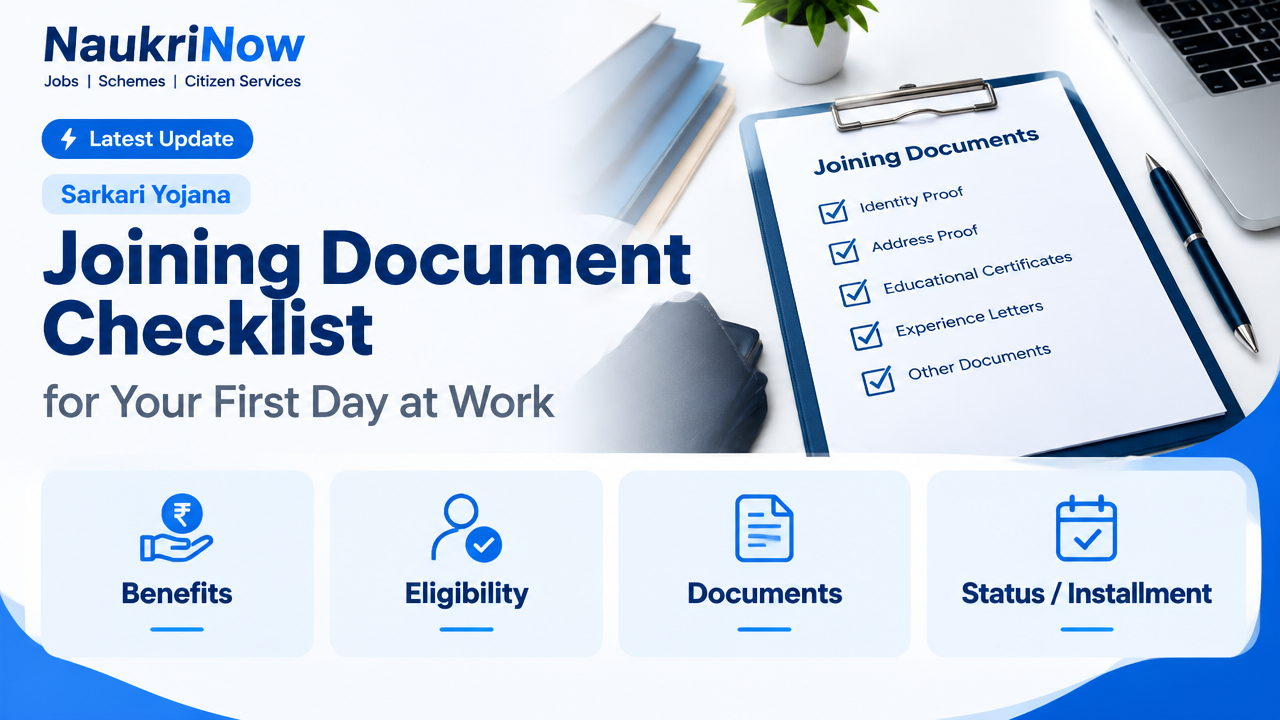
Starting a new job often involves more than signing an offer letter. Your employer may need to verify your identity, qualifications, previous employment and payroll details before or on your joining date. A little preparation can prevent delays and help you avoid handing over sensitive information without knowing why it is needed.
Use this Joining Document Checklist as a general guide, not a universal rule. Requirements differ by employer, role and type of appointment. Follow the written instructions from your employer or, for a government recruitment, the official recruiting authority. If a requirement is unclear, confirm it through an official HR or recruitment contact before you travel or share documents.
Start with the employer’s instructions
Before collecting documents, read your offer, appointment letter, onboarding email and any joining form carefully. Check whether the employer wants files uploaded in advance, originals brought for verification, self-attested copies, or a particular file format. Note the submission channel, deadline and whether any document must be issued in a specific format.
There is no single document list that applies to every Indian workplace. A company may request different records from a first-time employee than from someone with several previous jobs. A government post may have detailed verification requirements set out in the recruitment notice or appointment instructions. Where instructions conflict, ask the responsible employer or authority for written clarification rather than relying on a forwarded message or an unofficial website.
Core joining document checklist
1. Identity and personal details
- Photo identity proof: Carry an accepted identity document named in the employer’s instructions. The name and date of birth should be consistent with your application and other records wherever possible.
- Address proof: Keep a current address document ready if requested, particularly if your present address differs from your permanent address.
- Recent photographs: Bring photographs only if requested, and check any stated size, background or format requirements.
- Personal information: Keep your full legal name, contact details and emergency-contact information ready for joining forms. Use the same spelling as your supporting records, and flag any genuine discrepancy.
Do not assume that every employer needs a full copy of every identity document. If asked to upload sensitive identification, use the employer’s verified portal or an official work email and check whether a masked or otherwise limited version is acceptable. Never share an OTP, password, PIN or login credentials as a substitute for document verification.
2. Education and professional qualifications
- Collect marksheets and certificates for the qualifications relevant to the role, such as school, undergraduate, postgraduate or technical credentials.
- Include professional licences, registrations, trade certificates or course certificates when they are relevant or specifically requested.
- If your final certificate has not been issued, ask whether a provisional certificate, completion letter or another record will be accepted. Do not present an expected result as a completed qualification.
- Keep an explanation ready if your name, course title or dates differ across a certificate and your application. Ask the employer which supporting proof it needs.
You may not need to submit every certificate you have ever earned. Use the offer instructions and role requirements to decide what is relevant, but bring the records requested for verification.
3. Previous employment records
If you have worked before, prepare the employment records that the new employer has asked to verify. These may include:
- Appointment or employment letters showing your role and employment period.
- Relieving, resignation acceptance or service certificates, where available and applicable.
- Recent payslips or other salary records if requested for verification or payroll setup.
- Experience letters, particularly when your role or length of service is relevant to the appointment.
- Details needed to identify your previous employer or complete a background-check form.
Different organisations use different names for service and separation documents. If a former employer has not issued a requested record, tell your new employer honestly and ask what alternative evidence, if any, it can consider. Do not create, alter or backdate an employment document.
4. Bank and payroll details
For salary processing, an employer may ask for your bank account details and evidence that the account belongs to you. Depending on its process, this could be a cancelled cheque, a passbook page or another bank-issued record. Confirm what is accepted and how to submit it securely. Check the account number and bank details carefully before sending them.
For tax and payroll onboarding, you may also be asked for a PAN or other tax-related details. Requirements and forms can vary with the employer and your circumstances, so complete the current forms supplied by the employer and consult official tax or payroll guidance if you are unsure. Do not share banking passwords, card PINs or one-time passwords with anyone claiming to need them for salary setup.
5. Employment, social security and statutory details
Some employers ask for information from earlier employment to set up or update employment-related records. Keep relevant account or membership details available if you have them, but do not guess a number or provide someone else’s details. Ask HR which field applies to you if you are a first-time employee or do not have the requested information.
Where forms involve statutory declarations or benefits, read the wording before signing. For current eligibility, process or regulatory requirements, rely on the relevant official government portal, department or recruiting authority—not an old checklist copied from another person.
6. Role-specific records
Some appointments require additional evidence, such as a medical fitness certificate, background-verification form, licence, work authorisation, conflict-of-interest declaration or references. These are not universal requirements. Follow the employer’s written directions on who must issue a certificate, what format is acceptable and when it must be submitted.
If you are appointed through a government recruitment process, check the appointment letter and the recruiting authority’s official instructions for category, disability, domicile, experience or other eligibility documents. The required format, issuing authority and validity conditions can matter. Do not rely on an old certificate or a generic online list if the official instructions specify something different.
Prepare originals, copies and digital files
Make a simple inventory before joining. For each requested document, note whether you need an original, a photocopy, a scan or more than one of these. Keep originals separate from copies, and carry them in a folder that protects papers from damage. Do not leave original certificates with an employer unless there is a clear, legitimate reason and a documented process; ask for a written acknowledgement if an original is retained for verification or another stated purpose.
For digital copies, scan the complete document clearly, including relevant pages and both sides where information appears on both sides. Use readable filenames, such as Education_Certificate or Previous_Employment_Letter, rather than a confusing string of numbers. Save files in the format and size requested by the employer. Keep a secure backup for your own records, and avoid uploading documents to public links or sending them to an unverified personal account.
Self-attest copies only if asked. If you do, follow the stated method and do not write over important text. Carry a pen and a few blank copies if practical, but do not assume a particular number of copies is required unless the employer has specified one.
A practical timeline
- When you receive the offer: Read the joining instructions and make a list of every document, form and action requested. Note any item that needs to come from a former employer, bank, college or issuing authority.
- Before submitting information: Verify the request through the official employer channel. Ask about unclear items, name mismatches, missing certificates or documents that are still being processed.
- A few days before joining: Check that scans open properly, copies are legible and originals are packed. Confirm the reporting location, time and person or team to contact using your official joining communication.
- On the day: Bring the documents and identification specified in your instructions. Present originals for inspection when requested, and hand over only the copies or forms that are required.
- After joining: Keep copies of signed forms and any receipt for documents submitted. Ask HR how to correct an error in a form or update a personal detail after onboarding.
Examples: how to handle common situations
You are a fresher and have no employment records. Do not try to fill the gap with unrelated documents. Tell HR that this is your first job and ask whether any previous-employment fields should be marked not applicable. Bring the education and identity records requested in your joining instructions.
Your name is spelled differently on two documents. Do not edit either record yourself. Inform the employer before verification, explain the difference and ask which official supporting evidence it will accept. The appropriate evidence depends on the records and the employer’s process.
Your former employer has not issued a relieving letter. Let the new employer know early and ask whether another record can support verification. Keep any genuine correspondence or documents relevant to your employment, but do not claim that an alternative is guaranteed to be accepted.
Mistakes to avoid
- Relying on an old checklist: A friend’s list or an online post may relate to a different employer, role or recruitment cycle. Check your own official instructions.
- Carrying originals without tracking them: Keep them under your control during verification and check that every original is returned before leaving.
- Sending documents to an unverified contact: Confirm the sender and submission channel, especially before sharing identity, bank or salary records.
- Uploading blurry or incomplete scans: Review each file on a screen before submission so names, dates, seals and page edges are visible.
- Guessing or changing information: Keep dates and details consistent with your records. Raise genuine errors instead of trying to hide them.
- Signing without reading: Read declarations and authorisations. Ask for clarification if a form is unclear or asks for information you do not understand.
- Sharing OTPs or passwords: No document checklist should require you to disclose account credentials or a one-time password to a person.
Frequently Asked Questions
Do all employers ask for the same joining documents?
No. The list depends on the employer, role, your work history and the organisation’s verification process. Treat the employer’s current written instructions as the controlling list.
Should I carry original certificates on my first day?
Carry originals if your joining instructions require them for inspection. Keep them with you and check that they are returned. If an original is to be retained, ask why and request written acknowledgement and details of the return process.
How many photocopies should I take?
There is no universal number. Follow the employer’s instructions. If no number is mentioned, ask HR; carrying a few spare copies may be practical, but it does not replace checking what is actually required.
What if one of my documents is missing or delayed?
Contact HR or the recruiting authority before the joining date, explain the situation and ask what to do. Do not submit a fabricated substitute or assume that a particular alternative will be accepted.
Can I send documents over WhatsApp or a personal email account?
Use only a channel confirmed by the employer. If an informal channel is suggested, verify it independently through an official contact before sending sensitive records, and ask whether a secure portal or work email is available.
What should I do if my name or date of birth differs across records?
Tell the employer before verification and ask what evidence it needs. Do not alter a certificate or identity record. The correct way to resolve a mismatch depends on the document and the relevant issuing authority.
Where should I check requirements for a government appointment?
Use the official recruitment notice, appointment communication and website of the responsible recruiting authority or department. For current rules or formats, confirm directly with that authority rather than relying on a general job-preparation article.
Conclusion
A reliable Joining Document Checklist begins with the instructions for your specific job. Gather the requested identity, education, employment, bank and role-specific records; check originals and copies; and submit sensitive information only through verified channels. If something is missing, unclear or inconsistent, raise it early with the responsible employer or recruiting authority. That simple preparation can make your first day more organised and help you start with confidence.
Comments