Table of ContentsClick to view all sections
- State Wise Scheme Guide: What does “state-wise scheme” mean?
- Start with the need, not a scheme name
- How to find schemes for your state
- Check eligibility before you apply
- Prepare documents and apply carefully
- Illustrative examples: how to narrow a search
- Mistakes to avoid
- A practical checklist before you submit
- Conclusion
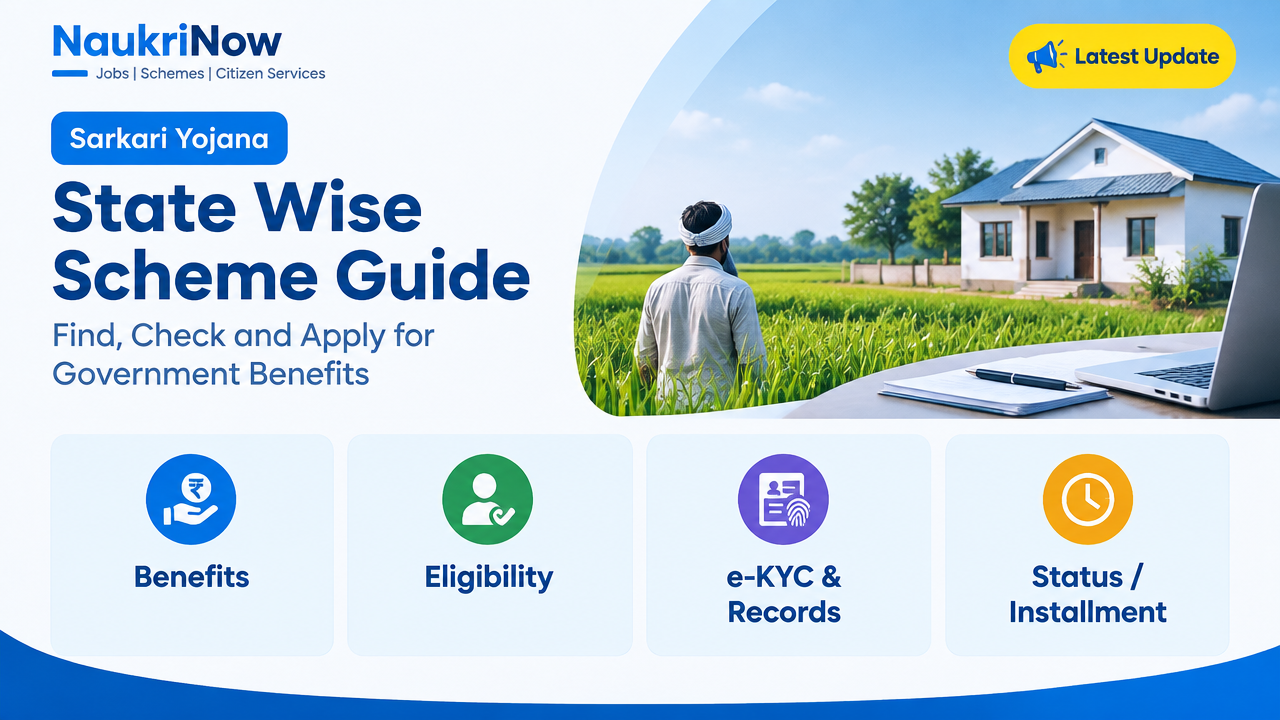
Government schemes can support people with needs related to education, farming, housing, health, livelihoods, pensions and more. But a scheme that is open to one family may not apply to another. Eligibility and application processes can depend on your state, district, income, age, occupation and other circumstances. Some programmes are run by a state government; others are national programmes delivered through state or district offices.
This State Wise Scheme Guide explains how to research schemes, check whether you may qualify and prepare for an application. It is a practical starting point, not a live scheme list. Rules, application windows, required documents and benefit details can change. Confirm those facts with the department responsible for the scheme or another official government source before you act.
State Wise Scheme Guide: What does “state-wise scheme” mean?
A state-wise scheme search is a way of finding government support relevant to a particular state or Union Territory. It can include programmes created and administered by a state government, as well as central schemes implemented locally. The state connection may affect eligibility, the office that handles an application, the documents accepted or the way a benefit is delivered.
Do not assume that a programme available in one state is available on the same terms elsewhere. Similarly, a national scheme may have state-level procedures or local verification. Treat any scheme page, article or social media post as a lead until you have checked the responsible department’s official instructions.
Start with the need, not a scheme name
People often search for a scheme by name because they saw it mentioned online. If you do not know the name, start by describing the need you want help with. That makes it easier to find relevant departments and reduces the chance of applying for something unsuitable.
- Education: Look for support connected to your course, institution, study level or student category.
- Agriculture and rural livelihoods: Check whether support is intended for farmers, agricultural workers, producer groups or rural households.
- Housing and basic services: Search for programmes linked to housing, sanitation, water or household facilities.
- Health and social care: Identify whether the support concerns treatment, insurance, disability, care needs or a particular age group.
- Employment and enterprise: Check schemes aimed at jobseekers, workers, self-employed people, small businesses or skill development.
- Social security: Look for support for older people, widows, persons with disabilities or other groups, and verify the conditions that apply locally.
These are search categories, not a promise that a particular benefit exists or is accepting applications in your area. Programme availability and terms must be confirmed with the relevant authority.
How to find schemes for your state
- Set your location accurately. Note your state or Union Territory and, where needed, your district and local area. Some schemes are state-wide; others may involve district-level administration or local eligibility conditions.
- Describe your situation. Write down the main purpose of your search and the facts that may affect eligibility, such as age range, occupation, student status, household circumstances or type of need. Share sensitive personal details only through a legitimate application process.
- Search official government sources first. Start with the state government’s official portal or the website of the department responsible for the subject. Depending on the scheme, an official district administration page or designated service portal may provide application instructions.
- Check whether the scheme is state-run or centrally sponsored. This helps you identify which authority sets the rules and which office receives or verifies applications. If the information is unclear, ask the department named in the official notice.
- Read the scheme’s own guidance. Look for eligibility, exclusions, application method, document requirements, selection or verification process, and how to ask questions or correct an application. Do not rely on a search-result summary alone.
- Confirm that the information is still applicable. Check for a publication date, updated notice or current instructions. If you cannot tell whether a page is current, contact the responsible department or local office before submitting documents or paying for assistance.
Search engines, news reports and third-party scheme directories can help you discover programme names. They are not the final authority on whether applications are open, what a person may receive or which documents will be accepted.
Check eligibility before you apply
Eligibility is usually a set of conditions, not a single qualifying detail. A person may meet one condition but fail another. Read the full official criteria and note whether each item applies to the applicant, household, property, institution or business.
- Residence: Does the scheme require residence in a particular state, district or area? Is a specified proof of residence required?
- Personal or household criteria: Does eligibility depend on age, family circumstances, income, occupation, student status or another defined category?
- Purpose of support: Is the scheme limited to a particular course, activity, service, asset or expense?
- Existing assistance: Are applicants who receive another benefit excluded, or are the programmes compatible? Verify this rather than assuming.
- Application conditions: Is there an application period, a required registration step, a designated institution or a local verification process?
- Evidence: Can you provide the documents requested in the form, and do the names and other details match across records?
If a condition is unclear, ask the office responsible for the scheme to explain it. Do not treat a neighbour’s successful application as proof that you qualify: household details, location and rules may differ.
Prepare documents and apply carefully
There is no single document list for every government scheme. Requirements depend on the programme and may also vary by applicant or application route. Commonly requested records can include identity, residence, income, education, occupation or bank details, but that does not mean every scheme asks for all of them. Use the official checklist for the specific programme.
- Gather only the documents requested. Avoid sending extra personal records to an unverified person or website.
- Check consistency. Compare names, dates and other details on your form with the supporting documents. If there is a discrepancy, ask the responsible office how to handle it rather than altering a document yourself.
- Use the stated application route. This may be an official online form, a designated office or another method named by the department. Do not assume that a form found through an advertisement or forwarded message is genuine.
- Review before submitting. Check that mandatory fields are complete, attachments are legible and you have selected the correct scheme and location.
- Keep a record. Save a copy of the submitted form, any acknowledgement or reference number, and official messages about the application. Follow the published instructions for checking progress or responding to a query.
Some applicants use a local service centre for help with online forms. A service provider can assist with the process, but the relevant government department remains the authority on eligibility, approval and benefits. Ask for a receipt where a service charge is officially applicable, and verify any fee directly against the scheme’s instructions.
Illustrative examples: how to narrow a search
A student looking for education support: Begin with the student’s state, course and institution type. Check the responsible education department or official student-support portal for the scheme’s eligible courses, applicant categories, documents and application route. Confirm with the institution if the official instructions require it to verify or forward an application.
A household seeking housing-related assistance: Search through the state or local department responsible for housing or rural and urban development, as relevant. Check whether the programme covers the applicant’s area and what household or property conditions apply. Do not assume that owning, renting or living in a particular type of home automatically qualifies someone.
A worker exploring livelihood support: Identify whether the need is for skills, employment, self-employment or business assistance. Different departments may handle each purpose. Read the scheme guidance carefully to see whether the applicant must belong to a specific occupation or group, attend training, submit a business plan or meet other conditions.
These examples show a research method only. They do not confirm that a particular scheme exists, is open or applies to an individual.
Mistakes to avoid
- Trusting an old article as current guidance. A page may remain online after its application period or rules have changed. Confirm details on an official source.
- Confusing similar scheme names. Check the full name, department, location and purpose. A similar title does not mean the rules are the same.
- Assuming one state’s rules apply everywhere. State programmes and local procedures can differ.
- Applying before checking exclusions. Read all eligibility conditions, including household, location and existing-benefit restrictions.
- Submitting inaccurate or incomplete information. Errors can delay verification or lead to rejection. Ask the responsible office how to correct information through the proper process.
- Paying an unofficial agent for a guaranteed approval. No intermediary should be treated as able to guarantee a government decision. Verify any authorised service and fee through the official scheme instructions.
- Sharing sensitive information carelessly. Do not disclose passwords, one-time passwords or banking credentials to callers or agents. Use only verified channels and provide documents when the official process requires them.
- Assuming submission means approval. An acknowledgement usually confirms receipt, not eligibility or sanction. Follow the official process for verification and status updates.
A practical checklist before you submit
- I have selected the correct state, district and scheme.
- I have read the official eligibility criteria, exclusions and instructions.
- I know which department or office is responsible.
- I have prepared the documents specifically requested and checked that details match.
- I am using the official application route and have verified any service fee.
- I will keep the acknowledgement and use the official process for follow-up.
Frequently Asked Questions
How can I find schemes available in my state?
Start with your state government’s official portal and the department responsible for the subject you need help with. Search by purpose and location, then read the specific scheme guidance. Treat non-government listings as discovery tools, not confirmation of current rules or availability.
Are central schemes the same in every state?
Not necessarily in their local application process. A central programme may be delivered by state or district authorities, and local offices may handle verification or applications. Check the official instructions for the scheme and the state in which you are applying.
Can I apply for more than one scheme?
It depends on the rules of each programme. Some may allow other support, while others may have restrictions or conditions. Read the eligibility and exclusions for both schemes, and ask the responsible departments if the rules do not explain how they interact.
What if my name or details differ between documents?
Do not change or edit a document to make it match. Ask the department or designated office what correction or supporting evidence it accepts. Follow the official process and keep a record of any correction request.
Where can I check an application’s status?
Use the status-check method or contact channel stated in the official scheme instructions. Keep your acknowledgement or reference number available. If no status facility is described, contact the responsible department or office rather than relying on an unofficial link.
Do I have to pay to apply?
Fees depend on the scheme and application route. Check the official instructions before paying anyone. If a service centre assists you, distinguish its authorised service charge, if any, from a government application fee and ask for a receipt.
What should I do if I cannot understand the eligibility rules?
Write down the specific condition you are unsure about and ask the department named in the official guidance or the designated local office. Explain your circumstances without sharing passwords or unnecessary sensitive information. Do not assume that an informal opinion is an official decision.
Conclusion
Finding the right government support is a process: identify the need, search by state and responsible department, check every eligibility condition, prepare the requested evidence and apply through the stated route. Because scheme details can change, verify current rules and application status directly with the official authority before making decisions. Careful checks can help you avoid unsuitable applications, misinformation and unnecessary exposure of personal data.
Comments