Table of ContentsClick to view all sections
- Women Scheme Guide: What does “women’s scheme” mean?
- Types of support to look for
- How to find a scheme that fits
- Check eligibility before preparing an application
- Documents and application preparation
- Applying safely: a practical checklist
- Common mistakes to avoid
- Examples: how to use the guide
- Conclusion
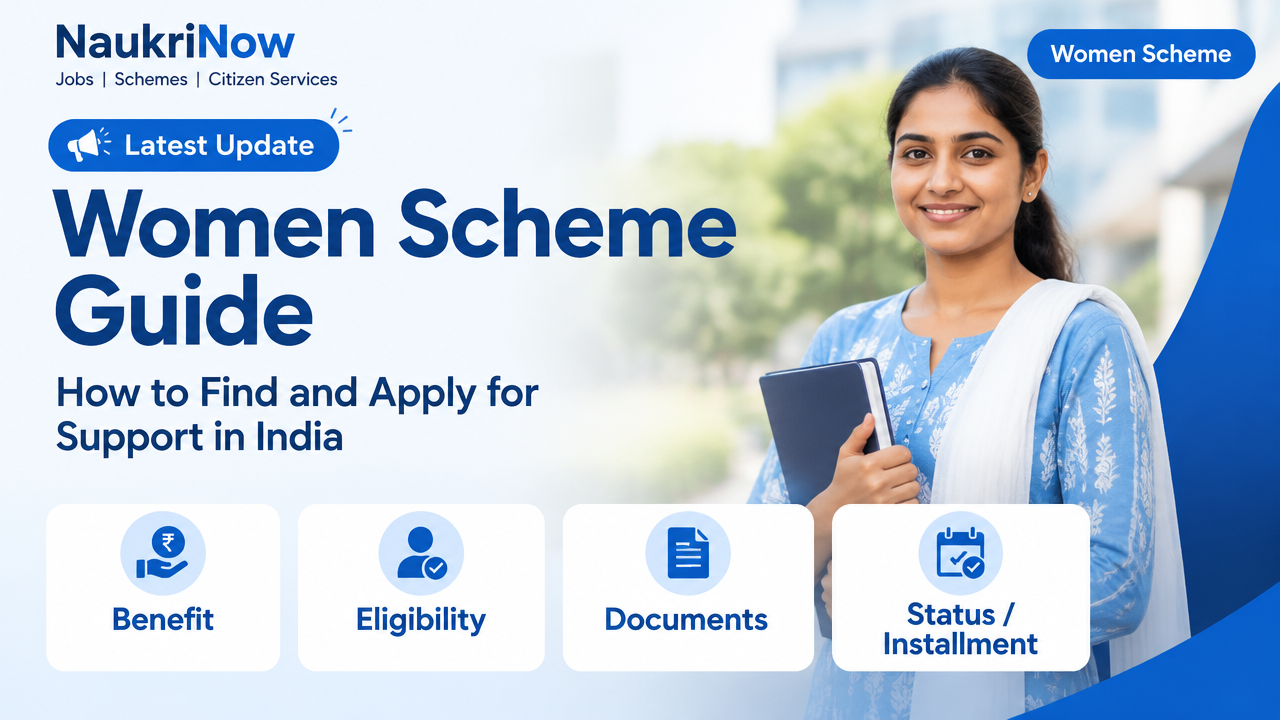
Government support for women in India can take many forms, from help with livelihoods and skills to education, healthcare, housing or financial inclusion. The right option depends on where you live, your circumstances and the rules of each programme. This Women Scheme Guide explains how to search carefully, check whether a scheme fits your situation and apply without relying on rumours or unofficial promises.
Scheme details can change, and a programme available in one state or district may not be available in another. Treat this article as a practical starting point, not confirmation that a particular benefit is open or that you qualify. Before sharing documents or making a decision, check the latest information with the government department responsible for the scheme.
Women Scheme Guide: What does “women’s scheme” mean?
The phrase can refer to a programme designed specifically for women, a scheme that gives women priority, or a general programme for which women are eligible. Some support is intended for individuals; other assistance is delivered through a self-help group, training provider, bank, local body or community organisation. The word “scheme” does not always mean a cash payment. It may mean access to a service, training, credit, a subsidy, insurance or another form of support.
Programmes may be run by the Union government, a state or union territory, or a local authority. A central programme can still have state-level application arrangements, while a state programme may have its own residence or income conditions. The department’s official notice or scheme guidelines are the best place to confirm what the programme actually offers.
Types of support to look for
Start with the need you want to address rather than searching only for a scheme name. This makes it easier to compare relevant options and avoid applying for something that does not match your circumstances.
- Livelihood and enterprise: Look for programmes connected with self-employment, small businesses, producer groups, market access or financial inclusion. Check whether support is a loan, a subsidy, training or a combination, and whether an intermediary is involved.
- Skills and employment: Training or placement-related programmes may set conditions about age, education, residence, course attendance or availability. Confirm who provides the training and whether any placement outcome is actually guaranteed.
- Education: Support may relate to scholarships, continued study or a specific educational level. Check the eligible course, institution, academic year and application route rather than assuming that every student can apply.
- Health and wellbeing: Some initiatives connect people with healthcare services, awareness activities or assistance through designated facilities. Confirm the service location and the responsible health department.
- Housing and basic services: A programme may support a household rather than an individual woman. Check how the applicant, household, property or local-area conditions are defined.
- Protection and social support: Support may be delivered through local departments or service providers and may require an assessment. Use a verified government office or recognised service channel to find the correct route.
These are broad categories, not a guarantee that a particular programme exists in your area. Names, eligibility conditions and delivery arrangements vary.
How to find a scheme that fits
- Write down your need. Be specific: for example, training in a particular skill, support to continue education, or help accessing a service. Note whether you are looking for a one-time benefit, an ongoing service or a loan.
- Identify the relevant location. Record your state or union territory and district. Residence requirements can matter, and an application may be handled locally even when the programme has a wider reach.
- Search official sources first. Check the website of the responsible ministry, state department, district administration or local authority. An official government scheme directory can help you discover programmes, but confirm the details on the department’s own page or in its current guidelines.
- Read the current notice or guidelines. Look for the intended applicants, eligible locations, conditions, application method, documents and selection process. If there is a downloadable form or notice, make sure it comes from the official site.
- Ask the implementing office when something is unclear. Contact details should be found on an official government page or notice. Ask precise questions, such as whether your location is covered, which document is accepted or where the form must be submitted.
- Keep a record. Save the official notice, application instructions and any acknowledgement you receive. Note the date you checked the information so you can recheck it before acting.
Search results, social-media posts and forwarded messages can help you discover a programme, but they are not proof that applications are open or that a message is genuine. Follow the link from an official government website rather than trusting a copied URL.
Check eligibility before preparing an application
Eligibility is usually a combination of conditions, not a single test. Read the complete rules and check each condition against your own situation. Depending on the scheme, the rules may refer to:
- age, gender or other applicant details;
- residence, domicile or a specific district or community;
- income, household circumstances or a defined social category;
- education, occupation, business activity or course enrolment;
- banking, identity or other verification requirements; and
- whether the applicant or household has already received specified support.
Do not infer eligibility from a scheme’s name or from another person’s successful application. Two applicants can have different outcomes because their residence, documents or circumstances differ. If a rule uses a term you do not understand, ask the department or implementing office to explain how it is applied. Do not alter information to fit a condition.
Documents and application preparation
There is no universal document set for every women’s scheme. Follow the current official checklist, because submitting unnecessary sensitive information can create avoidable risk. Depending on the programme, an application may ask for identity, address, income, education, bank or category details, but the required evidence and acceptable formats must be confirmed for that scheme.
Before submitting, check that names and other details are consistent across your form and supporting records. If a document has a spelling difference, an outdated address or another discrepancy, ask the responsible office how to correct or explain it. Do not edit a certificate or create a substitute document yourself.
Make clear copies or scans only in the format requested. Keep the originals safe unless an authorised office needs to inspect them. If you submit an application in person, ask whether you can receive an acknowledgement. For an online application, save the confirmation page or reference details and keep a copy of the form and uploaded files.
Applying safely: a practical checklist
- Confirm that the scheme and the application route are described by the responsible official department.
- Check that the application period or intake is current before filling in a form; do not rely on an old notice.
- Use the official portal or the office named in the official guidelines. If an authorised service centre is part of the process, verify its role through the department.
- Read declarations carefully. Make sure every answer is accurate and that you understand what you are agreeing to.
- Share only the information and documents the official process requires. Avoid sending identity or bank details to unknown people over messaging apps or social media.
- Never disclose a one-time password, PIN, password or card security code to someone claiming to process your application.
- Do not pay an unofficial agent for a promised approval. If an official fee or service charge is mentioned, confirm its basis and payment method in the current instructions, and request a receipt where applicable.
- Keep the application reference, acknowledgement and any official communication together. Check status only through the stated official channel.
If you need help using a portal, ask a trusted person or an authorised service provider to guide you while you remain in control of your documents and account. Do not allow anyone to submit false details or retain access to your account without a clear, legitimate reason.
Common mistakes to avoid
- Relying on a viral post: A message may use an official-looking logo while linking to an unrelated page. Verify the programme independently through a government department.
- Assuming every benefit is direct cash: Read what the scheme provides and how it is delivered. A training opportunity, service or loan is not the same as a grant.
- Using an old form or notice: Application requirements and routes can be revised. Use the latest version available from the responsible authority.
- Applying without checking location rules: A programme may be limited to certain areas or implemented differently across states. Confirm coverage before assembling paperwork.
- Submitting inconsistent or incomplete details: Review the form against your documents and answer every required field accurately. Never guess at a fact that affects eligibility.
- Paying for a guaranteed result: No private person can legitimately promise that an authority will approve an application. Treat such claims as a warning sign.
- Sharing sensitive information too widely: Submit documents only through the stated official route and avoid public posts containing personal or financial details.
- Failing to keep proof: Without an acknowledgement or application reference, it can be harder to follow up. Save records from the start.
Examples: how to use the guide
A woman seeking work-related training: She can first identify the skill and location she is interested in, then check the relevant state or central department’s official information. Before enrolling, she should confirm who runs the course, who can participate, what attendance is required and whether any employment outcome is stated as an aim or a guarantee. She should not pay a recruiter based on an unsupported promise of a job.
A woman exploring support for a small enterprise: She should clarify whether she needs training, a loan, a subsidy or advice, since each involves different conditions. She can then read the relevant programme guidelines and ask the implementing office about business eligibility, documents and repayment obligations, if applicable. She should compare the official terms before signing anything.
A student checking education support: She should verify that her course and institution meet the programme’s rules, check the correct application route and use current academic-year instructions. A friend’s previous approval is not proof that the same rules or intake apply now.
Frequently Asked Questions
Is there one official portal for every women’s scheme in India?
There is no single application route that covers every central, state and local programme. A government directory may help with discovery, but the responsible department’s current notice or guidelines should confirm eligibility and how to apply.
Can a woman apply for a scheme run by another state?
It depends on that programme’s residence and other eligibility rules. Do not assume that being an Indian resident is enough for every state programme. Check the official guidelines or ask the implementing department.
Do all women’s schemes provide money?
No. Support may involve a service, training, access to facilities, a loan or another form of assistance. Read the official description carefully to understand what is offered and whether any repayment or participation conditions apply.
Which documents should I keep ready?
Use the document list in the current scheme instructions. Requirements differ, and collecting or sharing extra sensitive documents “just in case” is not advisable. If an item is unclear, confirm it with the responsible office.
How can I tell whether an application link is genuine?
Reach the link through the responsible government department’s official website or a verified government notice. Check the page address carefully, and do not rely on a shortened link or one sent by an unknown person. If uncertain, ask the department through contact details published on its official site.
Can I apply through an agent?
Use an agent only if the official instructions recognise that service or intermediary. Confirm its role and any permitted charge with the department. An agent cannot guarantee approval, and you should keep control of your passwords, OTPs and original documents.
What should I do if I am unsure about eligibility or my application status?
Contact the department or implementing office named in the official guidelines, using contact details published by that authority. Keep your application reference and ask a specific question. Avoid paying anyone who claims they can change a decision or speed up approval unofficially.
Conclusion
Finding useful support starts with a clear idea of your need, followed by careful checking of the scheme’s location, eligibility, documents and application route. Use official sources for current facts, keep copies of your records and protect your personal information. A considered application is safer and more effective than acting on a forwarded message or a promise of guaranteed approval.
Comments