Table of ContentsClick to view all sections
- Student Scheme Guide: What can a student scheme cover?
- Start with your need, not a scheme name
- Where to look for reliable information
- Check eligibility before preparing an application
- Prepare documents carefully
- A practical application process
- Examples: matching a need to the right questions
- Mistakes to avoid
- Protect yourself from misleading claims
- Conclusion
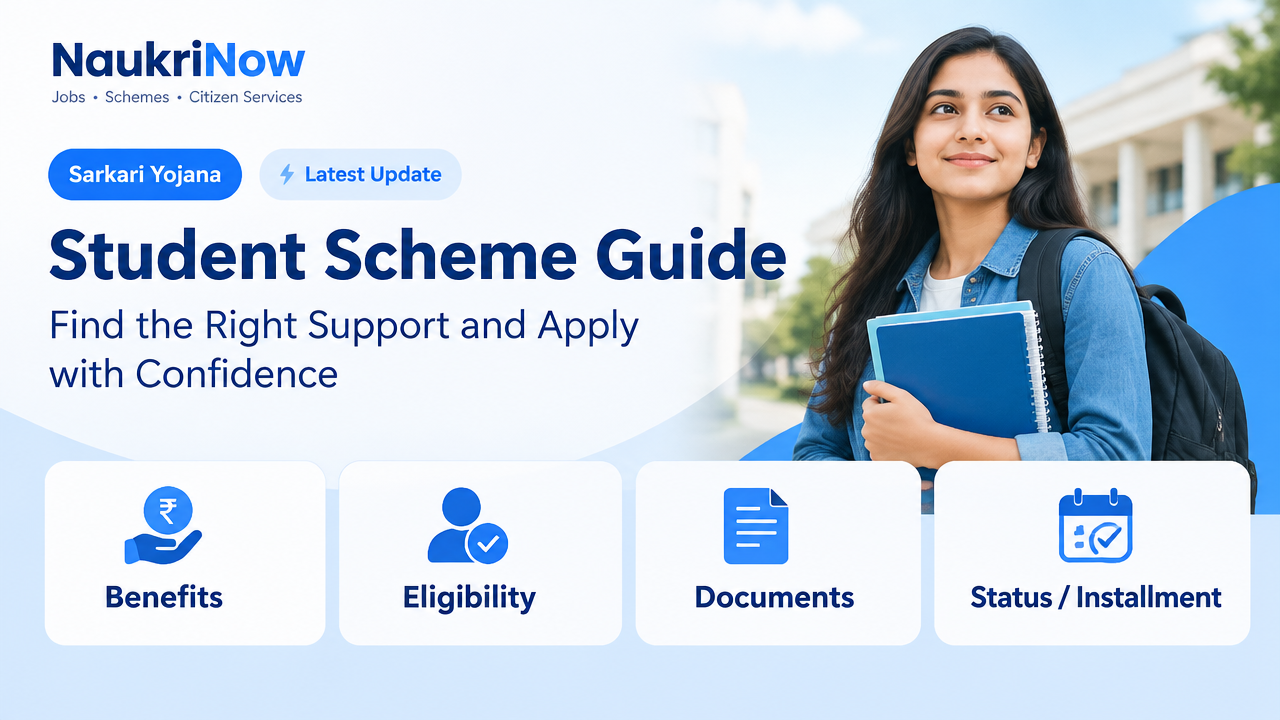
Student Scheme Guide: Find the Right Support and Apply with Confidence
Student schemes can help with different parts of education, from fees and accommodation to learning resources or career preparation. But there is no single scheme that suits every student, and eligibility, benefits and application routes vary. The safest approach is to start with your specific need, read the current official guidance and keep a clear record of what you submit.
This guide explains how to search for relevant support in India, check whether a scheme fits your circumstances and avoid common application problems. It is practical guidance, not a list of current openings. For live details—including deadlines, benefit amounts, rules and application links—always consult the official department, scheme portal or institution responsible for the scheme.
Student Scheme Guide: What can a student scheme cover?
The word scheme is used for a range of support programmes. Some provide money directly; others offer a concession, a service or access to a specific opportunity. Read the scheme description carefully rather than assuming that every programme is a scholarship or cash grant.
| Type of support | What to check |
|---|---|
| Scholarship or education assistance | Who can apply, which course or institution qualifies, how selection works and how support is paid or renewed. |
| Fee concession or reimbursement | Which charges are covered, whether payment is made to the student or institution and what proof of fees is required. |
| Hostel, travel or other student support | Whether the support is available in your location and whether it depends on residence, distance or a particular institution. |
| Learning, coaching or career support | What service is provided, who delivers it and whether there are attendance or participation conditions. |
| Education loan or credit-linked support | Whether the programme is a loan, a subsidy or another form of assistance, and what repayment or lender conditions apply. |
These are broad categories, not a guarantee that a particular programme exists in your area or accepts applications. The official scheme notice defines the actual support.
Start with your need, not a scheme name
Before searching, write down what is making it difficult to continue or complete your education. You might need help with tuition, a hostel place, travel, books, a device, coaching or a transition to further study. Being specific helps you compare relevant options and avoid spending time on schemes that address a different need.
- Note your current course, year of study and institution.
- Identify the cost or barrier you hope to address.
- Record relevant circumstances, such as your state of residence, community category, disability status or household circumstances, if applicable to the scheme.
- Decide whether you are looking for a grant, a fee benefit, a service or a loan-related option.
Share sensitive personal details only through a verified official application route and only when they are requested for a legitimate eligibility check.
Where to look for reliable information
Begin with the department or public authority responsible for the area the scheme covers. Depending on the programme, that could be a central or state government department, a statutory body or an authorised institution. Your school, college or university may also publish notices or explain how it handles verification, but confirm scheme rules against the official guidance.
Some schemes use a dedicated application portal. Others may route applications through an institution or department. A familiar portal should not be treated as the right route for every programme: follow the route stated in the scheme’s official notice. For example, use the National Scholarship Portal only when the relevant scheme’s official instructions direct applicants there.
Search results, social media posts, forwarded messages and coaching websites can help you discover a scheme, but they are not final proof of its current rules. Before acting, locate the official notice and verify that the page is maintained by the responsible authority. Check the scheme name, application route, contact information and any linked instructions. If two official pages appear to conflict, ask the responsible department or your institution to clarify rather than guessing.
Check eligibility before preparing an application
Read the full eligibility section, not just a headline saying a scheme is for a particular group. A programme may set conditions relating to course level, recognised institutions, academic progress, residence, family circumstances, income, age or other criteria. Each scheme defines its own terms, and a condition used by one programme should not be assumed to apply to another.
Look for the answers to these questions:
- Is your course, year and institution covered?
- Are there rules about where you live, where you study or where you completed earlier schooling?
- Does the scheme set an income or other household criterion, and which proof does it accept?
- Does it require a minimum academic record, attendance or progression to the next year?
- Can you apply if you receive another scholarship, fee waiver or form of assistance?
- Are there separate rules for new applicants and students seeking renewal?
- Are there conditions you must continue to meet after selection?
If a term is unclear—for example, how the scheme defines a recognised course or qualifying income—check the official definitions or ask the responsible office. Do not rely on an informal interpretation when it could affect eligibility.
Prepare documents carefully
Document requirements differ by scheme. Make a list directly from the current official instructions and check whether each item must be uploaded, verified by your institution or presented later. A document that was accepted for a previous application may not meet the requirements of a different scheme.
| Document category | Why it may be requested | What to check |
|---|---|---|
| Identity and personal details | To confirm that the application belongs to you. | Name, date of birth and other details match the official records required by the scheme. |
| Course and enrolment proof | To establish what and where you are studying. | The course, year and institution details are current and legible. |
| Academic records | To verify previous results or continued study, where required. | The correct examination or academic period is included. |
| Income or category certificates | To assess eligibility under criteria stated by the scheme. | The issuing authority, format and validity meet the scheme’s instructions. |
| Fee or bank information | To verify costs or arrange a payment, if applicable. | Details are accurate and submitted only through the official channel. |
This is a planning list, not a universal document checklist. Do not obtain certificates or share financial details simply because an unofficial source requests them. Follow the scheme’s instructions on accepted formats, file size, certification and whether originals must be shown.
A practical application process
- Find the official notice. Confirm that it relates to the correct scheme, student group and application period. Use the official application route stated in that notice.
- Read the instructions from beginning to end. Note eligibility, documents, form requirements, the process for verification and any conditions after selection.
- Make a personal checklist. List each field and document you need. Mark questions that require confirmation from your institution or the scheme authority.
- Prepare consistent information. Enter your name, course, institution and other details as they appear in the records requested by the scheme. Resolve discrepancies through the appropriate issuing office where possible; do not alter official documents yourself.
- Complete the form carefully. Check spelling, category selections, course details, contact information and uploaded files before moving on. Save or print a copy if the official process allows it.
- Review and submit. Read the declaration before agreeing to it. Submit only when the information is accurate and all required fields are complete.
- Keep proof of submission. Save the acknowledgement, reference number or other confirmation provided by the official system. Keep copies of the submitted form and documents in a secure place.
- Follow the stated next steps. Some processes may require institutional verification or a response to a query. Check the official application channel for instructions and use only the correction or appeal process described by the authority.
Submitting a form does not necessarily mean that an application is complete, eligible or approved. Treat any status message as an update from the system, not as a substitute for the scheme’s selection rules.
Examples: matching a need to the right questions
A first-year student facing course costs: The student can look for education assistance or fee-related support, then check whether the scheme covers that course and institution. They should confirm which fees are considered, what proof is needed and whether the application must pass through the college.
A student moving away from home: Travel or accommodation support may be more relevant than a general scholarship. The student should check whether the programme serves their location, whether residence conditions apply and what evidence of travel or accommodation is accepted.
A student continuing into another academic year: The student should look for the renewal instructions if they previously received support. Renewal may have different requirements from a first application, so they should verify what academic, enrolment or other proof is needed for the current period.
These examples illustrate how to investigate a need; they do not confirm that a particular scheme is available or that a student will qualify.
Mistakes to avoid
- Applying based on a headline alone: A short post may omit course, location or income conditions. Read the complete official notice.
- Assuming all schemes use the same portal: Follow the application route named for that specific programme.
- Uploading unclear or mismatched records: Check legibility and compare important details with the documents you were asked to use.
- Leaving the process until the last moment: Give yourself time to resolve document or verification issues. For current deadlines, rely only on the official notice.
- Submitting duplicate or contradictory applications: Check whether repeat applications are permitted and use the official process to correct an error.
- Ignoring messages after submission: Monitor the official channel and respond to genuine queries through its stated process.
- Assuming selection or payment is guaranteed: Eligibility, verification, available support and selection are governed by the scheme’s own rules.
Protect yourself from misleading claims
Be cautious if someone guarantees approval, asks for money to secure selection or requests passwords, one-time passcodes or banking credentials. Do not share a portal password or verification code with an agent or stranger. Use contact details published by the responsible authority, not numbers or links copied from an unverified message. If you are unsure whether a request is genuine, pause and check with the official department or your institution before responding.
Frequently Asked Questions
Can I apply for more than one student scheme?
It depends on the rules of each scheme. Some may restrict receiving multiple benefits or require you to disclose other assistance. Read both sets of conditions and answer questions about other support accurately.
Is a scholarship the same as a student scheme?
Not always. A scholarship is one form of support. Student schemes can also include fee concessions, services, accommodation-related help, learning support or loan-linked arrangements. Check what a particular programme actually provides.
Where can I confirm current eligibility and deadlines?
Use the latest official notice or application page published by the authority responsible for the scheme. If your institution handles verification, confirm its role with the institution as well. Do not treat old articles or social posts as confirmation of current details.
What should I do if my name or details differ across documents?
Do not change an official document yourself or enter inconsistent details without checking the instructions. Ask the relevant issuing office, institution or scheme authority how to resolve the mismatch before submission where possible.
Does an application acknowledgement mean I have been selected?
No. An acknowledgement generally shows that information was submitted or received. Selection, verification and any further steps depend on the scheme’s official process.
What if I cannot upload a document or access the portal?
Check the official troubleshooting instructions and contact the responsible portal or department through its published support route. If your institution is part of the process, ask its designated office for guidance. Avoid sending sensitive documents to unofficial accounts.
Can a school or college help with an application?
It may be able to explain enrolment records, verification or the institution’s part in the process. The official scheme notice remains the authority on eligibility, documents and application rules.
Conclusion
A good student scheme application starts with a clear understanding of what support you need and whether a programme’s official rules fit your situation. Verify the source, check every eligibility condition, prepare the requested documents and keep proof of what you submit. Because schemes and application details can change, confirm current facts directly with the responsible authority or institution before taking action. A careful, well-documented approach helps you make informed choices without relying on promises or outdated information.
Comments